A reverse osmosis membrane does not know the difference between lead and calcium. It rejects dissolved solids by size and charge, and both a contaminant and a mineral are, to the membrane, just something dissolved that is bigger than a water molecule. That is the entire point of the technology — a membrane fine enough to reject arsenic is also fine enough to reject the calcium and magnesium that give tap water its taste — and it is also the source of a question we get asked constantly: does putting a remineralization filter on the end of the line actually undo that, and is it worth the extra cartridge?
This guide answers it in order. What RO takes out beyond the contaminants you bought the system for. What a remineralization stage actually puts back, and in what quantity, using the manufacturer's own numbers rather than a marketing adjective. Which taste and pH claims survive scrutiny and which one does not. Where the cartridge belongs in the plumbing chain and why getting that wrong wastes the cartridge. Four real products, priced. And the extra it costs you every year, because a mineral filter that gets skipped after the first cartridge runs out is not really part of your system — it is a $30 impulse purchase.
What RO removes beyond the contaminants
Most buying decisions around reverse osmosis focus on what the system is certified to remove — lead, arsenic, PFAS, the list on the NSF/ANSI 58 test report. That list is real and it is the reason to own an RO system. But the membrane's rejection mechanism does not stop at contaminants, and three things leave with the reject water that nobody puts on the box:
- Calcium and magnesium — the two ions responsible for what people call "hard water" and also, not coincidentally, most of what gives tap water body on the tongue. A membrane rated to reduce total dissolved solids by 93 to 98 percent, the range iSpring publishes for its NSF/ANSI 58-certified systems, is describing this removal directly — TDS is mostly dissolved minerals, and rejecting 93 to 98 percent of it means rejecting 93 to 98 percent of the calcium and magnesium too.
- Bicarbonate alkalinity — the buffering capacity that keeps water's pH from swinging when a small amount of acid or base is added. Strip the bicarbonate and the water has almost no buffer left, which is part of why RO output tests mildly acidic. Nothing dangerous is happening; the water has simply lost its resistance to pH change.
- Trace elements — potassium, small amounts of sodium, and whatever else was dissolved in your specific supply. These are typically present in amounts too small to matter nutritionally, but they are part of what makes tap water taste like your tap water instead of the neutral blank that comes out of a membrane.
None of this is a flaw in the system. It is the necessary cost of a technology that also removes the things you actually bought it to remove. The question a remineralization stage answers is narrower: given that trade, do you want some of it back on the output side, and what does "some" actually mean in grams per gallon rather than in marketing language.
What a remineralization stage actually adds, and in what quantity
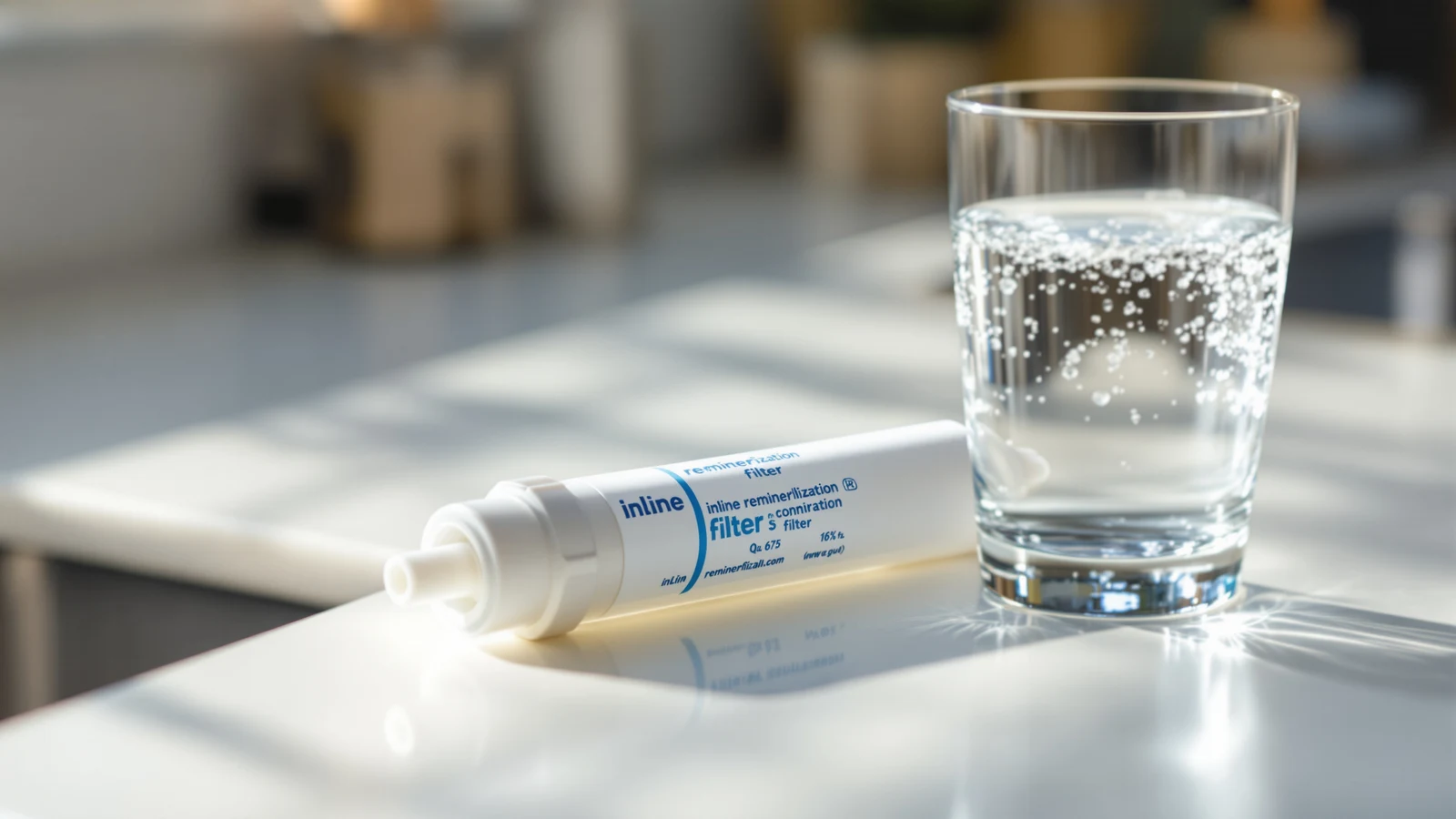
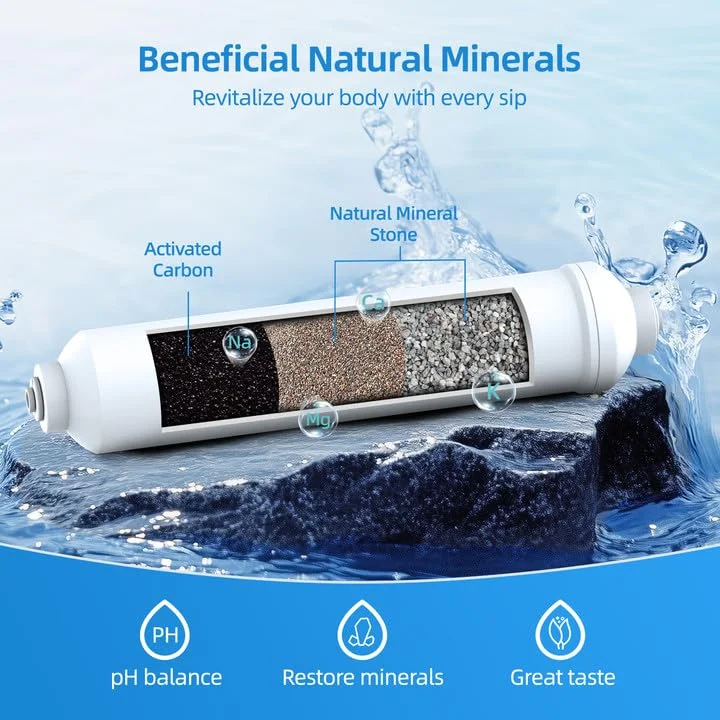
A remineralization cartridge is a small inline housing, placed after the membrane, packed with a mineral media — typically a calcite and magnesium oxide blend, sometimes described on packaging as "maifan stone" or "mineral balls." Water passing through dissolves a controlled amount of the media on contact, the same principle as a water softener running in reverse: instead of stripping minerals, the cartridge donates them.
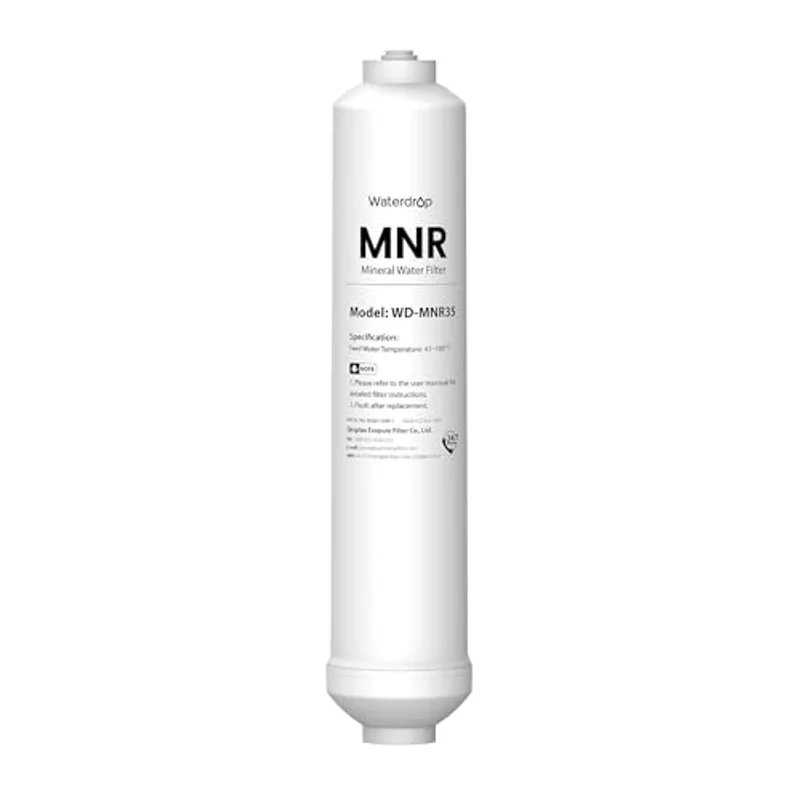
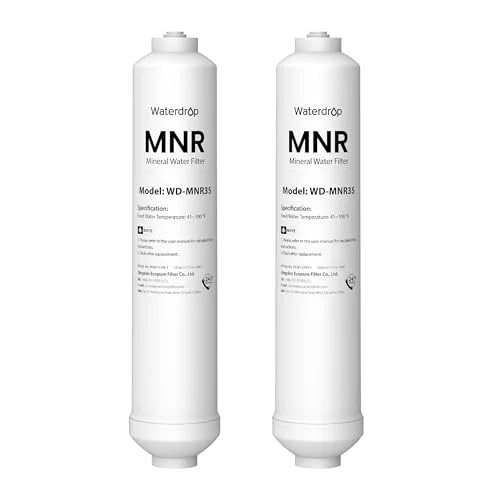
What that donation amounts to is specific and finite, not an open tap. Waterdrop's MNR35 remineralization cartridge is rated for nine to twelve months or 1,100 gallons — whichever comes first — with the manufacturer recommending replacement at the nine-month mark rather than waiting for either limit. The Waterdrop MNR35-2 is the same media in the housing size built for its two-cartridge alkaline systems, rated for comparable throughput. Both are inline, connect with standard 1/4-inch or 3/8-inch quick-connect tubing, and are explicitly not rated for hot-water lines.
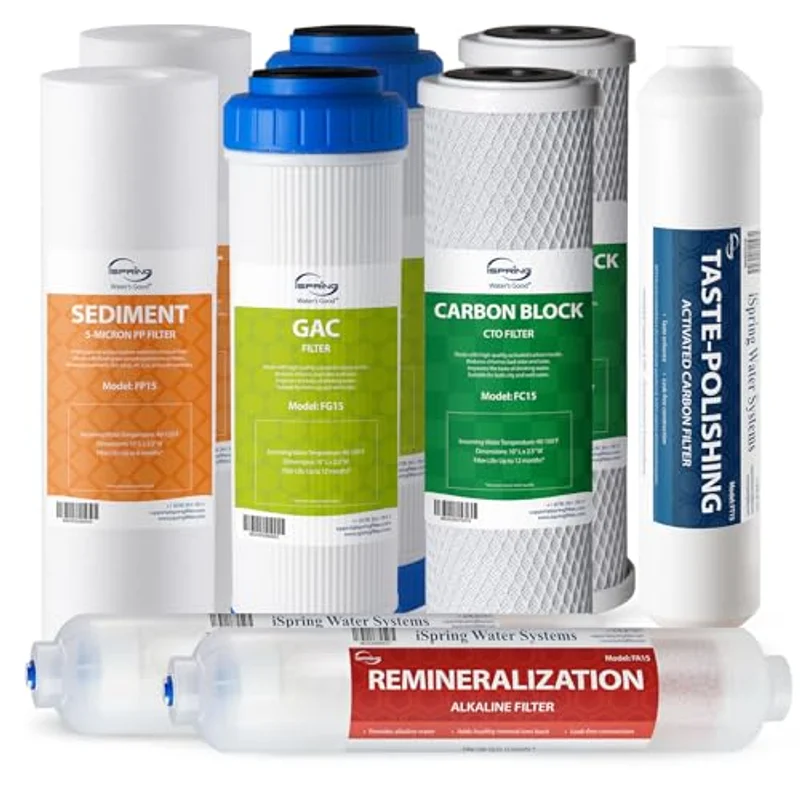
The MIZUDO 12-month remineralization filter takes the same approach in a 1/4-inch quick-connect alkaline housing, sized for a full year of typical household throughput before the media is exhausted. The iSpring F9K, which we cover in more detail below, folds two alkaline mineral cartridges into its nine-piece annual set for 6-stage systems — the remineralization stage bundled with the sediment, carbon and post-carbon cartridges you would be replacing anyway.
What none of these listings publish, and what we are not going to invent, is a milligrams-per-liter dosing figure — the actual concentration of calcium and magnesium the treated water ends up with. That number depends on your feed water's mineral content, your flow rate, and how saturated the cartridge media already is, and manufacturers do not publish a fixed output spec because it genuinely varies by installation. Treat "remineralization" as a directional claim — some minerals go back in, an amount the manufacturer bounds by a gallon or month rating rather than a concentration — not as a promise to restore water to any specific hardness.
Taste and pH: the claim that holds up, and the one that does not
Two things get said about remineralization filters, and only one of them is defensible from the mechanism.
The claim that holds up: taste. Calcium and magnesium are flavor carriers. Water with essentially none of them — which is what comes straight off a membrane — reads to most palates as flat or "empty," the same sensation people describe when comparing distilled water to spring water. Putting even a modest amount of mineral content back gives the water body. This is the mechanism manufacturers are actually selling, whether or not their marketing copy says the word "taste," and it is consistent with how mineral content is known to interact with the tongue.
The claim that does not: meaningful pH change or health benefit from "alkaline water." RO output does test slightly acidic — typically in the 6 to 7 range on a household test strip, against the mild alkalinity of most tap water — because stripping bicarbonate removes the buffer, not because the water has become dangerous or unusually acidic. A remineralization cartridge nudges pH back toward neutral by adding back some of that buffering capacity, and manufacturers often label this "alkaline" filtration. What does not hold up is any claim that this delivers a health benefit beyond taste. Drinking water is a minor contributor to your daily mineral intake compared with food, and the pH of what you drink is buffered by your body well before it could plausibly change your internal pH. If restoring a neutral, pleasant taste to your water is the goal, remineralization does that. If the goal is a health outcome from alkaline water specifically, the evidence for that claim is thin, and we are not going to repeat it as fact. This is general information, not medical advice.
Where the cartridge goes in the chain, and why order matters
A remineralization or alkaline cartridge is a post-membrane stage, full stop. It installs after the RO membrane and, on most systems, after the final post-carbon polishing filter — the last thing the water touches before it reaches the faucet. Installing it anywhere upstream of the membrane defeats its purpose twice over: the membrane would reject most of the minerals the cartridge just added, and the mineral media itself would foul faster from exposure to sediment and chlorine that the earlier stages exist to remove.
Sequence matters in one more direction people miss: remineralization has to come after carbon, not instead of it. The carbon stages are there to protect the membrane from chlorine and to strip taste and odor before the water gets that far — a job a mineral cartridge cannot do and is not designed to do. Skipping a carbon stage to make room for a remineralization filter trades membrane protection for a taste additive, which is the wrong trade in every system we have looked at.
Physically, this is why remineralization is almost always sold as an add-on rather than swapped in: it uses standard quick-connect tubing sized to slot onto the outlet of an existing system, in-line, without replumbing anything upstream. Check your system's fitting size before buying — 1/4-inch and 3/8-inch are both common, and the wrong size means an extra trip for a different fitting rather than a wrong-cartridge return.
The picks
Four remineralization products we could source with a complete, published spec — sizing, throughput rating and price. We are not naming a single "best" here, because the right one is the one sized to fit your system's connectors and your household's actual water use, not a universal winner.