Best RO Systems
HomeGuidesFilter replacement cost
Running costs

What reverse osmosis filters actually cost per year

We're reader-supported: buying through our links may earn us a commission at no extra cost to you. We compare published specifications, certifications and prices — we don't run a testing lab.

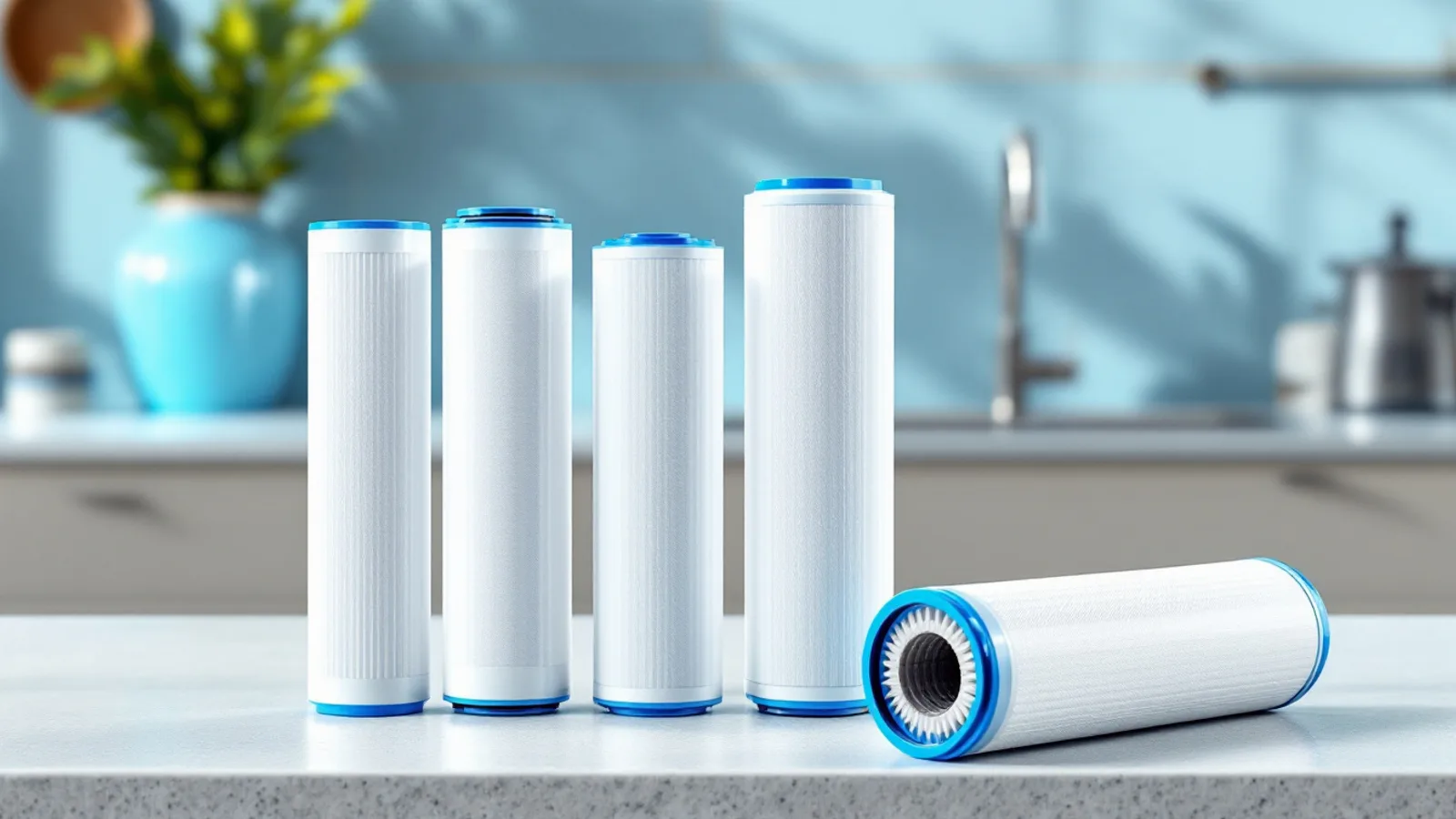
Replacement reverse osmosis filter cartridges laid out on a counter beside an open under-sink filtration system

Buying a reverse osmosis system is two transactions that happen years apart. The first is loud and comparable: a sticker price, a spec sheet, a hundred buying guides ranking six of them. The second is quiet, recurring, and almost never priced anywhere you can find it before you commit — and over a normal ownership span it is frequently the larger of the two.

This page is the second transaction: what is inside the housings, how long each part lasts, what a year of cartridges costs for the systems we recommend on this site, and the structural decision — standard housings versus proprietary twist-in cartridges — that sets your running cost for as long as you own the thing. Every price comes from a specific Amazon listing we recorded; where we could not source one, we say so rather than filling the gap with a plausible-looking guess.

What is in there, and how long each part lasts

Strip the marketing off and every RO system is the same four jobs in sequence, whether it is a $200 tank system with three transparent housings or a $439 tankless box with three plastic sticks in it.

Sediment. A spun or pleated polypropylene filter catching sand, rust and particulates — the cheapest part in the system and the one doing the most physical work. APEC rates the first stage of its Essence pre-filter set at 5 micron. Expect six to twelve months.

Carbon. Usually two stages — granular activated carbon, then a carbon block — stripping chlorine, taste and odor. This is not optional politeness: free chlorine attacks the thin-film composite RO membrane, so the carbon stages exist as much to protect your most expensive component as to improve taste. APEC's second and third stages are 10 micron extruded carbon blocks; Waterdrop uses a coconut-shell carbon block in its front filter. Six to twelve months.

The RO membrane. The part that actually does reverse osmosis, rejecting dissolved solids down to a fraction of a micron. Most expensive cartridge, longest-lived: typically two to three years, because it is not accumulating particulate the way a sediment filter is — it is slowly fouling and losing rejection. iSpring rates its 75 GPD membrane at up to 97% TDS rejection under NSF/ANSI 58 test conditions.

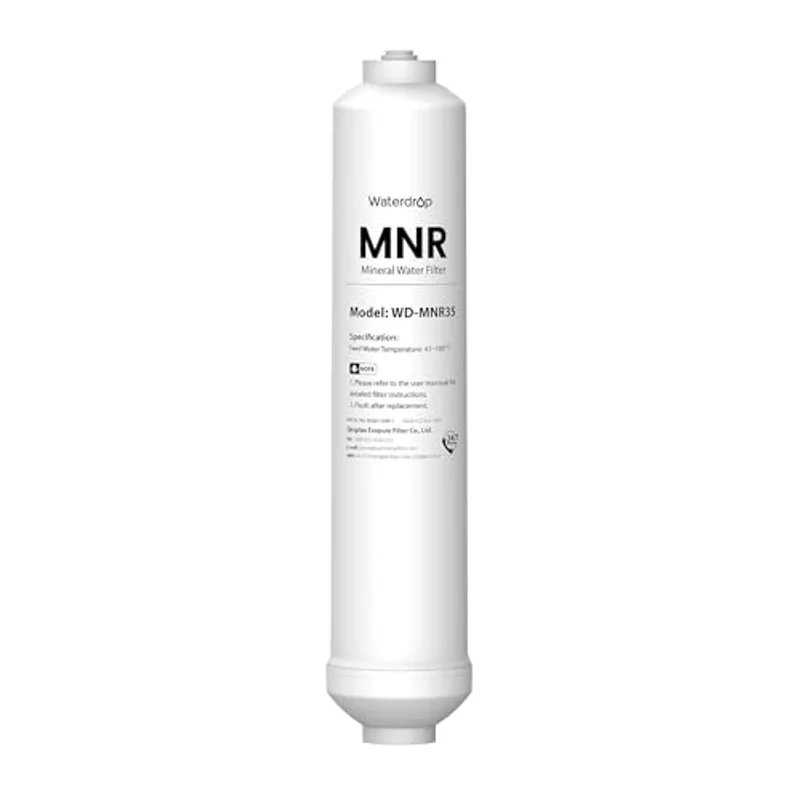
Post-carbon and remineralization. A final polish before the faucet, plus — on alkaline systems — a mineral stage putting calcium and magnesium back after the membrane has taken everything out. Waterdrop rates its standalone MNR35 remineralization cartridge at nine to twelve months or 1,100 gallons, whichever comes first, and suggests replacing at nine. That window is typical for the whole post-membrane group. (Whether losing those minerals matters is its own question — we work through it in does reverse osmosis remove minerals.)
"Lasts 12 months" on the box is a gallon number wearing a calendar costume

This is the most misread line in the category. When Waterdrop rates the G3-N1CF front filter at six months or 550 gallons, the six months is a courtesy translation. The 550 gallons is the actual claim: the manufacturer picked an assumed household, divided the capacity by it, and printed the result.

Your household is not that household. Two people who drink RO water and nothing else might take fourteen months to push 550 gallons through a filter. A family of five that also fills a coffee machine, a pet bowl and an ice maker from the RO line can be through it in four. Both are using it exactly as designed; only one of them should change on the printed date.

Two things shorten the number further and neither is on the box. Hard water accelerates scaling on the membrane, and sediment-heavy supply — well water, an old galvanized service line, anywhere the utility has been digging — loads the first stage far faster than treated municipal water. iSpring's transparent first-stage housing exists precisely for this: if yours goes from white to grey-brown in three months, your supply has told you something the label could not.

Treat the printed interval as a ceiling rather than a schedule, and use the signals in the section on knowing when to change to find your real one. It is worth money in both directions: changing early wastes cartridges, changing late can cost you a membrane.

The two economic families

Every RO system belongs to one of two cartridge economies, and which one you are in matters more to your ten-year bill than any spec on the box. It is the decision people make by accident, because nobody frames it as a decision.

Family one: universal 10" × 2.5" housings

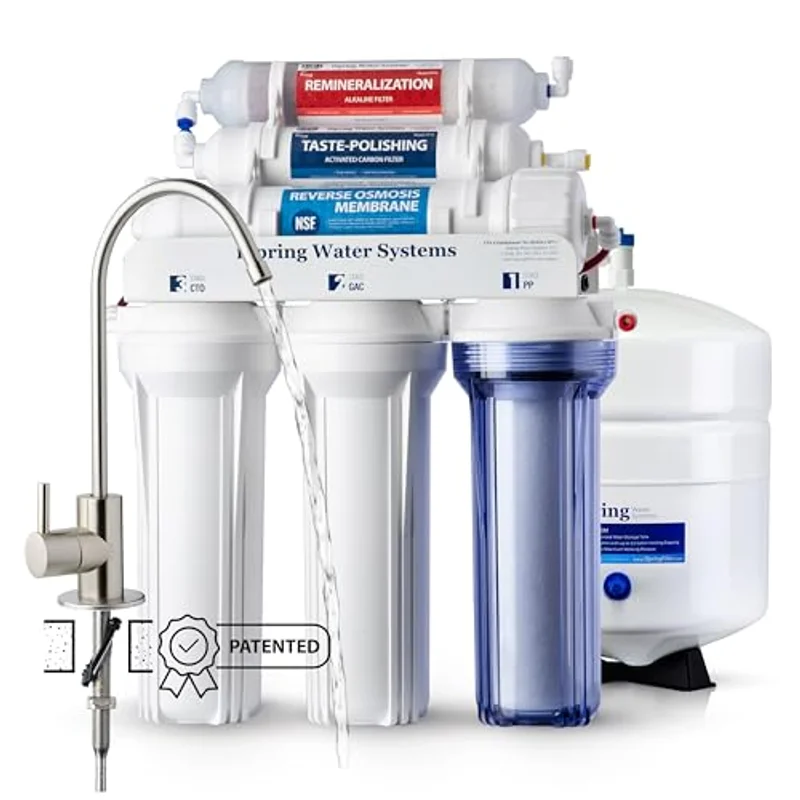
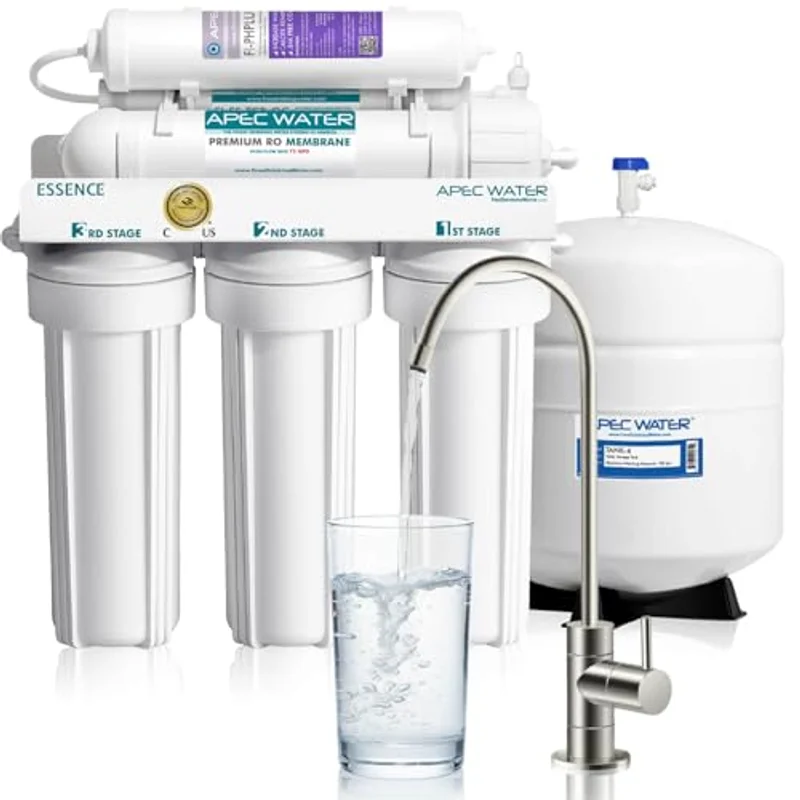
The classic under-sink system — three or four vertical canisters plus a pressure tank — uses a cartridge size that has been an industry standard for decades: ten inches long, two and a half inches across. iSpring, APEC, a dozen no-name Amazon brands and your local water-treatment shop all make cartridges that drop into that housing. That standard is your leverage. Four sourced examples of what it buys:

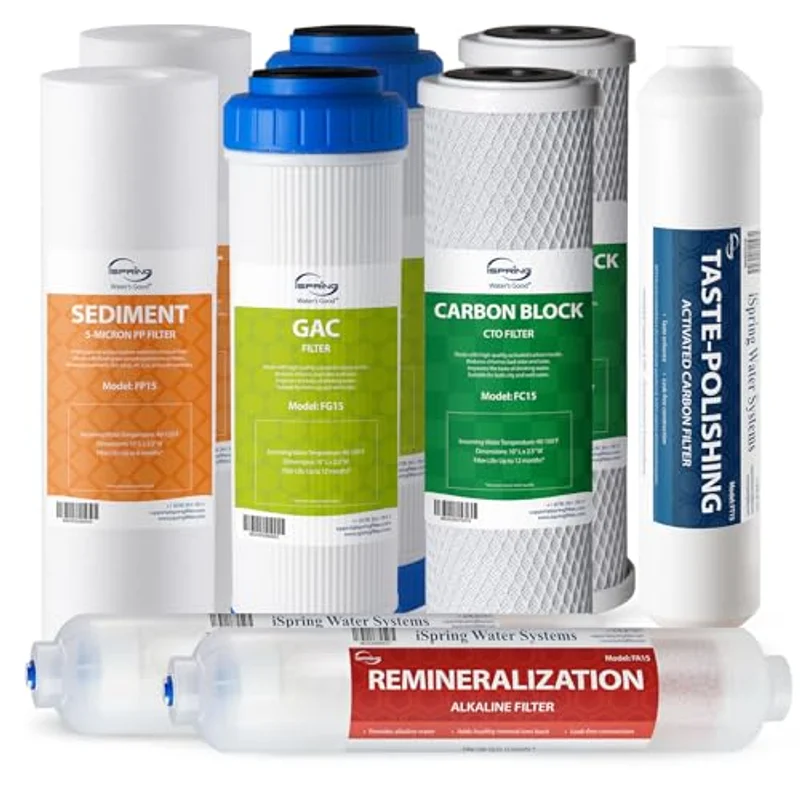
  • iSpring F9K — $69.24. Nine cartridges: two sediment, two GAC, two carbon block, one post-carbon, two alkaline. A full calendar year for a 6-stage system, alkaline stage included. Read the fine print, because it is the important part: the RO membrane is not in the box.
  • iSpring F6K75 — $87.69. A six-cartridge, six-month supply set for 6-stage systems that does include a 75 GPD membrane. Useful in the changeover year; a poor default, since buying it twice annually replaces a two-to-three-year membrane every six months.
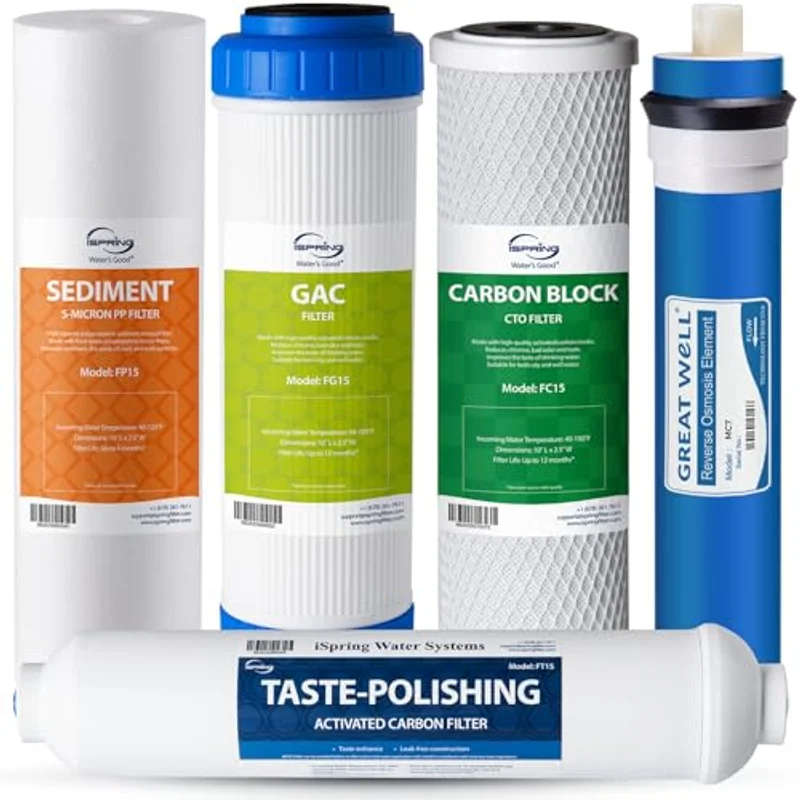
  • iSpring F5-75 — $55.09. Five cartridges for a 5-stage system — sediment, GAC, carbon block, 75 GPD membrane, post-carbon. The cheapest route we could source to a replacement iSpring membrane, which makes it the reference price for the amortized membrane line below.
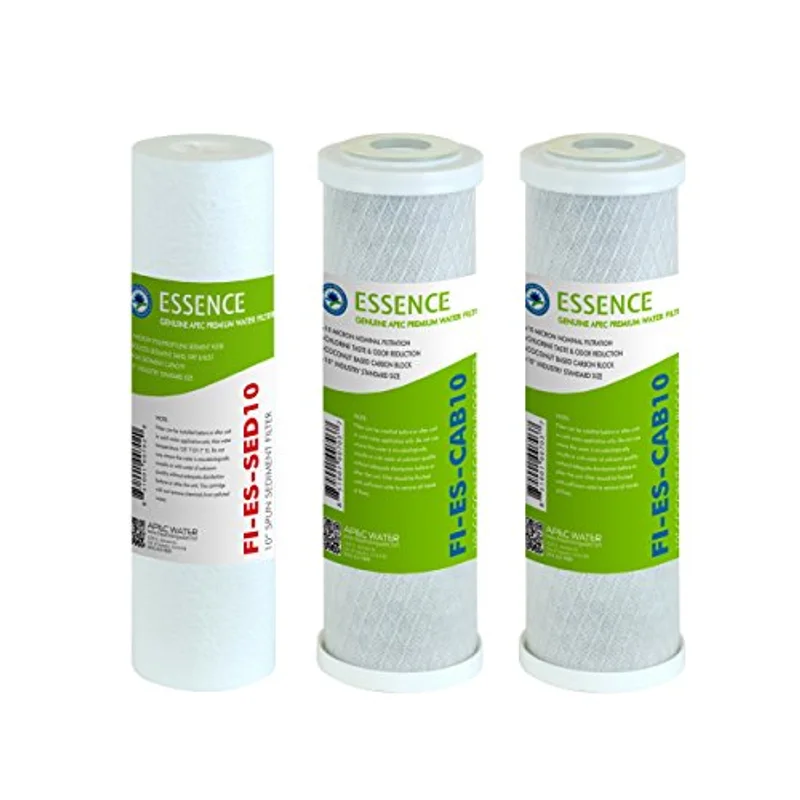
  • APEC FILTER-SET-ES — $25.46. One sediment filter and two carbon blocks for the ROES series, changed every six months. APEC's own description states the job plainly: to protect and extend the life of the RO system.

Note the shape of those numbers: $25 for a half-year of pre-filters, $69 for a full year of nine cartridges. That is what commodity competition does to a price.

Family two: proprietary twist-in cartridges

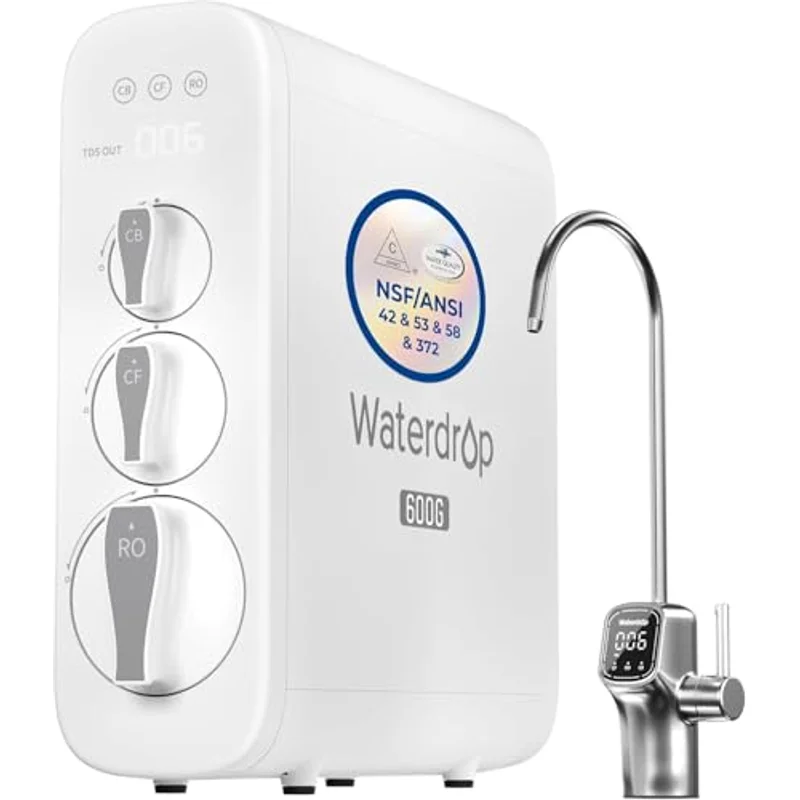
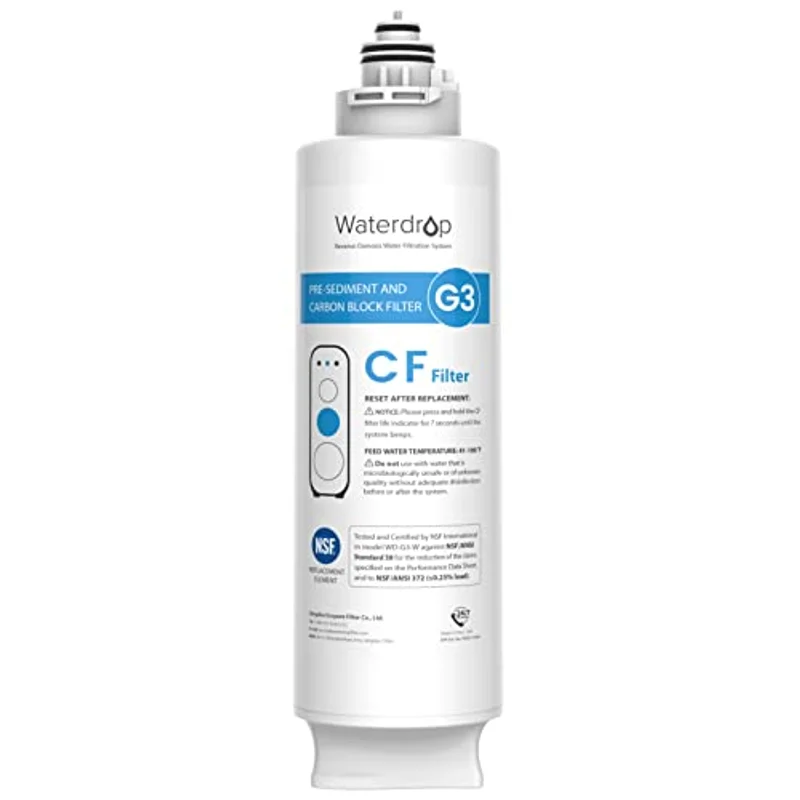
Tankless systems — the slim boxes that replaced the tank-and-three-housings layout — almost universally use cartridges only their manufacturer makes. The Waterdrop G3-N1CF at $29.99 is the archetype: a 3-in-1 front filter combining sediment and coconut-shell carbon block stages for the G3-W, G3P600 and G3P800, rated at six months or 550 gallons.

The premium buys something genuine, not just convenience theater. The system stays bolted where it is: no wrench, no canister, no draining, no lying under a P-trap with a bowl. You twist the old cartridge a quarter turn, pull, push the new one in. Waterdrop claims three seconds; even at ten times that it is a different experience from servicing three housings — and for a lot of people it is the reason the filters actually get changed on time, which matters more than the price gap, because a neglected pre-filter is how membranes die.

What you give up is the market. One manufacturer sets the price, decides when to discontinue the part, and controls whether a cartridge for your six-year-old model still exists. There is no generic. If Waterdrop doubles the price of the G3-N1CF, you pay it or you replace the system.

The arithmetic

What a year costs, system by system

Cartridge prices as we recorded them. Where a manufacturer does not publish a replacement price we could source, the row says so instead of estimating.

SystemSystem priceCartridges we could pricePer yearNot included in that number
APEC ROES-PH75$239.99FILTER-SET-ES $25.46 × 2$50.92Membrane, post-carbon, calcium stageFilters
Waterdrop G3P600$439.00G3-N1CF $29.99 × 2$59.98RO membrane, rear carbon blockFilters
iSpring RCC7AK-BN$198.76F9K $69.24 + F5-75 $55.09 amortized$80.26–$91.28Nothing materialFilters
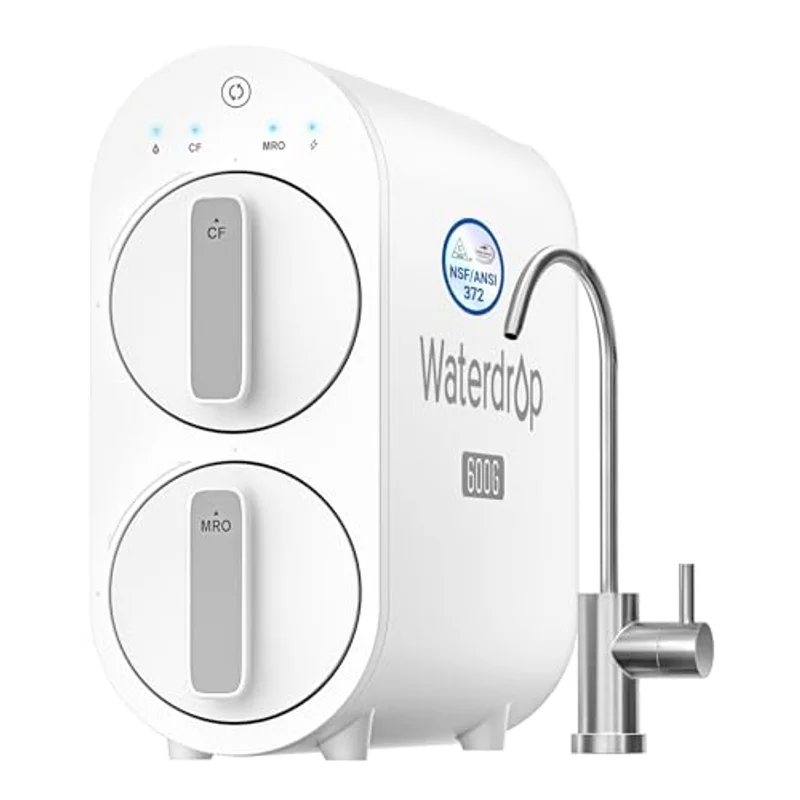
Waterdrop G2P600$299.00Not sourcedWhole cartridge scheduleSystem
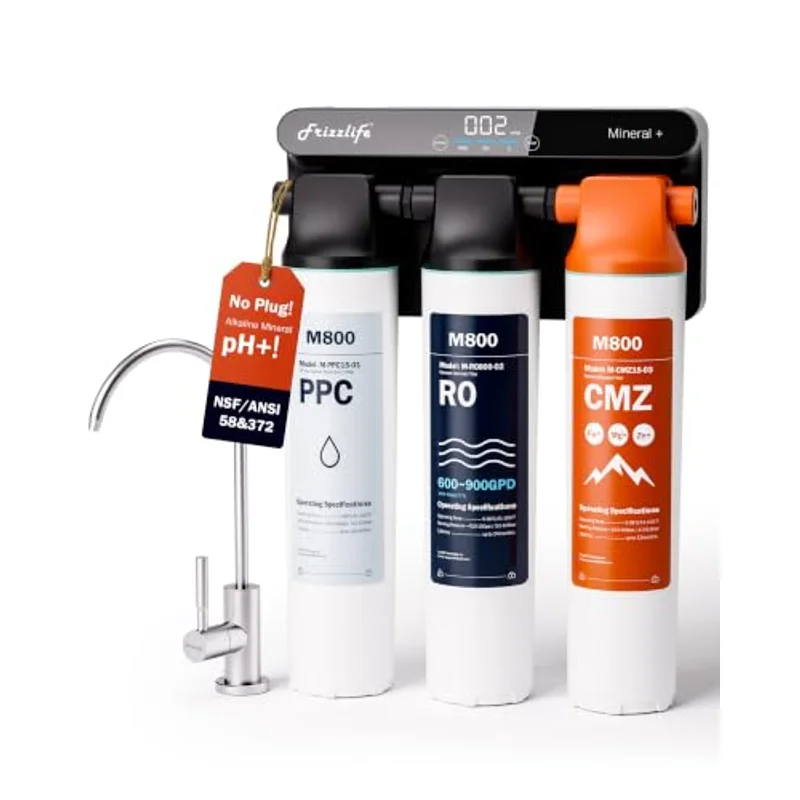
Frizzlife M800$299.99Not sourcedWhole cartridge scheduleSystem
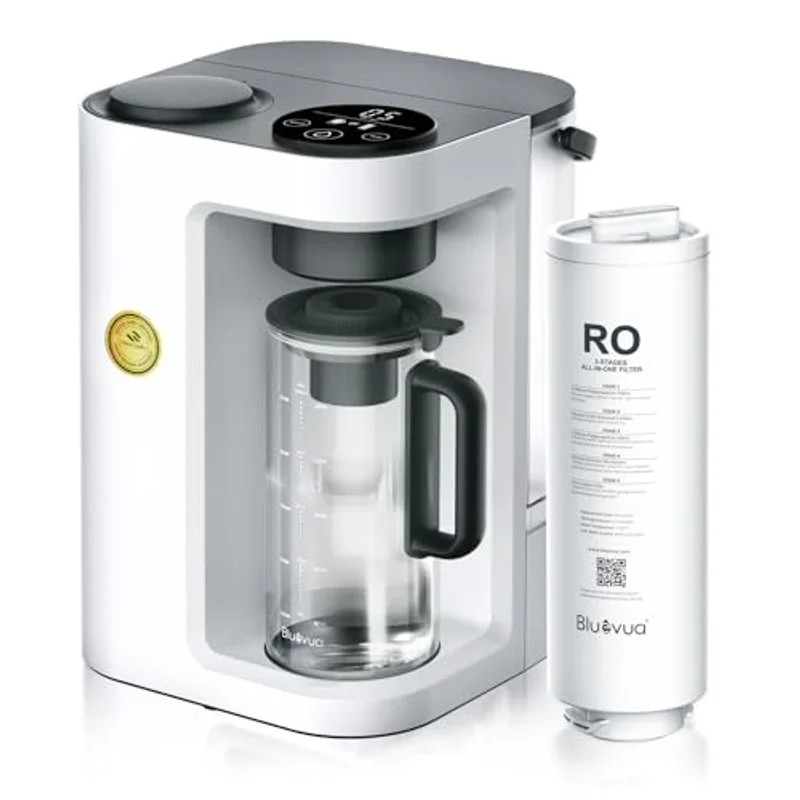
Bluevua RO100ROPOT-Lite$219.00Not sourcedMaker claims $0.22/dayVerification — we have no part priceSystem

Now the assumptions, in the open, because a running-cost table without them is decoration.

APEC ROES-PH75, $50.92. Two FILTER-SET-ES packs a year at $25.46, on APEC's stated six-month cadence. That covers stages one to three — sediment plus two carbon blocks. The membrane, the post-carbon polish and the calcium remineralization cartridge are separate APEC part numbers whose prices we could not source, so the true figure is higher.

Waterdrop G3P600, $59.98. Two G3-N1CF front filters a year at $29.99, on Waterdrop's six-month/550-gallon rating. The G3P600's RO membrane and rear carbon block are separate proprietary cartridges on a longer cycle, and we could not source prices for them either. Treat $59.98 as a floor.

iSpring RCC7AK-BN, $80.26 to $91.28. The only row we consider close to complete, so here is the full working. One F9K set a year at $69.24 covers all nine non-membrane cartridges; the membrane is bought separately, and the cheapest sourced route to an iSpring 75 GPD membrane is the F5-75 pack at $55.09. Over five years that is five F9K sets ($346.20) plus either one F5-75 (three-year membrane life: total $401.29, or $80.26 a year) or two (two-year life: total $456.38, or $91.28 a year). That route slightly overstates the cost, since the pack carries four cartridges beyond the membrane you have already covered — we use it anyway rather than inventing a standalone membrane price.

And now the part most guides in this category quietly skip. For three of the six systems on this site, we could not source a replacement-cartridge price at all. Waterdrop does not publish one we could record for the G2P600's filters; Frizzlife does not for the M800's; Bluevua's RO100ROPOT-Lite listing asserts a running cost of $0.22 a day — $80.30 over 365 days, if you take it at face value — but we have no part number and no price of our own to check it against. We are not going to reverse-engineer those numbers from a competitor's system and present the result as research. If running cost decides your purchase and the running cost is unknowable before you buy, that unknowability is the finding, and it should count against the system.

One tempting piece of arithmetic we are deliberately not publishing as a conclusion: if the G2P600's front filter happened to cost the same $29.99 twice a year as its more expensive sibling's, its five-year total would land at $598.90 — within about a dollar of the iSpring RCC7AK-BN. Interesting result; the word "if" is doing every bit of the work in it.

Five years of ownership, sticker plus cartridges

Annual figures understate how this compounds, so here is the same math run out to five years — the span over which most people either keep a system or replace it.

  • APEC ROES-PH75: $239.99 + (10 × $25.46) = $494.59. Excludes membrane, post-carbon and calcium stage.
  • iSpring RCC7AK-BN: $198.76 + (5 × $69.24) + one F5-75 at $55.09 = $600.05, rising to $655.14 if the membrane only makes two years.
  • Waterdrop G3P600: $439.00 + (10 × $29.99) = $738.90, and that is a floor.

The mechanism people expect is a cheaper system with expensive proprietary cartridges quietly overtaking a dearer one with universal housings. To find the moment it happens, divide the purchase-price gap by the annual cartridge gap. That quotient is the crossover year.

Run it on the widest pair in our data. The G3P600 costs $240.24 more than the RCC7AK-BN up front. Against the iSpring's more complete $80.26-a-year bill, the Waterdrop's $59.98 saves $20.28 annually, so $240.24 ÷ $20.28 = about 11.8 years before the sticker premium is repaid. Assume the harsher two-year membrane life, the iSpring's bill rises to $91.28, the annual gap widens to $31.30, and the crossover pulls in to 7.7 years. Both are measured against a Waterdrop figure counting only one of its three cartridges, so the real crossover is later still — if it arrives inside the life of the hardware at all.

That is the honest finding and it is not the one we expected: on the prices we recorded, the systems cheaper to buy are also cheaper to run, and the consumable gap between the two families is real but too small to reverse a $240 sticker difference in any timeframe that matters. The crossover only bites when the consumable gap is large relative to the sticker gap — as a rule of thumb, $30 a year of extra filters erases a $150 purchase-price advantage in exactly five years. So before you call a cheap system a bargain, find its cartridge price and do that division. If you cannot find the price, you cannot do the division, which is itself an answer. The broader version of the question — whether any of this beats bottled water — is in are reverse osmosis systems worth it.

Four ways people spend more than they need to

The theme that repeats across owner reviews is that the expensive mistakes are not exotic. They are the same four, over and over.

1. Changing on the calendar when the display says otherwise. If your system has a filter-life tracker — the G3P600's smart display faucet, the M800's TDS and filter-life readout, the Bluevua's filter alerts — that counter measures throughput, which is what the rating was actually about. Overriding it with a date on your phone means binning cartridges with a third of their capacity left, or running them well past it. In a two-person household that is easily one wasted set a year: $69.24 on a universal system, $59.98 on twist-ins.

2. Putting a no-name membrane in a certified system. Worth being precise, because the marketing is not. NSF/ANSI 58 certifies contaminant and TDS reduction performance. NSF/ANSI 372 certifies only that the materials are lead-free and says nothing about what the system removes. WQA is a different certifying body with its own program. iSpring is explicit that the RCC7AK is certified to NSF/ANSI 58 as an entire system — and that phrasing is the point, because a system certification describes a specific assembly of specific components. Swap the membrane for an uncertified one off a marketplace and the certification no longer describes what is under your sink. It may well still work fine; what you have lost is the third-party evidence that it does, which was the only reason the certification was worth paying for.

3. Ignoring the pre-filter until it kills the membrane. The costliest one, and pure arithmetic. Pre-filters exist to keep chlorine and particulate off the membrane — APEC says so in its own product description. Skip a $25.46 set for a year and you expose a component that should have lasted two to three years, whose cheapest sourced replacement route is a $55.09 pack. You saved twenty-five dollars and spent fifty-five, on a shorter cycle, forever. Everything upstream of the membrane is insurance on the membrane.

4. Skipping the sanitizing step at change time. Opening a housing exposes wet plastic and a damp cartridge seat to a kitchen's worth of airborne bacteria, and the system then sits pressurized and dark for six months. Manufacturers put a sanitizing step in their change instructions for a reason. It costs a few dollars of food-grade sanitizer and ten extra minutes, and skipping it is the usual explanation when water that tasted clean in March tastes stale in September on a filter with life left on the counter.

How to actually know when to change something

Four signals, and they point at different cartridges — which is the useful part, because "the water tastes off" and "the flow has dropped" are telling you about completely different components.

A TDS meter, used as a ratio. A handheld total-dissolved-solids meter is the cheapest diagnostic here, and its number means nothing on its own. What matters is rejection: measure untreated cold tap water, measure the RO faucet, compute (feed − product) ÷ feed. iSpring publishes 93 to 98 percent TDS reduction for the RCC7AK-BN and rates the 75 GPD membrane at up to 97 percent under NSF/ANSI 58 test conditions, so a system holding in the low nineties is healthy. One that has drifted to the bottom of its published band and kept going is telling you the membrane is fouling — months before anything tastes wrong. Take the reading when the system is new and write it on the housing; you cannot detect drift without a baseline. Rising feed TDS lifts the product number too without the membrane being at fault, which is exactly why you take the ratio and not the reading. Maintenance signal, not a health measurement.

Flow falling off. On a tank system this shows up as the tank taking noticeably longer to recover after you draw a couple of liters. On a tankless system it shows at the faucet — the G3P600 is specified to fill an 8 oz cup in 8 seconds, so a stopwatch and that spec give you a baseline. Falling flow usually means a clogged sediment stage before it means a dying membrane, which is good news: that is the cheap cartridge. Feed pressure matters too — APEC specifies 40 to 85 psi for the ROES-PH75, and a system starved of inlet pressure underperforms with perfectly good filters in it.

Taste changing. Taste is the carbon stages talking, not the membrane. When chlorine or a faint plastic note comes back, the activated carbon is saturated. Carbon exhausts silently — it does not clog, it just stops adsorbing — so taste is genuinely the primary signal there, and worth acting on promptly, since exhausted carbon means chlorine is now reaching the membrane.

The displays, if you have them. On tankless units the filter-life counter measures gallons, which is the correct unit; trust it over the calendar. The one thing it cannot see is your water. A counter tracking a 550-gallon rating has no idea your supply is loaded with sediment, so on well water or after utility work upstream, expect to be ahead of the display rather than behind it. And on systems with a transparent first housing, the oldest signal still works: look at it.

What we'd buy

The cheapest sane path, and the convenience path

Two coherent strategies. Pick the one that matches the system you own — or, if you have not bought yet, let it help decide which system you buy.

01Cheapest sane

APEC FILTER-SET-ES

The floor price of RO maintenance
$25.46 · 3 cartridges · 6-month set · 5 micron sediment + 2 × 10 micron carbon block

For the ROES-50, ROES-PH75 and ROES-UV75, and standard-size systems generally. Two a year is $50.92 to keep chlorine and particulate off your membrane — the best-value insurance policy in the category, and APEC says as much itself. No membrane and no post-stages in the box, so this is a pre-filter budget, not a whole-system one.

APEC Water FILTER-SET-ES replacement reverse osmosis pre-filter set
$25.46
6-month setCheck price →
02Full year, one box

iSpring F9K, 1-year set

A whole year of a 6-stage system, alkaline included
$69.24 · 9 cartridges · standard 10" × 2.5" · NSF certified · no membrane

Two sediment, two granular activated carbon, two carbon block, one post-carbon and two alkaline mineral cartridges, individually wrapped. At $69.24 for twelve months it is the cleanest illustration of what the universal-housing standard buys you: nine cartridges for roughly what two proprietary front filters cost. One point to buy it with your eyes open on — the RO membrane is not in the box, and it is a separate purchase every two to three years.

iSpring F9K one-year reverse osmosis replacement filter set with alkaline remineralization cartridges
$69.24
1-year · 9 countCheck price →
03Membrane year

iSpring F5-75

The cheapest route we could source to a fresh 75 GPD membrane
$55.09 · 5 cartridges · includes 75 GPD RO membrane · up to 97% TDS rejection under NSF/ANSI 58 conditions

Sediment, GAC, carbon block, membrane and post-carbon for a 5-stage system, all in standard 10" × 2.5" sizes. If you run a 6-stage system on the F9K, this is what you add in the year the membrane is due — you will have spare pre-filters left over, which is the small inefficiency we costed into the figures above rather than hiding. On a plain 5-stage system it is simply your annual set, membrane and all.

iSpring F5-75 five-stage reverse osmosis filter replacement pack with 75 GPD membrane
$55.09
Membrane includedCheck price →
04Convenience

Waterdrop G3-N1CF

The twist-in path, for G3-W, G3P600 and G3P800 owners
$29.99 · 3-in-1 front filter · 6 months or 550 gallons · coconut-shell carbon block

Sediment and carbon in one stick that quarter-turns out of the front of the system without moving it, draining it or finding a wrench. Two a year is $59.98, roughly what nine universal cartridges cost — you are paying for the format, not the media. Whether that is worth it has a defensible yes: a filter you can change in seconds is a filter that gets changed on schedule, and that is what keeps a membrane alive.

Waterdrop G3-N1CF 3-in-1 replacement front filter cartridge
$29.99
6 months · 550 galCheck price →
05Add-on

Waterdrop MNR35

Remineralization for a system that did not come with it
$29.99 · 9–12 months or 1,100 gallons · 1/4" & 3/8" quick-connect · inline

An inline cartridge that plumbs onto the outlet of most under-sink RO systems with quick-connect tubing, putting calcium, magnesium, sodium and potassium back after the membrane. Waterdrop rates it at nine to twelve months or 1,100 gallons and suggests replacing at nine — the same window as the post-carbon stages, so it slots into an existing schedule rather than creating a new one. Budget roughly $30 a year on top. Not for hot-water lines.

Waterdrop MNR35 inline remineralization filter for under-sink reverse osmosis systems
$29.99
9–12 monthsCheck price →

The summary is short. Universal housings cost roughly $50 to $91 a year depending on stage count and how you handle the membrane, and no manufacturer can hold that number hostage. Twist-ins cost around $60 for the front filter alone, on a schedule set by one company, and buy you a filter change that takes seconds instead of an afternoon. Both are defensible. Buying a system whose cartridge price you cannot find, and discovering it in month seven, is not.

FAQ

Questions people ask about filter costs

How much do reverse osmosis filters cost per year?

On the prices we recorded, a standard-housing system runs from $50.92 a year (two APEC FILTER-SET-ES packs at $25.46, pre-filters only) to about $80.26 for a complete 6-stage schedule — one iSpring F9K set at $69.24 plus an amortized membrane. A proprietary twist-in system such as the Waterdrop G3P600 costs $59.98 a year for its front filter alone, membrane and rear carbon block on top. Budget $50 to $90, and confirm the cartridge price before you buy the system.

How long does an RO membrane really last?

Typically two to three years, against six to twelve months for sediment and carbon and nine to twelve for post-carbon and remineralization cartridges. The membrane does not clog the way a sediment filter does; it slowly loses rejection. Judge it by TDS ratio rather than date: measure feed and product water, compute (feed − product) ÷ feed, and compare with the manufacturer's published figure — iSpring publishes 93 to 98 percent TDS reduction for the RCC7AK-BN. Hard water, high feed TDS and a neglected pre-filter all shorten it.

Can I use generic filters instead of the manufacturer's own?

For standard 10" × 2.5" housings, yes — that size is an industry standard, and the competition is why a full year of cartridges can cost $69.24. Proprietary twist-in cartridges like Waterdrop's G3 series have no generic equivalent by design. One caveat: NSF/ANSI 58 certification applies to a system as a whole assembly, and iSpring states its RCC7AK is certified as an entire system. An uncertified membrane may not hurt performance, but the certification no longer describes the system in your cabinet.

Is a system with cheap universal filters always cheaper to own?

Not automatically — it depends on the purchase-price gap. Divide the sticker difference by the annual cartridge difference to get the crossover year. On our numbers the Waterdrop G3P600 costs $240.24 more than the iSpring RCC7AK-BN but saves roughly $20.28 a year in cartridges, needing about 11.8 years to repay. Over five years the iSpring totals $600.05 against the Waterdrop's $738.90. The rule: $30 a year of extra filters erases a $150 purchase-price advantage in five years.

Keep reading

Next, if you're still choosing