Best RO Systems
HomeGuidesBest countertop reverse osmosis systems
Roundup

The best countertop reverse osmosis systems (no plumbing required)

We're reader-supported: buying through our links may earn us a commission at no extra cost to you. We compare published specifications, listing claims and prices — we don't run a testing lab, and nothing here is written from physically using the products.

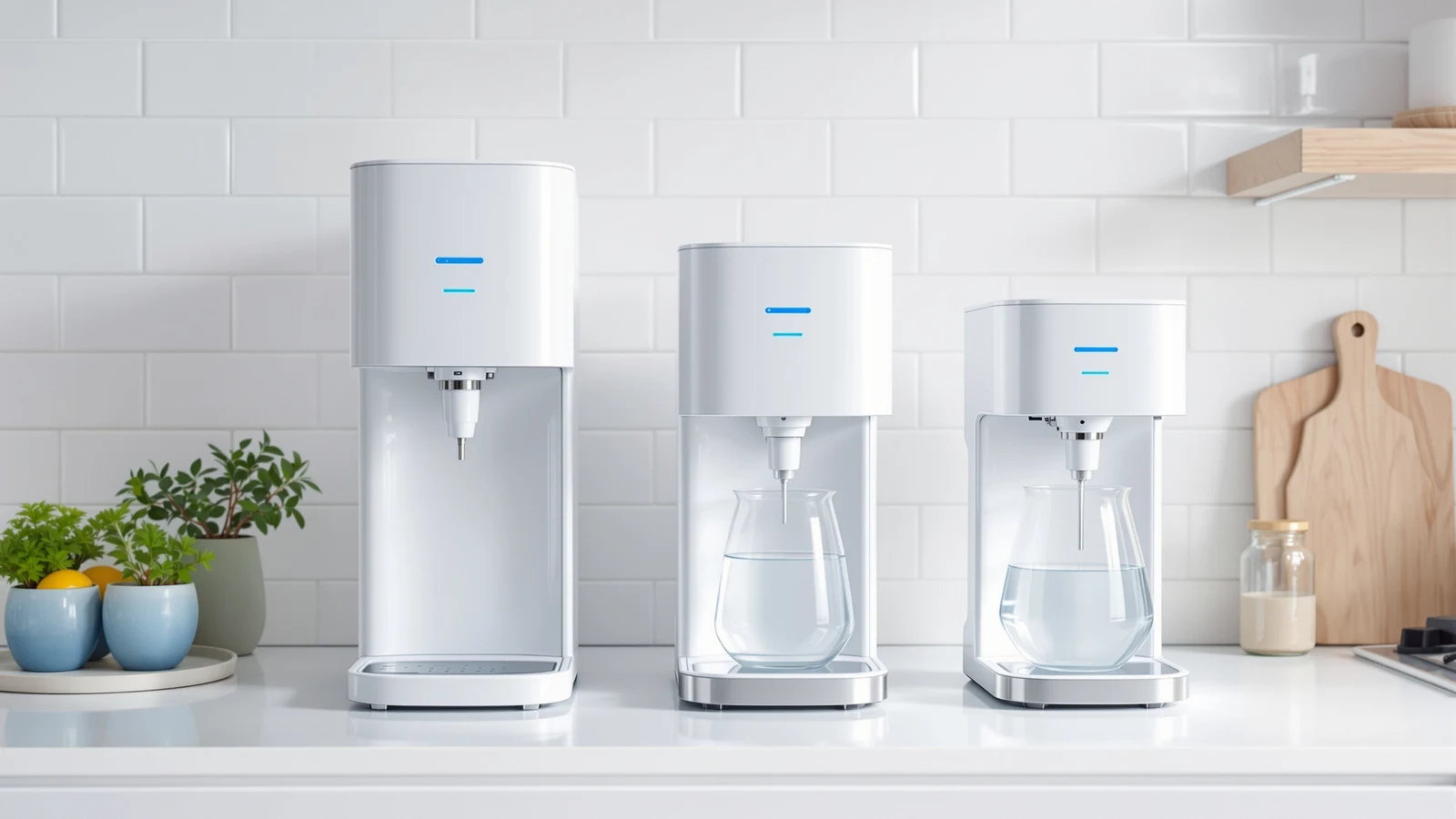
White countertop reverse osmosis water purifier with a glass carafe sitting on a kitchen counter, no plumbing connections

An under-sink reverse osmosis system is the better appliance on paper — more output, a bigger membrane, a permanent faucet — and for a large share of the country it is simply not available. You need a spare hole in the sink or the willingness to drill one, a drain you're allowed to tap into, and a landlord, a lease, or a stone countertop that doesn't object. Countertop RO exists for everyone that description excludes.

That is a specific set of households, not a compromise category for people who couldn't be bothered to install something. It's the renter who cannot legally modify a fixture and would lose a deposit over a drilled faucet hole. It's the owner of a quartz or granite countertop who does not want a hole cut for a dedicated tap, full stop, permission or not. It's the kitchen where the cabinet under the sink is already packed with a garbage disposal, a soap dispenser reservoir, cleaning supplies and a trash bin, with nowhere left for three housings and a tank. And it's the eighteen-month lease, the corporate relocation, the second home occupied four months a year — anywhere the payback horizon for a permanent install doesn't make sense. If you fit none of those, our renter's decision guide walks through why an under-sink system is usually still the better buy when installation is actually an option.

What all six systems below have in common: they plug into a wall outlet, sit on a counter, and connect to nothing but a water source you fill by hand or, on a couple of models, a direct line adapter. None of them requires a plumber, a drilled hole, or a landlord's sign-off.

The lineup

The price ladder: $149.99 to $395.00

Six countertop systems, ordered by price. Prices move on Amazon — confirm the live price before buying. None of the six carries a stated NSF/ANSI 58 system certification in the specifications we could source; more on what that means below.

ModelBest forWhat the listing statesPrice
Waterdrop C2SLLowest price of entryMineral RO system, countertop, no installation$149.99Price
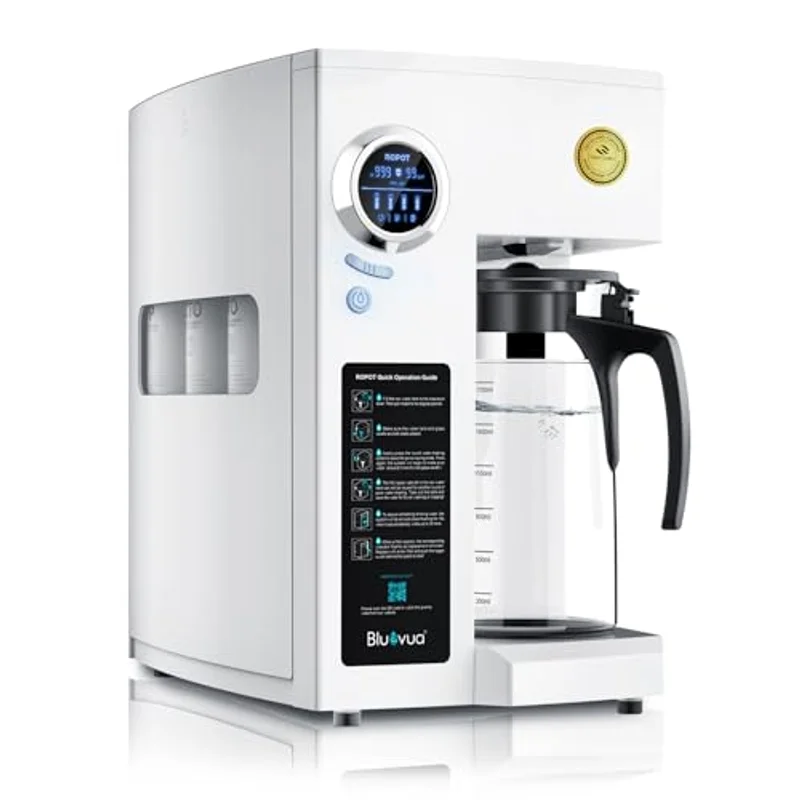
Bluevua RO100ROPOT-LiteSmallest footprint for the moneyCountertop, carafe-fed, the entry model in Bluevua's ROPOT line$219.00Price
SimPure Y7P-BW UVBest with UV built in5-stage RO with a UV stage, countertop$269.99Price
DREO WF511Best pure-to-drain ratio7-stage, installation-free, 3:1 pure to drain, TDS reduction$299.99Price
Bluevua RO100ROPOT (UV)The fuller-featured ROPOTCountertop, ROPOT-UV variant, adds a UV stage over the Lite$317.00Price
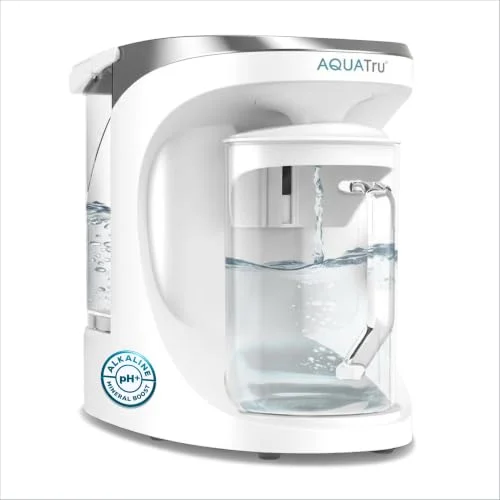
AquaTru Glass CarafeBest glass carafe, alkaline minerals4-stage RO, glass carafe, adds alkaline minerals, listing claims 84 contaminants reduced$395.00Price

The $150 step buys you the category, nothing more: a mineral RO stage and a countertop form factor, at a price that competes with a mid-range filter pitcher subscription rather than with under-sink hardware. The $220 to $270 band is where a UV stage starts showing up — worth reading about below before assuming it's a must-have. Past $300 you're generally paying for one of three things: more stages, a better drain ratio, or a carafe made of something other than plastic. AquaTru's $395 sits at the top for a specific reason — glass instead of plastic touching the water, and an alkaline mineral stage — not because it filters more thoroughly than the systems beneath it on this list; we have no comparative contaminant-removal data across all six to make that claim.

The picks

The six, in order of price

01Lowest entry price

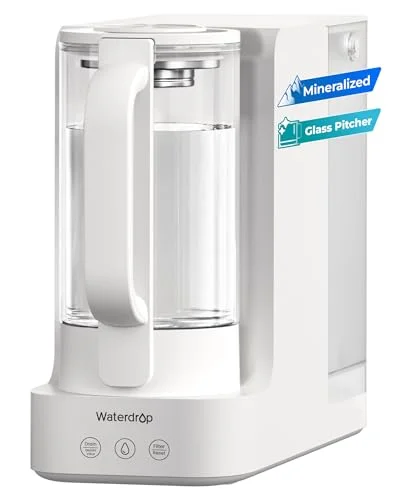
Waterdrop C2SL

The cheapest way into countertop RO
$149.99 · Mineral RO stage · countertop · plug-in

Waterdrop's listing describes the C2SL simply as a mineral reverse osmosis system built for the counter, and at $149.99 it undercuts every other system on this list by at least $69. There's no drilling, no drain saddle, and a mineral stage that puts something back after the membrane strips it out — the same basic promise as the pricier alkaline units further down this page, at roughly a third of the cost. What Waterdrop's listing does not spell out is a stage count or a rated output, so if either number matters to your decision, check the current listing before buying rather than assuming it matches a pricier sibling.

Waterdrop C2SL countertop reverse osmosis water filter with mineral RO system
$149.99
Mineral RO · countertopCheck price →
02Renters

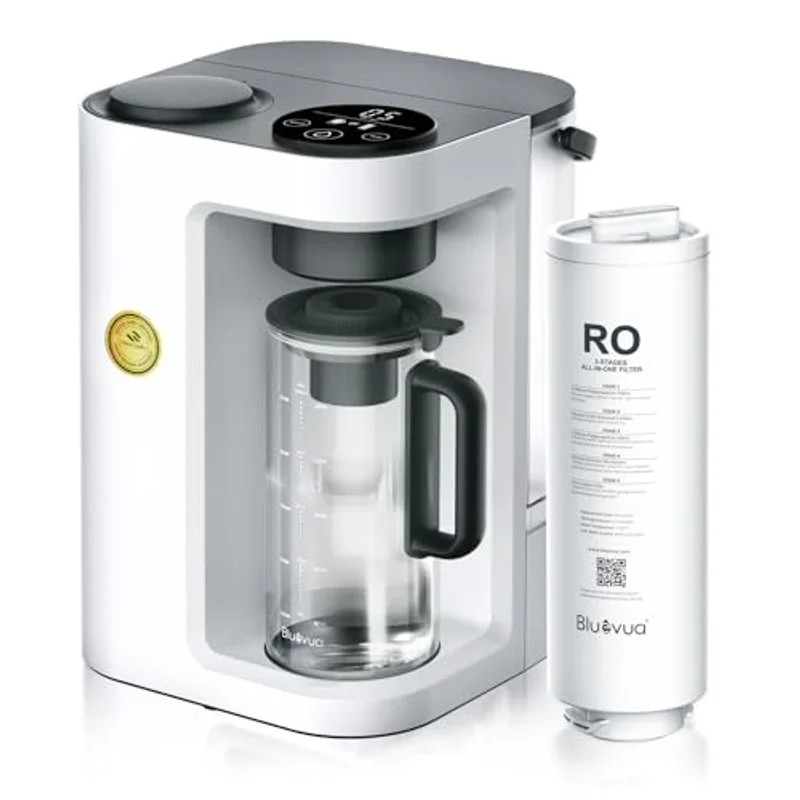
Bluevua RO100ROPOT-Lite

The smallest commitment, in price and counter space
$219.00 · carafe-fed · countertop · entry model of the ROPOT line

This is the base model in Bluevua's ROPOT family — the "Lite" naming does the work here, positioning it below the UV-equipped ROPOT further down this list at a $98 discount. It's built for the same job as every system on this page: fill it, let it run, pour from the carafe, no plumbing involved. Because it sits below the UV variant in Bluevua's own lineup, treat the absence of a UV stage as the trade for the lower price, and confirm the current stage count and reservoir capacity on the listing before you buy, since Bluevua doesn't spell those out in the title we sourced this from.

Bluevua RO100ROPOT-Lite countertop reverse osmosis water filter
$219
Countertop · carafeCheck price →
03UV built in

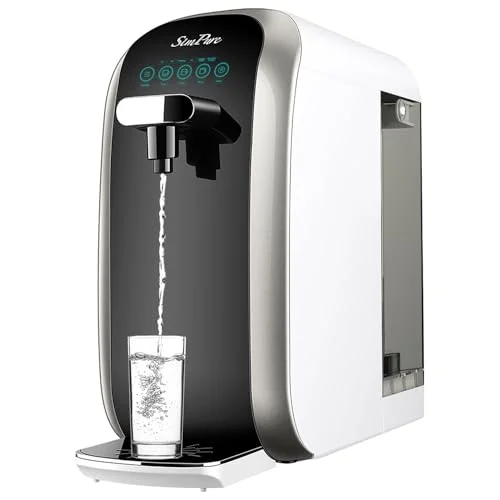
SimPure Y7P-BW UV

Five stages plus UV, at the middle of the ladder
$269.99 · 5-stage RO · UV stage · countertop

SimPure's own listing states a 5-stage RO process with an added UV stage, which puts it in a specific spot on this page: more filtration stages than the two cheaper systems above it, at a price that still undercuts the two UV-capable Bluevua and DREO systems above $290. UV lamps in a countertop unit are there to manage bacterial regrowth in stored water rather than to filter anything, which is worth understanding before you decide whether it's the deciding feature — we cover that trade-off in detail below. Stage count and a UV lamp are the two facts we can confirm from the listing; treat rated output and reservoir size as unconfirmed until you check the product page.

SimPure Y7P-BW UV countertop reverse osmosis water filter, 5 stage
$269.99
5-stage · UVCheck price →
04Best drain ratio

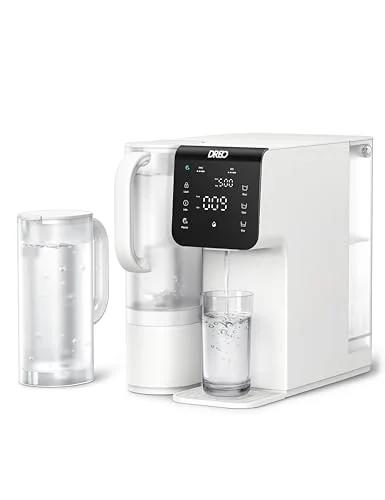
DREO WF511

Seven stages and the best documented efficiency here
$299.99 · 7-stage RO · installation-free · 3:1 pure-to-drain

DREO's listing is unusually specific for a countertop system: seven filtration stages, a TDS-reduction claim, and a 3:1 pure-to-drain ratio — meaning three parts of purified water for every part sent to waste, an efficiency figure most countertop listings simply don't publish. It's marketed as installation-free, consistent with every other system on this page, and it sits at the top of the mid-price tier at $299.99. The stage count is the highest of the six we cover, though more stages is not automatically better filtration — it depends what those stages are, which DREO's title doesn't itemize beyond the count and the drain ratio.

DREO WF511 7-stage reverse osmosis water filter countertop, installation-free
$299.99
7-stage · 3:1 drainCheck price →
05Step up from the Lite

Bluevua RO100ROPOT (ROPOT-UV)

The same platform as pick #2, with UV added
$317.00 · ROPOT-UV variant · countertop · adds a UV stage

Same base system as the RO100ROPOT-Lite above, identified explicitly on the listing as the ROPOT-UV variant — the $98 gap between the two is the closest thing on this page to a clean, apples-to-apples price of adding a single feature. If a UV stage is the deciding factor for you and you already like the Lite's form factor, this is the direct upgrade path rather than switching brands entirely. As with the Lite, we don't have a published stage count or reservoir size for this listing beyond the UV designation, so verify those on the current product page.

Bluevua RO100ROPOT countertop reverse osmosis water filter system, UV variant
$317
ROPOT-UVCheck price →
06Glass carafe

AquaTru Glass Carafe Alkaline

The top of the ladder, and the only glass carafe here
$395.00 · 4-stage RO · glass carafe · adds alkaline minerals

AquaTru's listing is the most detailed of the six on contaminant claims, stating removal of 84 contaminants including PFOA, PFOS (the PFAS family), lead and microplastics — a manufacturer claim from the product listing, not a figure we independently verified. It's a 4-stage system, fewer stages than the DREO or SimPure units above it, which is a reminder that stage count and contaminant count are not the same measurement and shouldn't be compared directly across brands. What sets it apart physically is the carafe: glass rather than plastic, which matters to buyers specifically trying to avoid purified water sitting in a plastic reservoir for hours before it's poured. The alkaline stage adds minerals back after the membrane, the same job Waterdrop's mineral stage does at less than half the price — the difference here is the carafe material and the wider contaminant claim, not a categorically different filtration process.

AquaTru glass carafe alkaline countertop reverse osmosis water purifier, 4 stage
$395
Glass carafe · alkalineCheck price →
The trade-off nobody photographs

Reservoir size versus counter footprint

Product photos for countertop RO systems are shot from the front, on an empty counter, next to nothing for scale. What they don't show is the thing that actually determines whether one fits your kitchen: every gallon of holding capacity is a gallon of physical tank the unit has to carry, and that tank has to go somewhere on top of the counter, not tucked out of sight in a cabinet the way an under-sink reservoir is.

That creates a real tension. A bigger reservoir means fewer refills and enough purified water on hand for cooking, a coffee maker and a couple of glasses back to back without waiting on the system to catch up. It also means a taller or wider box sitting permanently next to your stove or your toaster, in a spot you can't reclaim when you're not using it — unlike a filter pitcher, a countertop RO unit is generally not designed to be put away between uses.

None of the listings for the six systems above states reservoir capacity in gallons or liters, so we're not going to assign a number to any of them here — that's precisely the kind of spec worth confirming on the current product page before you buy, not after it's sitting on your counter. What we can tell you in general: a carafe-fed design like the two Bluevua ROPOT models tends to hold less at once than a tank-style unit, trading standing capacity for a smaller physical footprint, which is exactly the trade renters and small-kitchen buyers are usually making on purpose.

Which extras earn their money

UV stages, mineral stages and glass carafes

01

UV stages

A UV lamp doesn't filter anything — it's there to manage bacterial regrowth in water that sits in a reservoir for hours between fills, which is a real consideration for a countertop system in a way it usually isn't for an under-sink unit with continuous flow. SimPure and the ROPOT-UV variant of the Bluevua both add one; the Lite doesn't.

02

Mineral stages

RO membranes remove dissolved minerals along with everything else, which is why several systems here — Waterdrop's C2SL and AquaTru's alkaline stage — add calcium and magnesium back afterward. It's a taste and mineral-content decision, not a safety one. Our guide to what RO does to minerals covers whether losing them in the first place actually matters.

03

Glass carafes

AquaTru is the only system on this list that pours into glass instead of plastic. The filtration happening upstream is unaffected either way — this is purely about what the finished water sits in before you drink it, and it's a preference some buyers pay a real premium for.

04

Drain ratio

Only DREO's listing states a pure-to-drain figure — 3:1 — among the six here. On a metered water bill that ratio determines how much you send down the drain for every glass you keep, and it's worth asking for on any countertop system whose listing doesn't volunteer it.

The manual part

What you handle by hand

Every countertop RO system, no matter the brand, asks you to do two things a permanently plumbed system does automatically: put water in, and take the reject water out.

Filling. A carafe or tank-style countertop unit takes tap water poured or piped in by hand, runs it through the membrane over a stretch of minutes to hours depending on the unit, and holds the result until you draw it off. There's no continuous line pressure feeding the membrane the way there is under a sink, so output on a countertop system is inherently a batch process rather than an on-demand tap. Some of the systems above accept a direct line connection to a kitchen faucet as an alternative to hand-filling; check the current listing for each model, since that detail isn't consistent across the six and none of the titles we sourced from confirms it either way.

The reject water. Reverse osmosis produces waste alongside the water you keep — it's how the membrane rejects dissolved solids in the first place, the same physical process our under-sink systems handle by routing it straight down a drain saddle. A countertop unit usually has nowhere to route that water automatically, so it lands in a second internal reservoir that you empty by hand, typically by lifting it out and pouring it down the sink. Skip that step long enough and the unit simply can't keep producing, since it has nowhere left to send the reject stream. It's a small, recurring chore that under-sink systems eliminate entirely, and it's the honest cost of not drilling into a drain pipe.

The reality check

Certification: manufacturer-tested, not NSF/ANSI 58

We've written before about the gap between NSF/ANSI 372, which only certifies that materials are lead-free, and NSF/ANSI 58, the certification that actually verifies a system reduces dissolved solids and specific contaminants — a distinction that matters just as much under the sink. For countertop systems the gap is wider still: none of the six listings we sourced for this guide states a formal NSF/ANSI 58 system certification. What they state instead are manufacturer claims — AquaTru's 84-contaminant figure, DREO's TDS-reduction and drain-ratio numbers, SimPure's stage count — tested and published by the company selling the unit, not verified by an independent certifying body against a public standard.

That doesn't make those claims false. It means they carry a different kind of evidence than a third-party certification does, and the responsible way to shop this category is to know which one you're reading. If a specific contaminant matters to your household — PFAS, arsenic, nitrates — search the current listing and the manufacturer's own site for an NSF/ANSI 58 or NSF/ANSI 53 certification number you can look up independently, rather than taking a percentage on a product title at face value. Most countertop units on the market, including all six here as far as we could confirm, compete on manufacturer-published specifications rather than third-party certification, and that's a fact worth knowing before you pay a premium for a bigger contaminant-count claim.
How we picked

Six countertop systems, one requirement

We looked specifically for reverse osmosis units built to sit on a counter with no permanent installation — no drilled faucet hole, no drain saddle, no dedicated cold-water line. From that pool we kept listings with a clear stated price and enough specification detail — stage count, an added UV or mineral stage, a drain ratio, a carafe material — to say something concrete about what separates them. Systems whose only differentiator was marketing language with no attached spec went out.

How we compared

Research, not a lab

We're honest about this: we don't physically test these systems and we don't run a testing lab. We compare listed specifications, prices and stated certifications, and we're explicit anywhere a spec — reservoir size, exact filter life, output rate — simply isn't published for a given listing rather than filling the gap with a guess. Amazon no longer exposes star ratings through its product API, so you will not find invented scores or rating badges anywhere on this site.

FAQ

Common questions

Do countertop reverse osmosis systems need a drain line?

No — that's the entire point of the category. Reject water from the membrane collects in a second internal reservoir instead of routing to a drain pipe, and you empty it by hand, usually by pouring it down the sink. That's the trade for skipping the drain saddle an under-sink system needs.

Are countertop RO systems NSF certified?

Mostly not, at least not to NSF/ANSI 58, the certification that verifies a system actually reduces dissolved solids. None of the six systems in this guide states that certification in the specifications we sourced. What you'll typically find instead are manufacturer-published claims — stage counts, contaminant lists, TDS-reduction percentages — tested by the company itself rather than an independent body. Check the current listing for a specific certification number if that matters to you.

How much counter space does a countertop RO system need?

More than the photos suggest, and it varies by design. Carafe-fed units like the Bluevua ROPOT line tend to have a smaller footprint in exchange for holding less water at once; tank-style units with bigger reservoirs take up more permanent counter space in exchange for fewer refills. None of the listings in this guide states exact dimensions or capacity, so confirm both on the current product page against your actual counter space before buying.

Is a UV stage or a mineral stage worth paying extra for?

They solve different problems, and neither is required. UV manages bacterial regrowth in water that sits in a reservoir for hours, which is more relevant to a countertop unit's batch-and-hold design than to an under-sink system with continuous flow. A mineral or alkaline stage puts back the calcium and magnesium the membrane removed, which is a taste and mineral-content choice rather than a safety one — our guide to minerals and RO goes deeper on whether that loss matters in the first place.

Keep reading

Next, if you're still choosing