01Retrofit
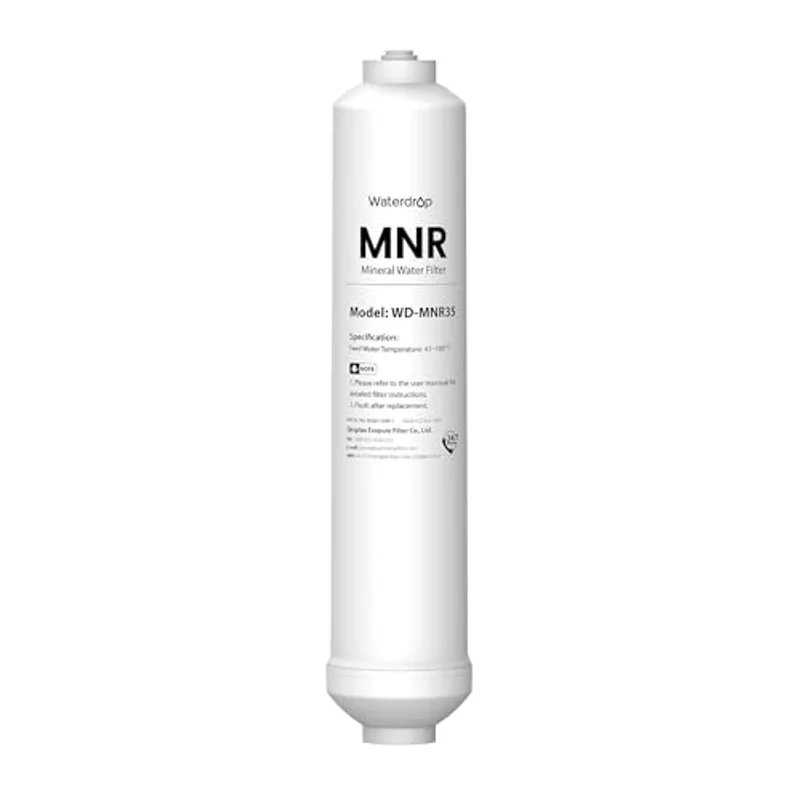
Waterdrop MNR35 remineralization filter
For a system you already own
9–12 months or 1,100 gallons · fits 1/4-inch & 3/8-inch quick-connect · inline · adds calcium, magnesium, sodium, potassium
This is the hardware that makes the whole mineral debate low-stakes. Because it's built for 1/4-inch and 3/8-inch quick-connect tubing — what essentially every under-sink RO system sold in the US uses — it retrofits to almost anything, with no brand matching and no adapter hunt. Waterdrop rates it for 9 to 12 months or 1,100 gallons and suggests changing at nine. Two caveats: the manufacturer says not to connect it to a hot-water line, and an inline stage adds two push-fit joints under your sink. Check both with a dry paper towel an hour after fitting, and again next morning.
If you know you're keeping the system for years, the two-pack — Waterdrop MNR35-2, $56.99 — is the same filter in a longer supply.