Best RO Systems
Home › Guides › PFAS testing claims
Water quality

PFAS and RO Systems: Which Claims Have Actual Testing Behind Them

We're reader-supported: buying through our links may earn us a commission at no extra cost to you. What follows compares published specifications, named third-party tests and certification standards exactly as each listing states them — we don't run a testing lab.

Reverse osmosis filter cartridges and a water-testing report laid out beside an under-sink filtration system

"Removes PFAS" is now a stock phrase on reverse osmosis boxes, and it covers an enormous range of actual proof. Some listings cite a named independent lab and a specific test. Some cite a published standard number. Some cite neither and just print a count — "84 contaminants" — and let the parenthetical "(PFAS)" do the persuading. All three phrasings can be true. They are not the same claim, and they are not backed by the same amount of work.

PFAS — per- and polyfluoroalkyl substances — is not one chemical. It's a family of several thousand synthetic compounds built around a carbon-fluorine backbone, used for decades in nonstick coatings, stain- and water-resistant fabric treatments, food packaging and firefighting foam. The same carbon-fluorine bond that makes them useful is also why they've earned the "forever chemicals" nickname: it's one of the strongest bonds in organic chemistry, and it resists the processes — sunlight, microbial breakdown, ordinary water treatment — that degrade most other pollutants. Once PFAS gets into a groundwater supply or a municipal system, it tends to stay there, which is why the U.S. EPA moved to set enforceable drinking-water limits for several specific PFAS compounds in 2024.

That family structure matters for filtration, because PFAS compounds don't all behave alike. Long-chain compounds like PFOA and PFOS are the ones most commonly named on marketing copy and the ones early research focused on. Shorter-chain replacement compounds — GenX, PFBS, and others — were developed partly because they move through some treatment processes more easily, which makes them a harder target, not an easier one. A claim that only ever mentions PFOA and PFOS is answering a narrower question than "does this remove PFAS."

Here's why the membrane is the part that actually carries this claim. A reverse osmosis system is a stack of stages — sediment, carbon, membrane, sometimes UV and remineralization after it — and each one does a specific job. Sediment and carbon stages work by trapping particles or adsorbing dissolved compounds onto a surface; how well they catch any particular contaminant depends on that contaminant's size, charge and chemistry, and it varies compound to compound. The RO membrane works differently: it's a semipermeable barrier with pores small enough to physically exclude almost anything dissolved in water, including compounds the upstream stages weren't built to catch. That size-exclusion mechanism is why a system's PFAS claim is really a claim about the membrane's integrity and the test method used against it — not about the whole box, and not reducible to a stage count.

Third-party testing versus a certification mark: what SGS and NSF/ANSI 58 each actually check

These two phrases get used almost interchangeably in marketing copy, and they describe two different kinds of evidence.

SGS testing. SGS is a global inspection and testing firm; when a listing says a product is "SGS tested," it typically means the manufacturer commissioned SGS to run a sample unit against a defined test protocol and issue a report or certificate for that specific claim. The iSpring RO5004F-AK's own listing title states this directly: "SGS Tested PFAS and TDS Reduction." That's useful evidence — an outside lab ran the test rather than the manufacturer grading its own homework — but it's still typically a point-in-time report on a sample unit, commissioned by the company whose product it's testing, rather than an ongoing program with independent audits of every production run.

NSF/ANSI 58. This is a published American National Standard, developed through NSF International under ANSI accreditation, written specifically for point-of-use reverse osmosis drinking-water treatment systems. A system "certified to NSF/ANSI 58" has been evaluated by an accredited certifying body against that standard's test protocol, and — unlike a one-off lab report — the manufacturer has to keep earning the mark: periodic facility audits and retesting are part of staying certified, not a one-time hurdle. The Frizzlife PD600-TAM3's listing cites "NSF/ANSI 58&53&42&372 Standard," stacking four different certifications that cover different things — 58 for contaminant/TDS reduction, 53 for health-effects reduction claims, 42 for aesthetic effects like taste and chlorine, 372 for lead-free material compliance.

The catch, and it's the one worth sitting with: NSF/ANSI 58 covers contaminant and TDS reduction broadly, and a manufacturer chooses which specific contaminants to test and certify against it. A product can legitimately say "certified to NSF/ANSI 58" while the certified claim list behind that number covers a general reduction profile rather than a PFOA/PFOS-specific line item — the standard number alone doesn't say which compounds were on the test list. Frizzlife's own listing places "Reduce FPAS/PFOA" as a separate bullet apart from the standard numbers, rather than tied explicitly to the 58 certification — and that typo in the listing ("FPAS" for PFAS) is a small, concrete reminder that bullet copy is marketing text, not a certificate. The standard number is real. Whether the PFAS claim is what was actually tested under it is a separate question, answered by looking up the certified claim on the certifying body's public listing rather than the product title.

Reading an "84 contaminants" claim

The AquaTru Glass Carafe system's listing states it "Removes 84 Contaminants Including PFOA & PFOS (PFAS), Lead and Microplastics." That's a different kind of claim than either of the two above — no named independent lab, no cited standard number, just a count with a few headline contaminants pulled out in parentheses.

A contaminant count by itself bundles together things that have almost nothing in common except that a filter was tested against them. "84 contaminants" can mean disinfection byproducts, volatile organic compounds, heavy metals, pesticide residues, pharmaceuticals, microplastics and PFAS all counted on the same list — which makes the number read as one undifferentiated score when the underlying performance against each contaminant class can vary enormously. A system can be genuinely strong against several chemical families and still only have middling data on the specific PFAS compounds a buyer actually cares about; the headline number doesn't distinguish between those cases.

What the number doesn't tell you, specifically: which of the thousands of PFAS compounds were included (the title names only PFOA and PFOS, which are two of the most-studied long-chain compounds, not the shorter-chain replacements increasingly found in supply); what the starting concentration was during testing and what percentage reduction was achieved, as opposed to simply listing "PFOA & PFOS" as included on a panel; and whether the figure comes from an accredited independent lab or from the manufacturer's own internal testing against a panel it selected. None of that means the claim is false. It means a count is a summary, not a document, and a buyer who wants to know what actually backs "removes PFAS" has to ask for the document underneath the number — the same instinct that matters when comparing how stage counts get inflated on marketing copy generally.

Where the carbon pre-filter stage contributes — separately from the membrane

It's worth being precise about what the carbon stage is actually doing, because "activated carbon" shows up on PFAS marketing copy almost as often as the membrane does, and the two don't do the same job. Granular activated carbon and carbon block stages work by adsorption: contaminants stick to the carbon's surface as water passes through. That mechanism does have some effect on PFAS — activated carbon can adsorb certain PFAS compounds, particularly longer-chain ones like PFOA and PFOS, to a meaningful degree. But adsorption capacity is finite, it varies by compound (shorter-chain PFAS adsorb to carbon less readily than long-chain ones), and a carbon bed exhausts gradually and silently, with no taste change signaling that its PFAS-adsorption capacity in particular has run out the way a chlorine taste signals exhausted capacity for chlorine.

The membrane's size-exclusion mechanism, by contrast, doesn't depend on a compound's chemistry sticking to a surface — it depends on whether the molecule is small enough to pass through the pores, which makes it the more consistent mechanism across the PFAS family regardless of chain length. That's why a PFAS claim tied to the membrane stage (where SGS or NSF/ANSI 58 testing is typically aimed) is stronger evidence than a claim leaning on "includes a carbon filtration stage" as supporting detail. Carbon still matters — it protects the membrane from chlorine, which otherwise degrades the thin-film membrane material over time — but it's insurance for the membrane's lifespan, not a substitute for the membrane's PFAS claim. Replacing that pre-filter on schedule, as covered in our guide to systems that ship with a spare filter set, keeps the tested configuration intact.

How we read these claims

The listing's own words, checked against what the term means

For each system below, we used only the test or certification language that appears in the manufacturer's own Amazon listing title — we did not look up third-party certification databases to confirm or expand on what's printed there, and we say so plainly rather than implying a deeper audit took place. What we did do is explain what each cited term (SGS testing, an NSF/ANSI standard number, a contaminant count) actually obligates the manufacturer to, so the same three words don't all land as equally convincing.

What we're not claiming

No lab, no verified concentrations, no ranking of "safe"

We don't physically test these systems and we don't run a testing lab. We also aren't verifying the specific PFAS concentrations any of these three systems reduce water to, because none of these listings publish that figure for us to check. This article ranks how much documentation each listing cites for its PFAS claim — a named test, a certification standard, or neither — not how effective each system is at removing PFAS in your specific water supply, which depends on your water and isn't something a product listing or this article can tell you.

The picks

Three systems, ranked by how much documentation backs the PFAS claim

Ordered by the strength of the paper trail behind "removes PFAS" on each listing — not by price, output or any other spec. Confirm the live price before buying.

SystemPFAS claim is backed byForm factorPrice
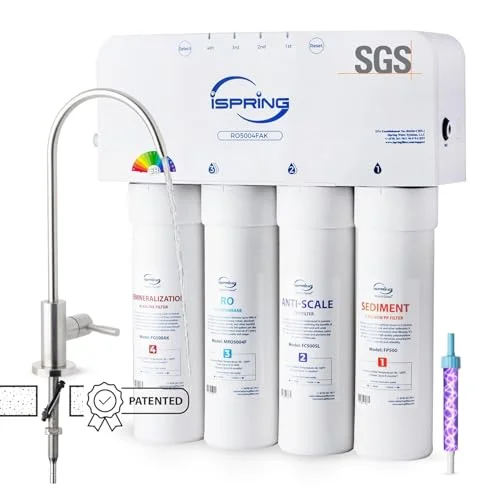
iSpring RO5004F-AKNamed third-party test (SGS)Tankless under-sink$319.49Price
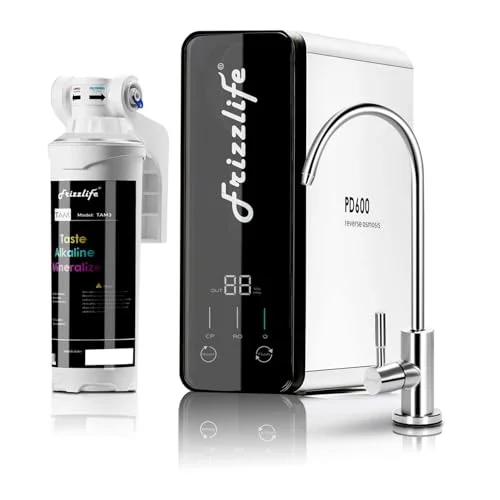
Frizzlife PD600-TAM3Certification standard numbers (NSF/ANSI 58, 53, 42, 372)Tankless under-sink$359.99Price
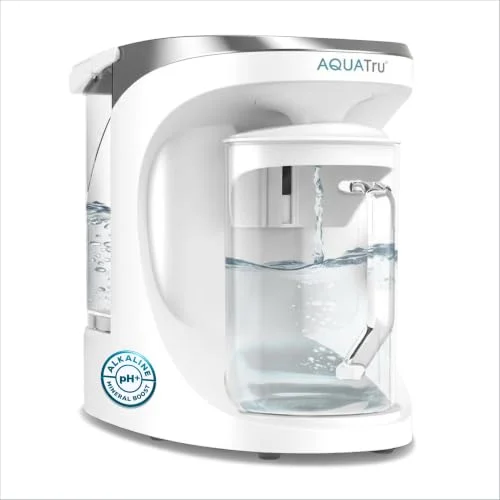
AquaTru Glass CarafeContaminant count, no named lab or standardCountertop carafe$316.00Price
01Most documented

iSpring RO5004F-AK

A named independent lab, stated on the listing itself
SGS Tested PFAS & TDS Reduction · 500 GPD · UV · alkaline · 2:1 pure to drain · filter life monitor

This is the only one of the three whose listing title names the testing organization directly: "SGS Tested PFAS and TDS Reduction." That's a meaningfully different claim from a certification standard number or a bare contaminant count, because it points to a specific outside party that ran a specific test, rather than asking a buyer to trust an unattributed figure. It's a tankless under-sink system rated at 500 GPD with a 2:1 pure-to-drain ratio, adds a UV stage and alkaline remineralization, and includes a filter life monitor to track cartridge wear by usage rather than the calendar. What the listing doesn't give us: the tested PFAS concentration, the specific compounds on SGS's test panel beyond "PFAS" as a category, or whether the certificate is dated to the current production run. Ask the manufacturer for the SGS report itself before treating the listing phrase as the full picture.

iSpring RO5004F-AK UV alkaline reverse osmosis system
$319.49
SGS testedCheck price →
02Certified, claim unclear

Frizzlife PD600-TAM3

A heavier compliance bar, loosely connected to the PFAS line
NSF/ANSI 58, 53, 42 & 372 · 600 GPD · alkaline mineral pH+ · 2:1 pure to drain · tankless

Four certification standard numbers on one listing is a heavier documentation load than a single commissioned test — NSF/ANSI certification carries ongoing audit and retesting obligations that a one-time report doesn't. But the listing's PFAS language — "Reduce FPAS/PFOA" (the typo is in the listing as written) — appears as its own bullet point, separate from the string of standard numbers, rather than explicitly tied to which of those four standards the PFAS claim was certified under. NSF/ANSI 58 covers contaminant and TDS reduction broadly; it doesn't automatically mean PFOA/PFOS specifically was the certified line item without checking the certifier's listing. It's a capable tankless system on paper — 600 GPD, a 2:1 drain ratio, alkaline remineralization — and the certification stack is real. What's missing from the listing is the explicit link between that stack and the specific PFAS bullet.

Frizzlife PD600-TAM3 tankless reverse osmosis system
$359.99
NSF/ANSI certifiedCheck price →
03Count only

AquaTru Glass Carafe

No install, no plumbing — and no named lab or standard on the listing
Removes 84 contaminants incl. PFOA & PFOS · 4-stage · countertop · alkaline minerals

The weakest paper trail of the three, by what's actually printed on the listing: a contaminant count with PFOA, PFOS, lead and microplastics called out in parentheses, but no named independent test lab and no cited certification standard anywhere in the title. That doesn't mean the number is wrong — it means the listing gives a buyer less to independently check than either of the other two. Where this system earns its place is use case, not documentation: it's a countertop carafe unit with no plumbing, no drain saddle and no faucet hole required, which matters for renters or anyone who can't modify a sink. The 4-stage design and alkaline remineralization are both stated plainly. If the PFAS claim specifically is the deciding factor, this is the one to call the manufacturer about before buying — ask for the test report behind the 84-contaminant figure rather than relying on the count itself.

AquaTru Glass Carafe countertop reverse osmosis water purifier
$316.00
Countertop · no installCheck price →

Questions worth asking a manufacturer that a listing's bullet points won't answer

None of the three listings above publish everything a buyer would need to fully evaluate a PFAS claim — that's not unusual. It just means the real document lives one step past the product page. These are the questions that get you there:

  • Can you send the actual test report or certification listing, not just the product description? A PDF from SGS or a lookup on the certifying body's public database is a different thing from a bullet point, and a manufacturer confident in its claim should be able to produce one.
  • Which specific PFAS compounds were included in the test — only PFOA and PFOS, which is what most listings name, or the broader group of PFAS now subject to enforceable drinking-water limits?
  • What was the feed concentration and the percentage reduction achieved? "Removes PFAS" without a number attached is a claim; a feed-to-product reduction percentage against a stated starting concentration is a result.
  • Is the certification or test tied to the exact cartridges and membrane you'd install at replacement time, two or three years in, or only to the unit as it shipped new? A PFAS claim on the original membrane doesn't automatically carry over to every generic replacement part.
  • Is this a one-time commissioned test or an audited, ongoing certification program with periodic retesting — the distinction covered above between an SGS report and an NSF/ANSI standard matters here directly.
  • If you're considering a used or renewed unit, does the PFAS documentation transfer with it, or does it only apply to a factory-fresh membrane? Our guides to buying a used system and Amazon Renewed listings both cover why a certification printed on the box doesn't always describe the actual filter media sitting inside a resold unit.

None of these questions require a chemistry background to ask. They require treating "removes PFAS" the way you'd treat any other specific claim on a purchase that matters: as something you can ask to see the evidence for, rather than something you take on the strength of a bullet point.

FAQ

Common questions

Is SGS testing the same thing as an NSF/ANSI certification?

No. An SGS test is typically a report a manufacturer commissions from an independent lab against a defined protocol — real outside verification, but usually a point-in-time result for a sample unit. An NSF/ANSI certification, like NSF/ANSI 58 for reverse osmosis systems, is tied to a published standard and requires ongoing compliance — periodic audits and retesting — to keep using the mark. Both are stronger than an unverified manufacturer claim; they're not interchangeable with each other.

What does an "84 contaminants removed" claim actually tell me?

It tells you a product was tested against a panel of 84 substances and performed well enough on each to be counted, but the number bundles very different contaminant types together — heavy metals, disinfection byproducts, PFAS and more — without showing the reduction performance for any single one. It doesn't tell you which specific PFAS compounds were on the panel, the starting concentration, or whether an independent lab ran the test. Ask the manufacturer for the underlying report if a specific contaminant class is your reason for buying.

Can a carbon pre-filter remove PFAS on its own?

Partially, and inconsistently. Activated carbon can adsorb some PFAS compounds, particularly longer-chain ones like PFOA and PFOS, but its capacity is finite, it varies by compound, and it exhausts without an obvious warning sign the way a chlorine taste signals exhausted capacity for chlorine. The RO membrane's size-exclusion mechanism is the more consistent barrier across the PFAS family regardless of chain length, which is why PFAS testing claims are usually aimed at the membrane stage rather than the carbon stage alone.

What's the single most useful question to ask before trusting a PFAS claim?

Ask for the actual test report or the certification listing on the certifying body's public database — not the product description. A specific document naming the compounds tested, the concentrations and the reduction percentage is categorically more useful than any phrase printed on a box, whether that phrase is a lab name, a standard number, or a contaminant count.

Keep reading

Next, if you're still evaluating a system