Best RO Systems
Home › Guides › Extra filter sets included
Buying advice

RO Systems That Ship With a Spare Filter Set: What You Actually Save

We're reader-supported: buying through our links may earn us a commission at no extra cost to you. We compare published listings, specifications and prices — we don't run a testing lab.

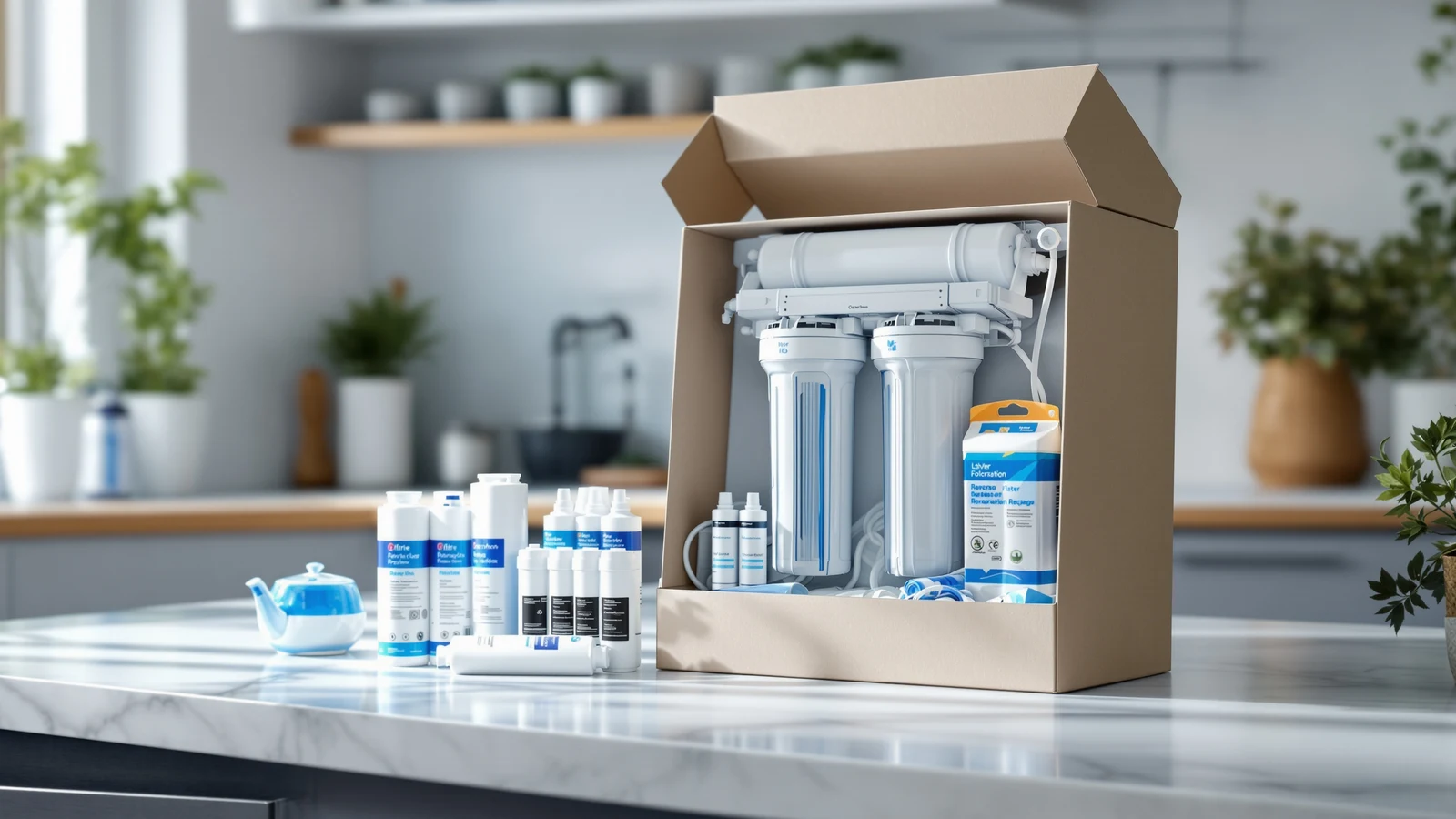
An under-sink reverse osmosis system box next to a second, sealed set of replacement filter cartridges

Scroll a handful of reverse osmosis listings and you'll see the phrase sooner or later: extra filters included, a full year of filters, bonus filter set at checkout. It sounds like free money — maintenance you'd otherwise pay for later, thrown in at no extra charge. Sometimes that's exactly what it is. Sometimes it's a single pre-filter tucked into the box and called a "set" because one cartridge technically qualifies as a set of one.

The words don't tell you which. What tells you is the stage count and what the listing's own bullet points specify is inside — and that's worth working through before you let a bundle tip a purchase decision, because the three systems we're using as examples here sit at three different points on that spectrum without any of them spelling it out plainly.

A full second set, or just the parts that wear out fastest

Every RO system, regardless of brand, is built from two kinds of consumable: fast-wearing stages — sediment and carbon, typically rated six to twelve months — and the RO membrane itself, which is the most expensive single part and normally lasts two to three years because it fouls gradually rather than clogging on a schedule. We broke that distinction down in detail, with real cartridge prices, in our filter replacement cost guide, and it matters here for one reason: when a listing says "extra filters included," it is almost always talking about the first category, not the second. A spare membrane bundled free at checkout would be an unusual claim for a sub-$300 system to make, and none of the three listings we looked at for this piece make it.

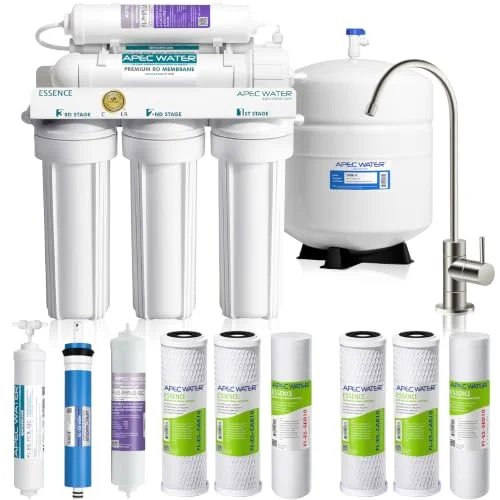
The APEC Water ROES-PH75X is the clearest example of the claim actually being made: its title states "Extra Filters" outright, and the specific listing we priced is sold under a "Value Bundle" variant — language that exists specifically to separate it from whatever base configuration APEC also sells. What the title does not do is itemize which of the six stages are duplicated. That's not unusual, and it's not necessarily a red flag either — it's just a gap you have to close yourself, which is the whole subject of the "reading the bullet points" section below.

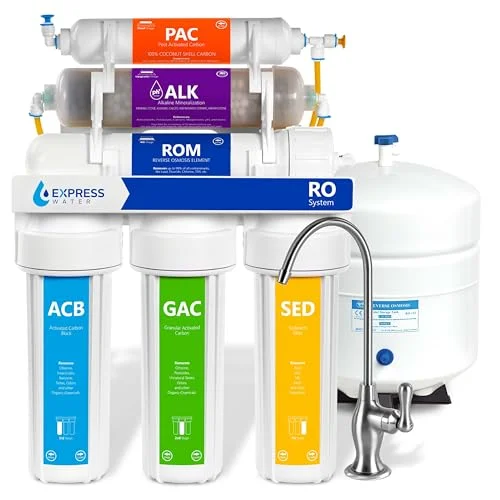
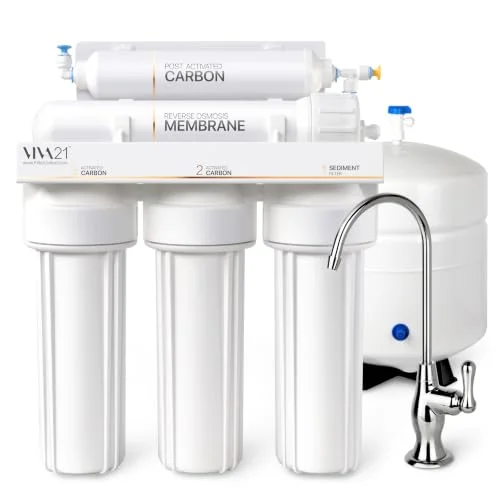
Compare that with the other two systems here. The VIVA21 5-Stage Reverse Osmosis System advertises its WQA Gold Seal certification to NSF/ANSI 58 and 372, a lead-free faucet, a tank and a leak detector — a full page of claims, and "extra filters" is not one of them. The Express Water ROALK10D, a 10-stage alkaline system rated at 100 GPD, leads with stage count and output instead. Absence of the claim isn't proof of absence of a spare part somewhere in the box — manufacturers bury plenty of real inclusions in bullet six or seven — but you should not assume a bundle exists where the listing never says so, and you should not pay a premium expecting one.
At a glance

What each listing actually claims

Stage count and the bundle claim, exactly as published. Prices move on Amazon — confirm the live price before buying.

SystemStagesListing claims extra filters?VariantPrice
APEC ROES-PH75X6-stage, alkalineYes — in the titleValue Bundle$249.99Price
Express Water ROALK10D10-stage, alkalineNot stated100 Gallons/Day$229.99Price
VIVA21 5-Stage RO System5-stageNot statedStandard$199.99Price

Pricing the bundle: what a spare set is actually worth

The honest way to value a bundled filter set is to ask what it would cost to buy the same cartridges on their own, the day after your warranty clock starts. That's a question the listing itself rarely answers, and it's worth being upfront about what we could and couldn't verify for these three systems.

We have sourced, real replacement-cartridge prices for other systems on this site — an APEC pre-filter three-pack at $23.99, a full iSpring nine-cartridge annual set at $69.24, a Waterdrop twist-in front filter at $29.99 — all broken down in the filter cost guide. Those numbers establish the honest range for standard-housing and alkaline systems: roughly $50 to $90 a year once you account for a full stage lineup. None of them, though, are the specific replacement part numbers for the APEC ROES-PH75X, the Express Water ROALK10D, or the VIVA21 5-stage system named here. We went looking for standalone replacement listings tied to these exact ASINs and could not source verified prices for any of the three — which is itself the finding, not a gap we're going to paper over with a plausible-sounding number.

What that means practically: don't trust a bundle's advertised value, because there usually isn't one printed anywhere. Judge it structurally instead. A 10-stage system like the Express Water ROALK10D has more individual cartridges in a complete set than a 5-stage system like the VIVA21 — so if either of them shipped with a genuine spare set, duplicating ten stages is worth more in raw parts than duplicating five, even without a dollar figure attached. The APEC ROES-PH75X's "Extra Filters" claim, on a 6-stage alkaline system, sits in between. More stages to duplicate is not the same as a better deal, though — it only tells you the ceiling on what the bundle could be worth, not what you actually paid for it, since none of these three list a bundle price next to a no-bundle price for the same model to show you the premium.

The six-months-later test is the one that actually settles it. When the first sediment or carbon stage is due for replacement, go back to the same brand's storefront and search for the exact replacement part. If you can find it and price it, you can finally do the subtraction that tells you whether the bundle saved you money or just moved the expense earlier. If you can't find a standalone listing at all — which, on the evidence here, is a real possibility with at least one of these three — that's worth knowing before you buy, not six months after.

Do bundled filters degrade sitting in a drawer for a year?

This is the question that makes a "free" spare set less obviously free, and it has a real answer, even though none of the three listings here publish a shelf-life figure for their included parts.

Sediment and carbon cartridges are shipped sealed — in a bag, a shrink-wrap sleeve, or a sealed cartridge housing — and that packaging is doing real work. As a general rule across the category, manufacturers commonly rate a sealed, unopened cartridge for one to two years of storage before the clock that matters — exposure to water and the contaminant load it's filtering — ever starts. That's good news for a spare set bought today and not needed for six to twelve months: the gallons-or-months rating printed on the box is almost always counted from first use, not from the date you bought it. A spare that sits sealed in a cabinet for most of a year is not quietly spending down its rated life while it waits.

What does matter is the seal itself. Activated carbon is porous by design, which is exactly what makes it good at adsorbing chlorine and odor compounds — and exactly what makes it vulnerable to absorbing whatever is in the air around it if the packaging is torn, punctured, or left open. A spare cartridge stored loose in a damp under-sink cabinet, next to cleaning products, with a compromised seal, can pick up odors or lose capacity before it's ever installed. Store spares the way you'd store any sealed consumable: dry, at room temperature, in the original packaging, away from solvents and strong-smelling cleaners — and don't crack the seal to "check" a filter you're not installing yet.

The RO membrane is the one part of the system where shelf life genuinely gets more particular, which is part of why bundled "extra filters" so rarely include one. Membranes are typically shipped either dry with a preservative coating or wet-packed, and the manufacturer's instructions for the specific storage method matter more than a generic rule. Since none of the three systems here advertise a spare membrane as part of their bundle, that particular storage question doesn't apply to what you'd actually be getting — another reason it's worth confirming exactly which stages are in the "extra" set before you assume you've prepaid for the expensive part too.

Reading the listing bullet points that actually specify what's included

Since the headline claim rarely breaks down the contents, the real information is further down the page. A few places to check before you buy, in the order we'd check them:

  • The stage-by-stage bullet list. Most RO listings number their stages (sediment, GAC, carbon block, membrane, post-carbon, alkaline, and so on). If a bundle is real, the listing should say which of those numbered stages come twice — not just that "filters" are included.
  • The "What's in the Box" section. This is usually the most literal accounting on the page, and the one place a seller is least likely to round up. If it lists cartridge part numbers or counts, that count is more trustworthy than the title.
  • Product images showing two full sets laid out. A photo of the box contents with cartridges counted and labeled is better evidence than any adjective in the title. Absence of such a photo isn't proof of absence, but its presence is a good sign the seller is confident in the claim.
  • Whether the membrane is named among the "extra" parts. If the bundle only lists sediment and carbon stages and stays silent on the membrane, assume the membrane is not duplicated — it almost never is, for the reasons above.
  • The Q&A section. Buyers who've already opened the box frequently ask or answer exactly this question — "does the second set include the membrane" or "how many of each cartridge did you actually get." It's publicly visible, free, and more specific than marketing copy.

None of this requires taking the seller's word for anything. It just requires reading past the headline, which is the one step a bundle claim is specifically designed to make you skip.

The picks

Three systems, three different starting points

01Bundle, named

APEC Water ROES-PH75X

The one that actually says "extra filters"
6-stage · alkaline · Value Bundle variant

This is the one listing of the three that puts the claim in the title: "Extra Filters," sold as a Value Bundle variant distinct from whatever base configuration APEC lists elsewhere. That naming alone is a reasonably strong signal the second set is real rather than marketing inflation — sellers who invent a bundle rarely give it its own variant name. What the title doesn't do is break down which of the six stages are duplicated, so before paying the bundle's price over a non-bundle listing of the same system, check the box-contents bullets for a cartridge count rather than taking "extra filters" as a full second kit.

APEC Water ROES-PH75X 6-stage alkaline reverse osmosis system, Value Bundle
$249.99
6-stage · bundleCheck price →
02Most to duplicate

Express Water ROALK10D

If a bundle existed here, it would be worth the most
10-stage · alkaline · 100 GPD

Ten stages is a long cartridge lineup — more sediment, carbon and alkaline parts than either of the other two systems here, which means a genuine spare set on a system like this is structurally worth more than the same claim on a 5- or 6-stage unit, simply because there are more individual parts to duplicate. The ROALK10D's own listing doesn't make the extra-filters claim, so treat it as shipping with one standard set and budget cartridges separately — but it's the clearest illustration of why stage count belongs in the math before any bundle's dollar value does.

Express Water ROALK10D 10-stage alkaline reverse osmosis system, 100 gallons per day
$229.99
10-stage · 100 GPDCheck price →
03No claim made

VIVA21 5-Stage Reverse Osmosis System

The baseline case: one set, and the listing says so by omission
5-stage · WQA Gold Seal · NSF/ANSI 58 & 372 · lead-free faucet · tank · leak detector

VIVA21 spends its listing on certification and hardware — WQA Gold Seal to NSF/ANSI 58 and 372, a lead-free faucet, a tank, a leak detector — and says nothing about a spare filter set. Take that at face value: budget for one standard set of cartridges on the normal six-to-twelve-month schedule, not a prepaid year. The leak detector is worth noting on its own terms, separate from the filter question — it's a feature some competing systems at this price skip entirely.

VIVA21 5-stage reverse osmosis system with tank and leak detector
$199.99
5-stage · tankCheck price →

When skipping the bundle and buying as-needed is the smarter money

A spare set bundled at checkout isn't automatically the better deal, even when it's genuine. A few situations where buying filters only when you actually need them beats paying for two sets up front:

Light households on the gallon rating, not the calendar. Cartridge life is almost always printed as months or gallons, whichever comes first — and a one- or two-person household that drinks RO water occasionally can take well past a year to use the gallons a "six-month" filter is rated for. If your usage is light, a spare set may sit unused well past the point where buying it fresh, closer to when you'll actually install it, made more sense than paying for it at checkout.

You're not committed to the system long-term. Renting, planning a move, or simply not sure this is the system you'll keep for years — a prepaid spare set is money tied to a specific piece of hardware you might not own when the filters are due. Buy-as-needed keeps that decision open.

The non-bundle version is meaningfully cheaper and you can't verify the premium. If a bundle variant costs more than a standard listing of the same or a comparable model and you can't find a standalone price for the same cartridges to check the math — which, as covered above, was the case for all three systems here — you're paying a premium you can't audit. A known price for a known part, bought when you need it, beats an unverifiable bundle premium.

Your system tracks filter life for you. Systems with a TDS or filter-life display, or simply a transparent first housing you can see sediment loading in, give you a real-time signal for when a cartridge is actually due — which makes buying on-demand, matched to that signal, more accurate than any prepaid schedule. Our guide to RO systems with smart displays covers which systems give you that readout versus which ask you to track it yourself.

None of this makes a genuine bundle a bad idea by default — if the premium is small and the system is a long-term fixture in your kitchen, prepaying for the first set you'll need anyway is a reasonable convenience. It just means the bundle should win on verified math, not on the word "included" doing the persuading by itself.

Go deeper

Related reading

On filter economics, certification and the brands behind these three systems specifically.

If the alkaline stage on the Express Water or APEC system is part of what's drawing you to it, our honest look at whether alkaline RO water actually does anything is worth reading before the filter-cost math, since the alkaline cartridge is one more part on the replacement schedule. And because APEC is one of the three brands we compare most often on this site, our Waterdrop vs. iSpring vs. APEC breakdown has the wider context on how its certification and cartridge philosophy compares with its two biggest competitors.

FAQ

Questions people ask about bundled filter sets

Does "extra filters included" mean a full spare set or just the fast-wearing stages?

Almost always the fast-wearing stages — sediment and carbon, typically rated six to twelve months — rather than the RO membrane, which lasts two to three years and is the most expensive single part in the system. The APEC ROES-PH75X states "Extra Filters" in its title but, like most listings, doesn't itemize which of its six stages are duplicated. Check the "What's in the Box" bullets or product images for a cartridge count before assuming the membrane is included.

Do bundled filters go bad sitting in a drawer before I install them?

Not meaningfully, as long as they stay sealed. Manufacturers commonly rate a sealed cartridge for one to two years of storage, and the gallons-or-months clock that matters usually starts at first use, not at purchase. The real risk is a compromised seal — activated carbon is porous enough to absorb ambient odors or moisture if the packaging is torn or left open, so store spares dry, at room temperature, away from strong-smelling cleaners.

Is it cheaper to take the bundle or buy filters separately later?

It depends on a premium you usually can't verify up front. We could not source standalone replacement-cartridge prices for the APEC ROES-PH75X, Express Water ROALK10D or VIVA21 systems specifically, which means there's no published number to subtract the bundle's price against. The honest test is to check the brand's storefront for the standalone replacement part when your first filter is actually due — if you can price it, you can do the math; if you can't find it at all, that absence is itself worth knowing before you buy.

How can I tell from the listing what's actually in the "extra" set?

Read past the title. Check the numbered stage-by-stage bullet list, the "What's in the Box" section, any product photo showing the cartridges laid out and counted, and the Q&A section, where previous buyers often ask exactly this question. A listing that names specific cartridges or shows a labeled photo is more trustworthy than one that only uses the word "included."

Keep reading

Next, if you're still choosing