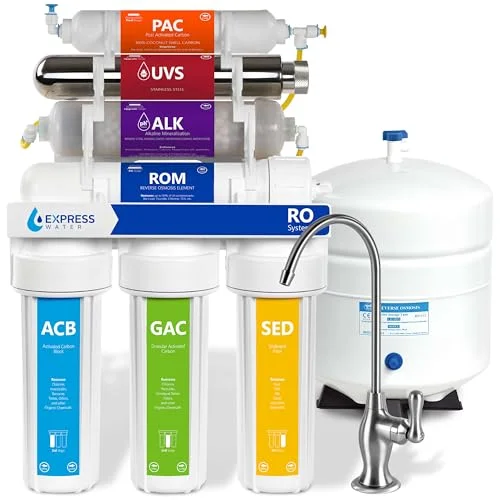
The three stages no RO system can skip
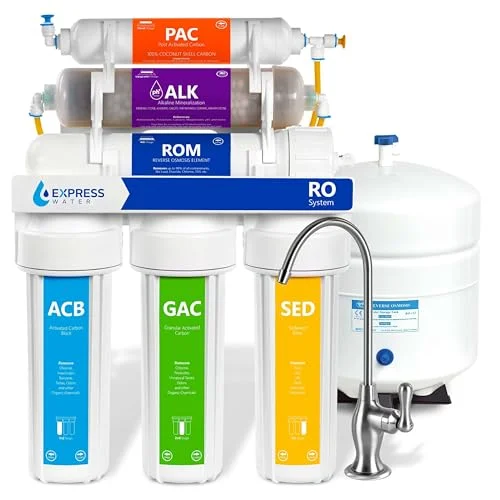
Strip the marketing off any of these four boxes and there are exactly three jobs that have to happen, in this order, or what comes out of the faucet isn't reverse osmosis water at all.
Sediment. A spun or pleated filter catching sand, rust flakes and particulate before anything else touches the water. It is the cheapest, crudest stage in the system, and it exists as much to protect everything downstream as to clean the water itself.
Carbon. Activated carbon stripping chlorine, chloramine and the taste and odor that come with them. This stage is not a courtesy — free chlorine will attack and shorten the life of the thin-film composite membrane that comes next, so carbon is doing protective work as much as cosmetic work.
The membrane. The actual reverse-osmosis step: a semi-permeable membrane that rejects dissolved solids down to a fraction of a micron, under pressure, sending part of the feed water to drain as reject. Take this stage away and there is no RO system left, just a carbon filter.
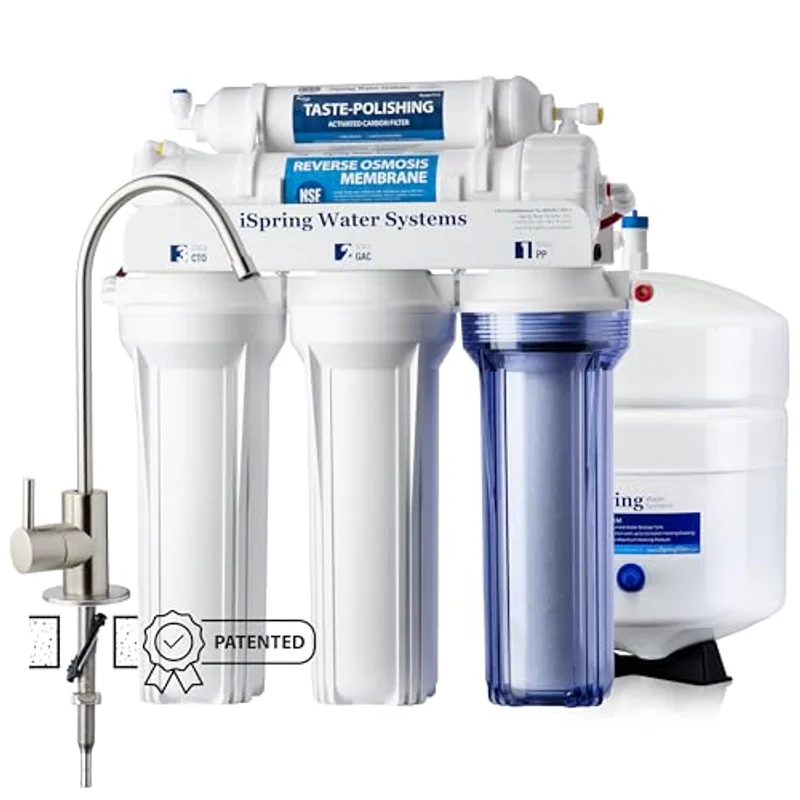
Sediment, carbon, membrane — that's the floor. Almost every listing adds one more thing on top as a near-default fourth: a post-carbon polish after the membrane, giving the water a final pass before it reaches the faucet. The iSpring RCC7-BN's own "5-stage" count is a clean illustration of how the arithmetic works: sediment is stage one, the carbon job gets split into a granular-carbon stage and a carbon-block stage (two and three), the membrane is stage four, and the post-carbon polish is stage five. Three hard requirements, one near-universal addition, and the number on the box already depends on whether the carbon job got counted once or twice.