Best RO Systems
Home › Guides › Smart display RO systems
Buying guide

RO Systems With Smart Displays: Which Touch Panels and TDS Readouts Earn Their Price

We're reader-supported: buying through our links may earn us a commission at no extra cost to you. Every display claim below comes from the manufacturer's own Amazon listing — we compare published specifications and the engineering behind them, we don't run a testing lab.

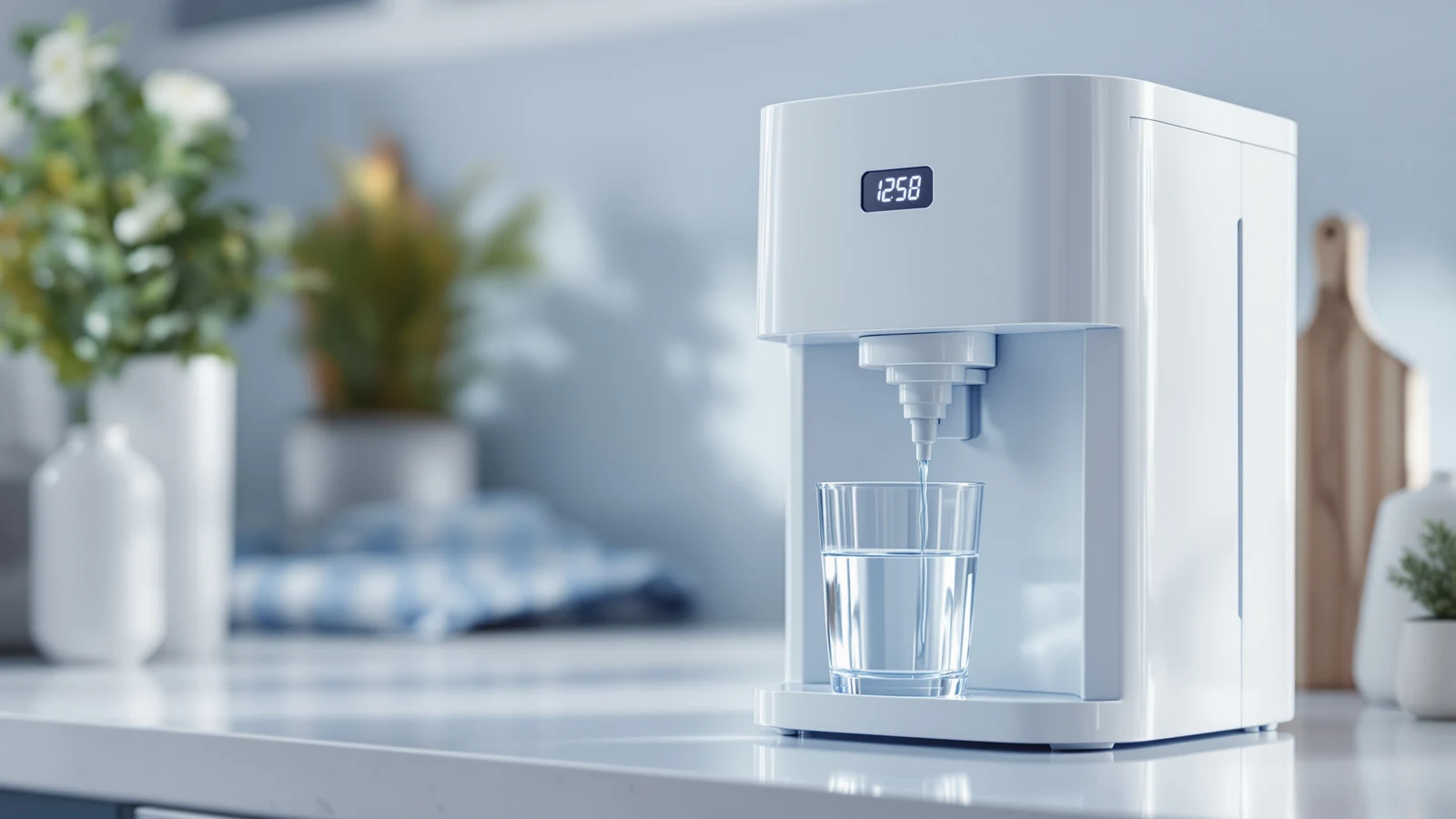
Countertop reverse osmosis water filter systems with digital touch displays showing TDS and filter-life readouts on a kitchen counter

A glowing panel is not automatically a measurement

Four countertop reverse osmosis systems in our database advertise some version of a "smart display," and the phrase is doing a lot of work. Open the listings and the display is actually three unrelated jobs sharing one screen: a water-quality readout, a filter-life reminder, and a dispensing control. Only one of those three is a sensor reporting something it measured. The other two are, respectively, a countdown and a convenience setting — useful, but not evidence of anything happening inside the membrane.

That distinction matters because a buying decision built on "it has a smart display" collapses the moment you ask which job that display is doing. A total-dissolved-solids number is a real electrical measurement, even if a blunt one. A filter-life reminder can be counting gallons that actually passed through the cartridge, or counting days since you plugged the thing in — two different claims wearing the same icon. A cup-size selector is a timer on a pump, full stop, and tells you nothing about what's left the water by the time it reaches the glass.

We pulled the four countertop systems in our database that specifically advertise a display or touch-panel feature — a different question from the tank-capacity comparison we ran on this same category — and read exactly what each listing claims the screen does. The honest finding is that the screen worth paying for and the screen that just looks busy are not always the more expensive one.

TDS readouts: a real-time sensor, or a number the listing never actually names

A total-dissolved-solids reading comes from a genuine instrument: two electrodes measure how well the water conducts electricity, and a chip converts that conductivity into a parts-per-million estimate of everything dissolved in the sample — salts, minerals, and some contaminants, lumped into one number. It is a real sensor doing real work. It is also, by design, not a test for any specific substance; a TDS meter cannot tell the difference between a stray mineral and a contaminant you'd actually want to know about.

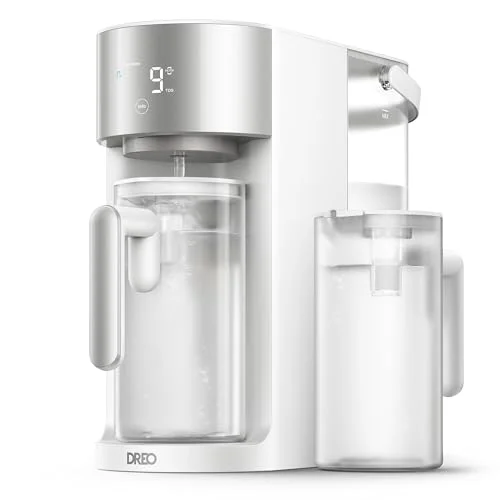
The DREO Reverse Osmosis Water Filter Countertop is the most specific of the four on this point. Its listing states "real-time TDS and filter life monitoring" and describes checking both raw water and pure water TDS — meaning two readings, one before the membrane and one after, displayed together rather than a single ambiguous figure. That's the format a TDS comparison actually needs: a before-and-after pair lets you watch the gap between the two numbers, the same arithmetic a handheld meter would walk you through by hand.

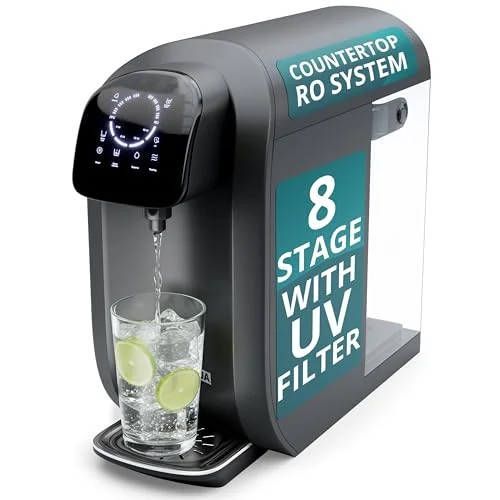
The NU Aqua 8-Stage Countertop Reverse Osmosis Water Filter System with UV doesn't make the same claim. Its touch panel is described as letting you "monitor water levels, choose from multiple cup sizes, and receive automatic filter replacement reminders" — no TDS figure mentioned. Worth reading carefully, too: the same listing credits the "built-in UV-C treatment" with removing "dissolved solids." Read literally, that's the membrane's job, not the UV lamp's — ultraviolet light disinfects by disrupting microorganisms, it doesn't reject dissolved solids.

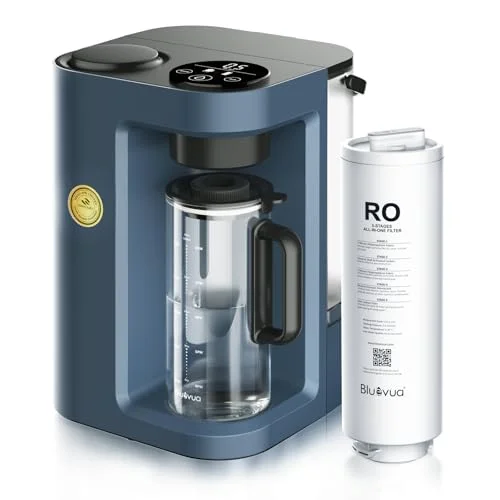
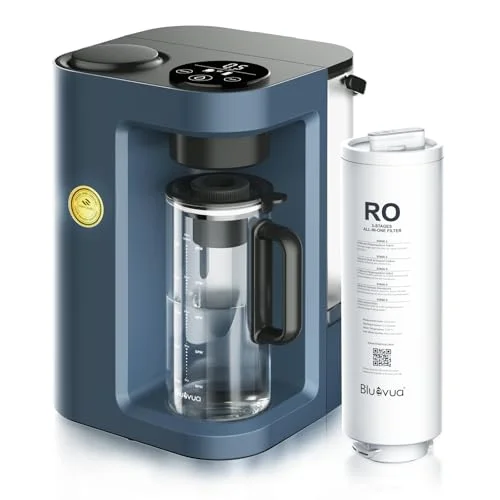
Both Bluevua RO100ROPOT-Lite listings — the base five-stage unit and the seven-stage UV version — describe the panel letting you "monitor water quality in real-time," phrasing that never states a unit, a number, or whether "quality" means a TDS figure. It could be a numeric ppm readout like DREO's; it could just as easily be a simplified good/fair/change-soon indicator. If a specific ppm number is the feature you're shopping for, confirm the display's exact output before assuming it works the way DREO's does.
Filter-life reminders: counting what passed through, or counting days on a clock

A filter-life indicator can run on one of two different mechanisms. A usage-based counter tracks gallons actually dispensed against the cartridge's rated capacity — it adapts to how hard you use the system. A calendar-based reminder just counts elapsed days since installation and assumes a fixed usage rate for everyone, the same blind-average problem behind any "lasts 12 months" sticker.

DREO gives us the most to work with: its filter is rated for 265 gallons (1,000 liters), and the listing pairs that throughput number directly with the "real-time" filter-life claim. A gallon rating is the input a usage counter actually needs; a purely calendar-based reminder has no use for one. That's the strongest signal among the four that the number on the screen is tracking consumption rather than the date.

NU Aqua's "automatic filter replacement reminders" come with no stated gallon rating and no description of how the reminder is calculated — a genuine gap, since without a capacity figure we can't say whether the alert is watching usage or just a calendar.

Both Bluevua listings lean on a single word that tells you more than it might seem to: "annual." The base unit is sized for easy annual filter replacement, and the UV version repeats the once-a-year framing, down to quoting a $0.22-per-day running cost that implies a fixed 365-day cycle. Neither listing publishes a gallon-per-filter figure to anchor a usage counter to. Framing maintenance around a calendar year, with no throughput number in sight, reads like a reminder pegged to the clock rather than a flow sensor — a different claim than DREO's gallon-anchored display, worth knowing before you assume "filter alert" means the same thing on every box.

Whichever mechanism is behind the light, the habit it's trying to build is the one we'd recommend regardless: swap cartridges on schedule rather than waiting for taste to tip you off, since a lingering off-taste is a late signal, not an early one. Every system here also uses a proprietary countertop cartridge rather than a universal housing — a trade-off covered in quick-change versus universal filters and generic versus OEM replacement filters — so the display's reminder is the only prompt you get; there's no transparent housing to eyeball.

Cup-size selection and auto-dispensing: convenience, not filtration

The third job bundled into these displays has nothing to do with what's been removed from the water. NU Aqua's touch panel lets you "choose from multiple cup sizes" before dispensing. Both Bluevua units let you "select the volume of water you wish to dispense and let the system do it automatically," delivering a full carafe in, the listings say, under three minutes. DREO takes a different approach to the same convenience problem: rather than portioning a cup, it automates refilling two included pitchers with an auto-fill sensor, and runs a self-cleaning cycle that auto-flushes the internal tubing between fills.

All of that is a solenoid and a timer sitting downstream of the membrane, solved by the same control board that drives the display. None of it changes what the filtration stages reject upstream. A system with excellent portion control can have ordinary filtration, and a system with no portion control at all — just a tap and a tank — can filter identically well. Treat the dispensing features as real quality-of-life improvements that shouldn't move the needle on how you judge filtration performance. The same logic applies to a larger household's sizing question: a cup-size button is a nice-to-have for one or two people, not a substitute for a system rated for higher daily output.

The picks

The four, and which display feature earned its price

Ranked by how clearly the display claim is specified against price — not by price alone.

01Clearest TDS claim, lowest price

DREO Reverse Osmosis Water Filter Countertop

The best match of price to a stated display feature
$169.99 · 7-in-1 filter · 3:1 pure-to-drain · 265 gal / 1,000L filter life · 2 autofill pitchers

DREO is the cheapest of the four and the most specific about what its display actually shows: real-time TDS for both raw and pure water, plus a filter-life figure tied to a published 265-gallon rating rather than a vague reminder. SGS testing backs the 7-in-1 filter's reduction claims, and the self-cleaning system auto-flushes the internal tubing between fills so the two included 1.1-liter pitchers can auto-refill without you standing over them. The footprint is slim — 14.51" L × 6.73" W × 13.35" H — built for 3 to 4 people. If the TDS readout is the feature you actually want, this listing spells out the most about how it works, at the lowest price of the group.

DREO reverse osmosis water filter countertop system with TDS and filter life display and two autofill pitchers
$169.99
Dual TDS readoutCheck price →
02Most control on the panel

NU Aqua 8-Stage Countertop Reverse Osmosis Water Filter System with UV

For the touch-panel experience over a documented TDS number
$199.94 · 8 stages + UV · 4:1 pure-to-drain · touch display · cup-size selection

NU Aqua's $29.95 premium over DREO buys the most interactive panel of the four — cup-size selection, water-level monitoring and automatic filter reminders on one touch display — plus the best drain efficiency here at a claimed 4:1 pure-to-drain ratio and a tool-free, self-flushing filter change. What it doesn't buy is a documented TDS readout: the listing never states one, and its claim that the UV stage removes dissolved solids is worth reading skeptically, since that's the membrane's job, not the UV lamp's. Judge this one on touch-panel convenience and stage count, not on water-quality monitoring the listing doesn't actually promise.

NU Aqua 8-stage countertop reverse osmosis water filter system with UV and smart touch display
$199.94
Touch display · cup sizesCheck price →
03Glass carafe, same screen

Bluevua RO100ROPOT-Lite Countertop Reverse Osmosis Water Filter

Where the extra money goes to the carafe, not the display
$299.00 · 5-stage · 3:1 filtered-to-waste · WQA / NSF·ANSI·CAN 372 · annual filter

At $299, this is $129.01 more than DREO for a display that claims the same basic job — real-time water-quality monitoring and a filter-change alert — described in vaguer terms, with no stated TDS unit. What the extra money more clearly buys is a high-borosilicate glass carafe in place of a plastic container, a 0.0001μm RO membrane, and SGS testing plus WQA certification against NSF/ANSI/CAN 372. That certification covers lead-free materials, not a performance standard for contaminant reduction. Sized by Bluevua for 1 to 2 people, with filter replacement pegged to once a year rather than a published gallon figure.

Bluevua RO100ROPOT-Lite countertop reverse osmosis water filter with smart LED display and glass carafe
$299.00
LED display · glass carafeCheck price →
04The premium buys stages, not the screen

Bluevua RO100ROPOT-Lite Countertop Reverse Osmosis Water Filter (7-Stage UV)

Proof that a pricier panel isn't automatically a better one
$319.00 · 7-stage + UV + remineralization · 3:1 ratio · WQA / NSF·ANSI·CAN 372 · annual filter

This is the clearest illustration in the lineup that the display and the price aren't moving together. The $20 gap over the base RO100ROPOT-Lite buys two added filtration stages, a UV treatment step, remineralization, and a glass fruit-infuser accessory — not a different or better screen. The one-touch LED panel description is nearly word-for-word the same as its cheaper sibling's: volume selection, automatic dispensing, real-time water-quality monitoring with no stated unit, and a filter alert on the same annual cycle. The listing doesn't publish a size/footprint figure the way the other three do, so confirm dimensions on the current listing before buying. If you're paying $319 expecting a more capable display than the $299 model offers, that upgrade isn't on the spec sheet.

Bluevua RO100ROPOT-Lite 7-stage UV countertop reverse osmosis water filter with LED display
$319.00
LED display · 7-stage UVCheck price →
At a glance

What each display actually claims, side by side

Every figure is the manufacturer's own claim. A dash means the listing doesn't state a number there.

ModelPriceTDS readout stated?Filter alert basisCup / volume select
DREO Countertop RO$169.99Yes — raw & pure, real-time265 gal / 1,000L rating statedAutofill pitchers, not cup selectPrice
NU Aqua 8-Stage UV$199.94Not statedNo gallon figure statedYes — multiple cup sizesPrice
Bluevua RO100ROPOT-Lite$299.00"Real-time quality," no unit namedAnnual — no gallon figure statedYes — select dispense volumePrice
Bluevua Lite 7-Stage UV$319.00"Real-time quality," no unit namedAnnual — no gallon figure statedYes — select dispense volumePrice

What none of these displays can tell you about contaminants

Even the best-specified screen in this lineup — DREO's dual TDS readout — has a hard ceiling on what it can report. A TDS number is a conductivity measurement converted to a dissolved-solids estimate. It cannot distinguish a harmless mineral from lead, arsenic, PFAS, bacteria, or any specific contaminant named on a marketing bullet point. A reading can look fine while something the sensor was never built to detect is still present, and a reading can tick up from ordinary mineral content with nothing concerning behind it. That's true whether the number is flashing on a $170 countertop unit or a lab-grade handheld meter — the limitation is in what conductivity physics can measure, not in any one brand's engineering.

It's also worth naming what's certified here and what isn't. Both Bluevua listings cite WQA certification against NSF/ANSI/CAN 372 — a standard covering lead-free materials in construction, not a performance certification for contaminant reduction. Neither the DREO nor the NU Aqua listing names a specific third-party certification body at all; both lean on SGS-tested marketing language without citing a certificate you can look up. A glowing display is not a substitute for an independently verified performance standard, and the display on any of these four systems is the last place to look for that verification.

If per-contaminant confirmation genuinely matters — well water, a known local issue, or wanting more than a vendor's own number — a standalone, independently certified test is the only way to get it. None of these four screens were built to answer that question, including for sensitive uses like mixing water into baby formula, where water-quality guidance is about minerals and specific contaminants, not a convenience display.

How we picked

Four countertop systems that name a display feature

We looked at the countertop reverse osmosis systems in our database that specifically advertise a smart display, touch panel or digital readout, then pulled the exact wording each listing uses: TDS monitoring, filter-life alerts, cup-size or volume selection. Systems naming only a generic "LED indicator" with no described function didn't qualify.

How we compared

Research, not a lab

We're upfront about the limits here: we don't own these four systems and we don't run a testing lab, so every claim in this guide is the manufacturer's own published wording, checked against how TDS sensing, UV disinfection and filter-life tracking actually work. Amazon's product data doesn't surface star ratings or review counts for any of the four, one more reason this comparison runs on published specifications, not owner sentiment we don't have data for. Prices move — confirm the current price and display wording before buying.

FAQ

Questions people ask about RO displays

Does a smart display on a reverse osmosis system measure contaminants?

No. A TDS readout is a conductivity-based estimate of everything dissolved in the water — minerals and contaminants lumped together — not a test for any specific substance like lead, arsenic or PFAS. None of the four systems here claim per-contaminant detection on their displays, and no countertop display is a substitute for an independently certified lab test if a specific contaminant is the actual concern.

Is the TDS number on these displays a live sensor reading or just an estimate?

It depends on the model. DREO's listing explicitly states real-time TDS monitoring for both raw and pure water. The NU Aqua 8-Stage system and both Bluevua RO100ROPOT-Lite listings describe general "water quality" monitoring without naming a unit or confirming it's a numeric TDS figure, so confirm the exact display output before assuming all four work the same way.

Do filter-life reminders count gallons used or just count down days?

It varies and most listings don't say outright. DREO ties its filter-life claim to a stated 265-gallon (1,000-liter) rating, the kind of number a usage counter needs. Both Bluevua listings frame maintenance around a once-a-year replacement with no gallon figure published, which reads more like a calendar-based reminder. NU Aqua's listing doesn't specify either mechanism or publish a capacity rating.

Does cup-size selection or auto-dispensing affect water quality?

No. Cup-size selection, volume dispensing and auto-fill pitchers are dispensing conveniences — a pump and a timer sitting after the filtration stages are already finished with the water. They change how the water is portioned out, not what was removed from it. A system with no portion-control feature at all can filter identically to one with an elaborate touch panel.

Keep reading

Next, if you're still choosing