How to read a tankless listing's stage breakdown instead of trusting the number
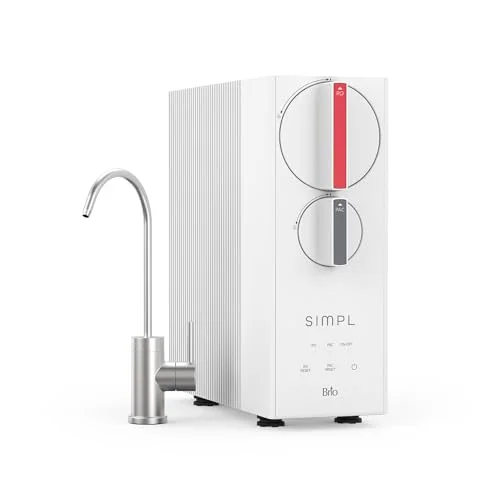
Three checks, in the order we'd apply them to any 800 GPD listing — tankless or otherwise.
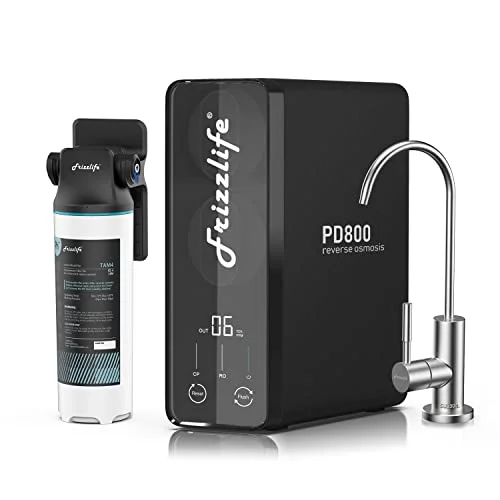
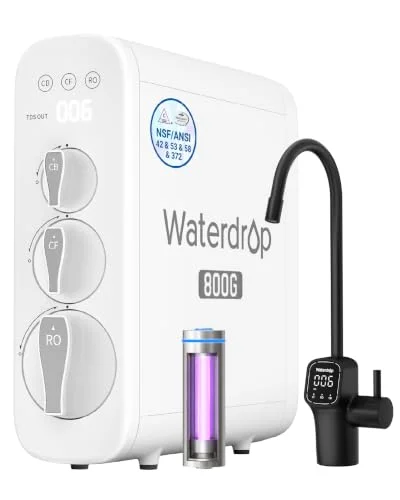
1. Look for named standards, not just a stage count. Frizzlife's listing naming NSF/ANSI 58, 53, 42 and 372 tells you more about what the system actually does than "9-Stage" does on its own — because each standard is a specific, checkable claim about a specific category of removal, not a cartridge tally. A listing with a high stage count and zero named standards, like Waterdrop's G3P800-WCK here, has told you less, not more, regardless of which number is bigger.
2. Ask what job each additional stage over the three-stage floor is doing. Sediment, carbon and membrane are the floor covered in the section above. Every stage past that should map to something: a named remineralization cartridge, a second carbon media for broader coverage, a finer pre-filter. If a listing's extra stages don't map to anything you can name, that is useful information — it tells you the number may be doing more marketing work than filtration work. We walk through the same discipline applied to running costs, where the identical logic applies to cartridge pricing, in our bulk replacement filter pack breakdown.
3. Price the drain ratio and the warranty alongside the stage count, not instead of it. A worse pure-to-drain ratio is a real, ongoing cost that a stage count says nothing about, and it is exactly the kind of spec that gets buried under a bigger, more marketable number. The same goes for what happens if a cartridge fails early — our warranty coverage comparison breaks down what "1-year limited" actually covers across brands, which matters more to total cost of ownership than whether a system has nine stages or ten.
None of this means buy the cheapest or the most expensive system in a stage-count race. It means treat the stage count the way you'd treat the GPD rating itself: one real number, among several, that only tells you something useful once you know what it is actually measuring.