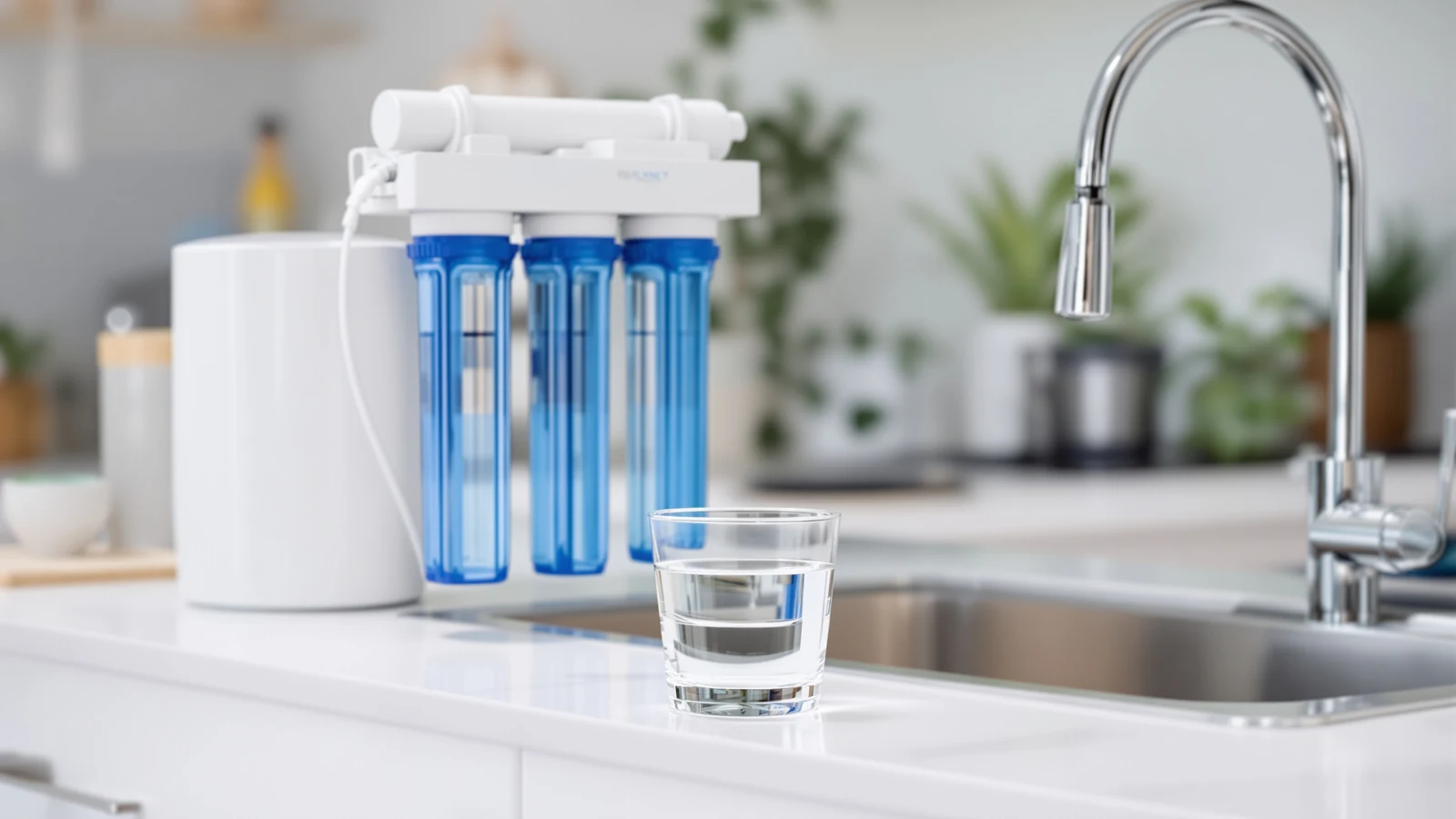
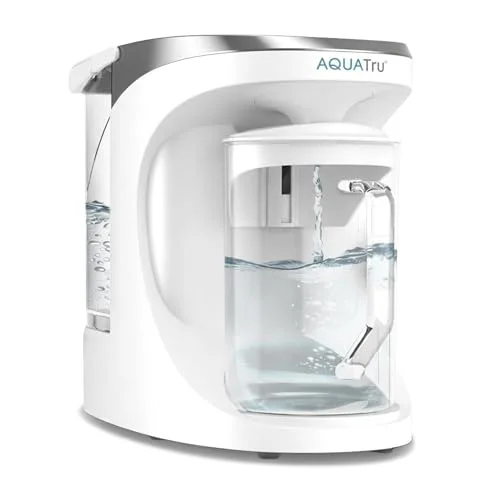
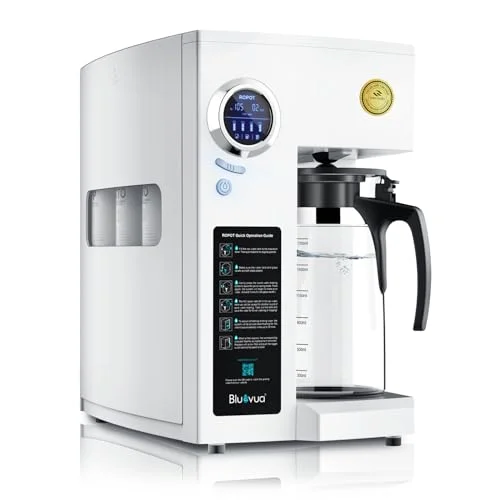
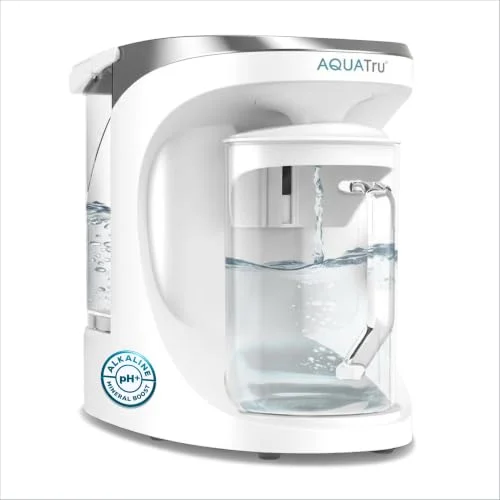
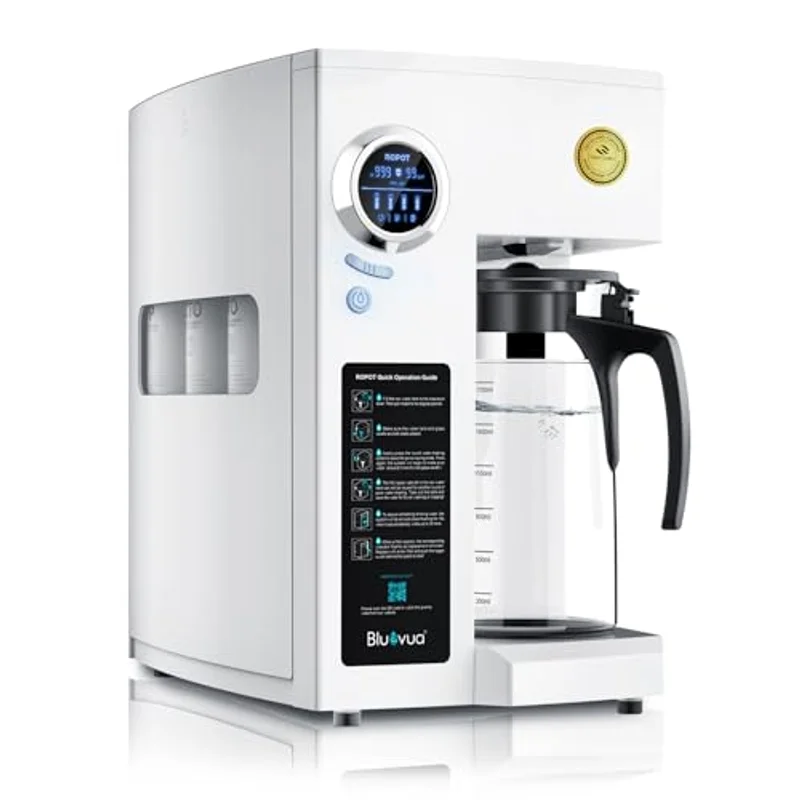
Every reverse osmosis buying guide on the internet is written for a homeowner. Measure the cabinet, drill the countertop, tap the cold-water line, drop a drain saddle onto the waste pipe. None of that is a decision you're allowed to make in a unit you don't own, and most of it is a decision your landlord doesn't have to let you make even if you ask nicely.
This page is the version of that guide for the roughly one in three US households who rent. The systems here are real products with real specifications — the same four countertop units we'd point a homeowner toward if their cabinet were too small or their landlord were the reason, not the excuse. What changes for a renter isn't the filtration; it's which purchases are reversible.
What a landlord actually objects to
It helps to be specific, because "the landlord won't allow it" gets used as a catch-all for a handful of distinct, and distinctly avoidable, problems.
Holes. A dedicated RO faucet needs its own hole in the sink deck or countertop. Most kitchen sinks have a spare hole for a sprayer or soap dispenser you can reuse, but where they don't, the fix is drilling one — through stainless steel, laminate, or worse, granite or quartz that needs a diamond bit. A hole is permanent. It is also, unambiguously, not yours to make in a rental without written permission, and "I'll fill it back in when I move" convinces exactly no landlord.
Cutting into the supply line. An under-sink system's feed valve typically clamps or pierces the cold-water line under the sink — a self-piercing saddle valve, or a proper cut-and-compression fitting on newer installs. Reversing that cleanly, so the next tenant's inspection doesn't turn up a spliced line, is a real plumbing job, not a five-minute undo. Landlords who've had one bad experience with a tenant's DIY water project don't wait for a second.
The drain saddle. RO systems reject a portion of the feed water down the drain, and that connection is usually a saddle valve clamped onto the P-trap or the drain pipe itself, with its own small hole drilled into the pipe. It's a five-minute job for anyone who's done it before and a genuine liability question for anyone who hasn't — a bad clamp is a leak under the sink of a unit that isn't yours, sitting there until someone notices the water bill or the cabinet floor.
Anything that looks like an alteration on a walkthrough. Beyond the specific mechanics, most leases have a general clause against structural or plumbing alterations without consent, and a move-out inspection is exactly the moment a property manager goes looking for exactly this kind of thing. An extra faucet on the sink deck is the first thing a checklist notices, because it wasn't there at move-in.
None of those four objections has anything to do with filtering your water. They're about permanence — and permanence is the one variable a countertop system removes entirely.