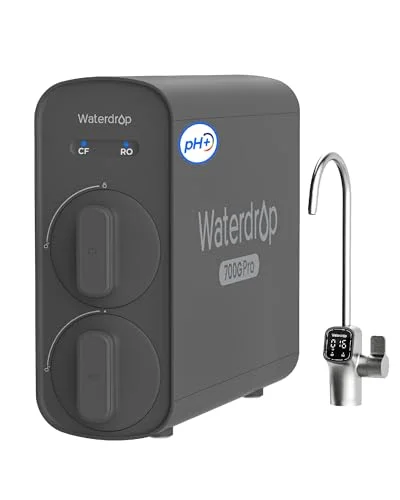
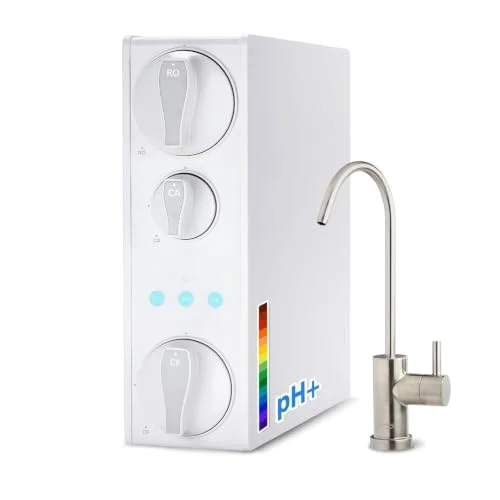
Every reverse osmosis system on the market does the same first job: it forces water through a membrane fine enough to reject dissolved solids, and that membrane does not distinguish between the contaminant you wanted gone and the calcium your body would have absorbed at breakfast. An "alkaline" reverse osmosis system is a plain RO system with one more idea bolted onto the end of the line — a stage that puts some of what the membrane just removed back in, and raises the water's pH while it does it.
That idea is sound chemistry, but it is also a marketing phrase doing a lot of work on a lot of boxes, and the five systems below are not equally forthcoming about what their alkaline stage actually is. Two carry a named third-party certification for the system as a whole. The rest describe the feature by name only — "alkaline," "pH+," "mineral" — without a published pH range or mineral-addition figure we could independently verify. We're going to be precise about which is which, because the gap between "measurably alkaline" and "labeled alkaline" is exactly where this category gets oversold.
What reverse osmosis strips, and what an alkaline stage puts back
A reverse osmosis membrane rejects dissolved solids by size and charge, not by nutritional value. Sodium, chloride, nitrates and heavy metals come out — so do calcium and magnesium, the two minerals responsible for water's natural hardness and a meaningful share of what people describe as "flat" or "sweet" tasting water once they're gone. The membrane doesn't strip flavor as a side effect; the flavor most people associate with tap water largely is those dissolved minerals, so a plain RO system's water tastes different by design, not by accident. We cover the mechanics of that removal, and how RO output compares with the even-more-thorough distillation process, in our reverse osmosis vs. distilled water comparison.
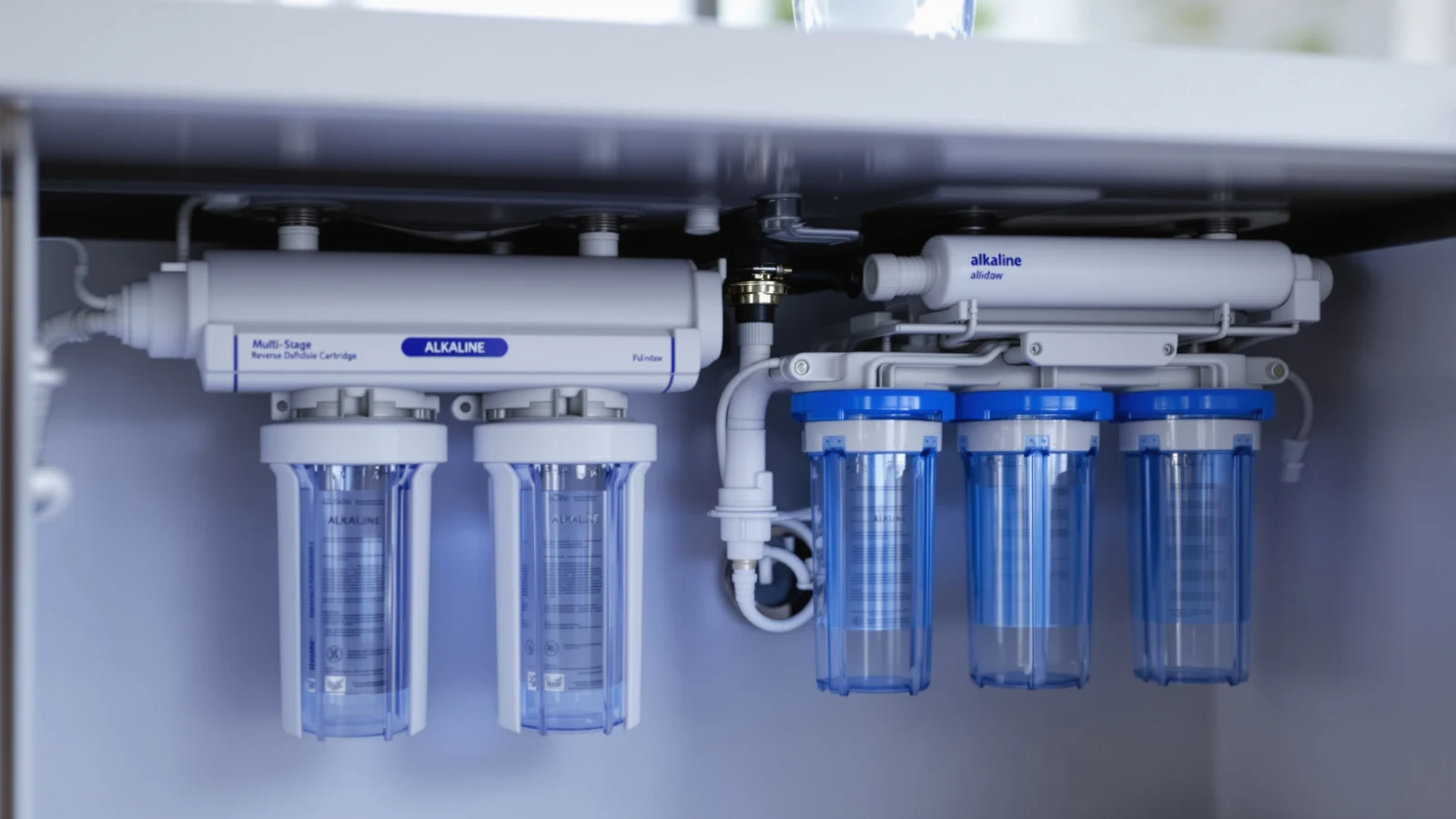
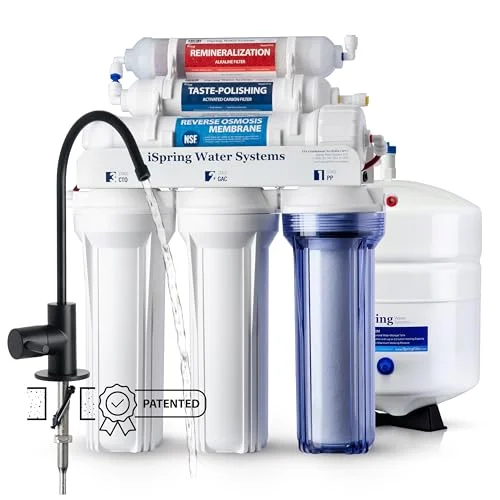
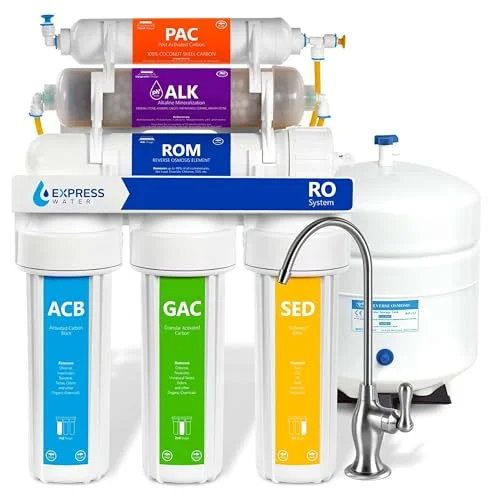
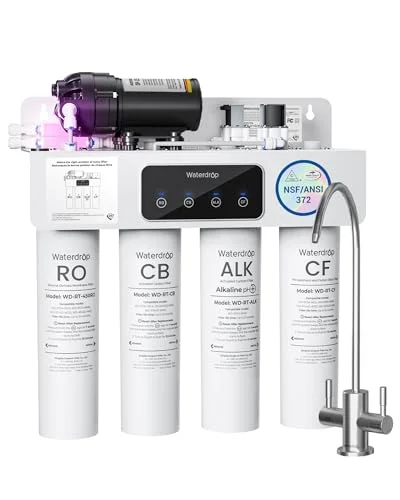
An alkaline or remineralization stage sits after the membrane, in the last one or two positions before the faucet, and works by dissolving trace amounts of calcium and magnesium — usually from a mineral media the water passes through, such as calcite or a magnesium-oxide blend — back into the otherwise mineral-stripped water. The practical effect is twofold: a measurable rise in pH, because those minerals buffer the mildly acidic RO output toward neutral or above, and a partial return of the taste and mouthfeel that a plain system removes. It puts back a fraction of what came out, not all of it — none of the five systems below publish a mineral-content figure for their finished water, so treat "remineralized" as a direction, not a quantity, unless a specific listing states one. Our remineralization filters guide goes deeper on what these stages add back and where the idea comes from.