Best RO Systems
HomeGuidesBest reverse osmosis systems under $250
Budget picks

The best reverse osmosis systems under $250

We're reader-supported: buying through our links may earn us a commission at no extra cost to you. We compare published specifications, listing claims and prices — we don't run a testing lab, and nothing here is written from physically using the products.

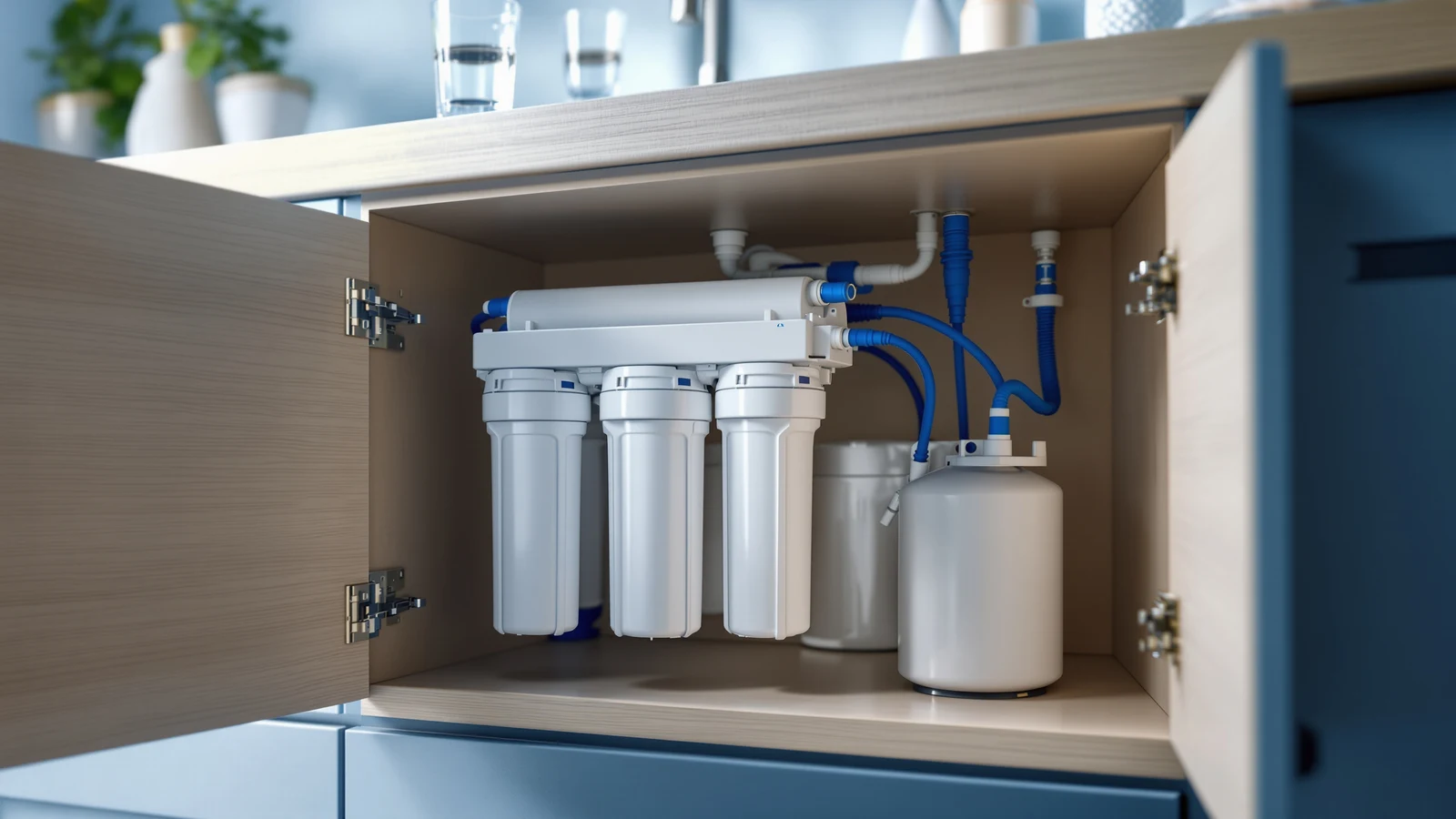
Compact white under-sink reverse osmosis system with standard filter housings, positioned as a budget-friendly option in a kitchen cabinet

Two hundred and fifty dollars is not a floor and it is not a ceiling — it's where the market actually clears. Spend under $180 and you're mostly choosing among the same handful of basic five-stage tank systems that have been the entry point into reverse osmosis for a decade. Spend past $300 and you're generally into smart-display tankless territory, with app-connected filter trackers and proprietary everything. Two-fifty is the seam in between: the price where a shopper with a real budget, not an unlimited one, actually clicks buy. We pulled six systems that sit inside it, from $179.99 to $234.99, and priced out honestly what that money does and doesn't cover.

What it buys, reliably: a working reverse osmosis system built around a real membrane, at least five filtration stages, and — on four of the six — the same industry-standard 10-inch by 2.5-inch housing size used across the category, which matters more to your wallet a year from now than it does on install day. Two of the six state a formal NSF certification directly on the listing. Two include an alkaline remineralization stage. None of the six is a smart, app-connected system with a live TDS display on the faucet — that's still generally a $300-and-up feature in 2026. If you want the wider cost math across the whole price range rather than just the budget end, our guide to whether reverse osmosis is worth it walks through it.

What it doesn't reliably buy, and this is the part most budget roundups skip past: a stated stage count, a stated certification, or a stated pump spec on every single listing. Two of the six systems here — both tankless — simply don't say. That absence is itself information, and it's the throughline of this guide: at $250, the systems that tell you the least about themselves are frequently not the cheapest ones on the page.

The lineup

The price ladder: $179.99 to $234.99

Six systems, ordered by price. Prices move on Amazon — confirm the live price before buying. "Not stated" means the listing we sourced from doesn't publish that figure, not that the system lacks it.

ModelBest forTypeStagesOutputCertifiedPrice
Express Water RO5DXLowest price of entryTank · under-sink5-stage50 GPDNot stated$179.99Price
iSpring RCC7-BNBest certified valueTank · under-sink5-stage75 GPDNSF Certified$185.22Price
APEC ROES-PH75Best alkaline on a tank budgetTank · under-sink6-stage75 GPDNot stated$189.99Price
VIOMI Pure B6WFastest flow, most unknownsTankless · under-sinkNot stated600 GPDNot stated$189.99Price
Waterdrop T3-MTankless with remineralizationTankless · under-sinkNot stated450 GPDNot stated$199.98Price
iSpring RCC7AK-BNBest certified + alkalineTank · under-sink6-stage75 GPDNSF Certified$234.99Price

The two cheapest systems bracket the comparison this whole guide is built around. iSpring's RCC7-BN costs $5.23 more than Express Water's RO5DX and states an NSF certification the RO5DX's listing simply doesn't carry. Both are five-stage tank systems in the same 50-to-75 GPD output band, using the same basic under-sink layout. From there, price stops tracking anything as cleanly: VIOMI's 600 GPD tankless unit and APEC's 6-stage alkaline tank system land within a dime of each other at $189.99, despite being different categories of product with very different lists of what's actually printed on the label.

The picks

The six, in order of price

01Lowest price

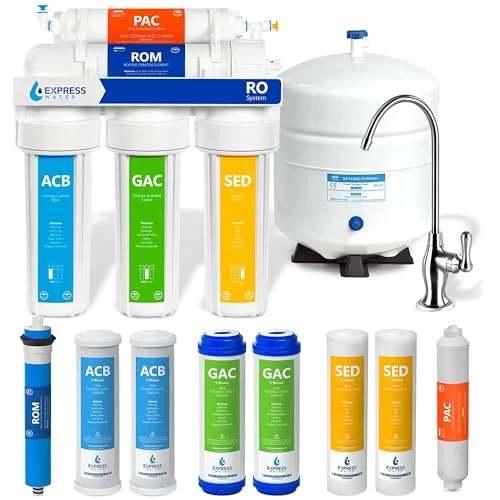
Express Water RO5DX

The cheapest way into a real tank system
$179.99 · 5-stage · 50 GPD · tank · under-sink

This is the floor price in our lineup: a five-stage under-sink system rated at 50 GPD, built around the same tank-and-housings layout that's been the standard entry point into reverse osmosis for years. At 50 GPD it belongs firmly in the tank-system class — a rating that slow is a deliberate design choice, not a shortfall, because the point is to fill a pressurized storage tank slowly rather than push water on demand. The listing we sourced from doesn't state a third-party certification, which is the honest trade-off for the lowest number on this page. If your priority is simply clean water at a tap you don't already have plumbed, and you don't need alkaline minerals or a stated cert, this is where the category starts.

Express Water RO5DX 5-stage under-sink reverse osmosis system
$179.99
Tank · 5-stageCheck price →
02Best certified value

iSpring RCC7-BN

NSF Certified for about $5 more than the cheapest option here
$185.22 · NSF Certified · 5-stage · 75 GPD · tank · brushed nickel faucet

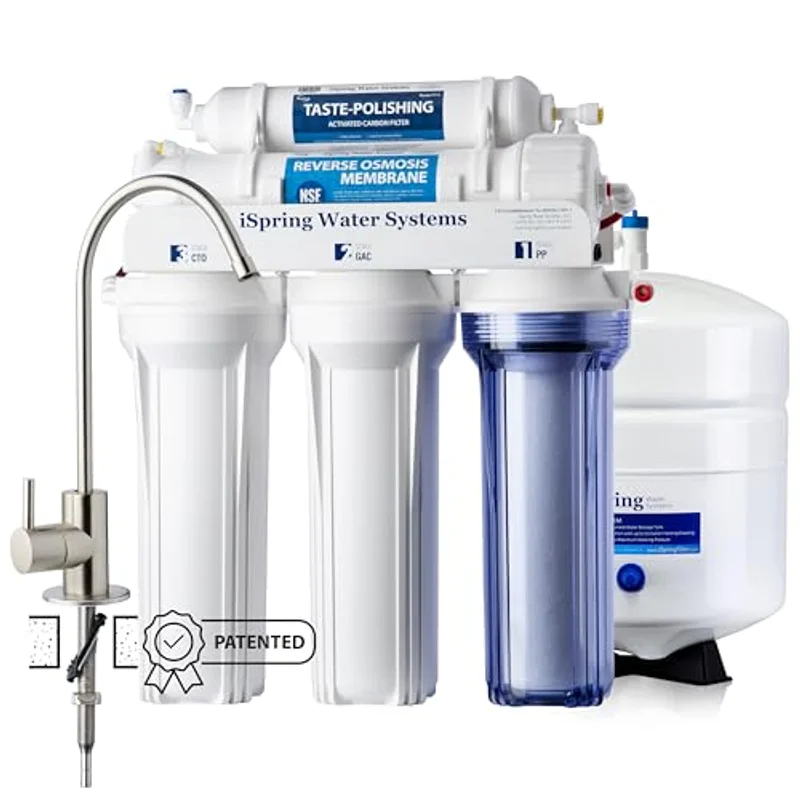
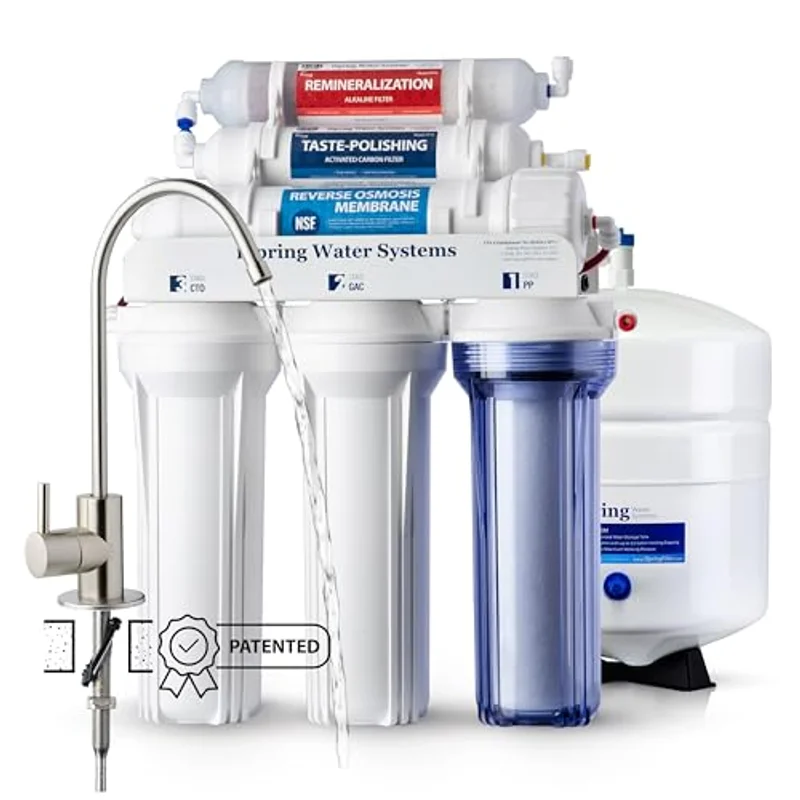
This is the pick that answers the question the whole guide is built around: yes, you can get a certified system for well under $250. iSpring states NSF certification directly on the listing, pairs it with a higher 75 GPD output than the RO5DX above, and adds a brushed nickel finish on the patented top-mounted faucet — a fastener design you tighten from above the counter rather than lying under the sink, which matters more than it sounds like it should on install day. Standard 10-inch by 2.5-inch housings mean the cartridges aren't locked to one brand. For the five dollars it costs over the cheapest system on this page, it gives up almost nothing.

iSpring RCC7-BN NSF Certified 5-stage reverse osmosis system with brushed nickel faucet
$185.22
NSF CertifiedCheck price →
03Alkaline on a budget

APEC Water ROES-PH75

A remineralization stage without leaving tank-system pricing
$189.99 · 6-stage · alkaline · 75 GPD · tank

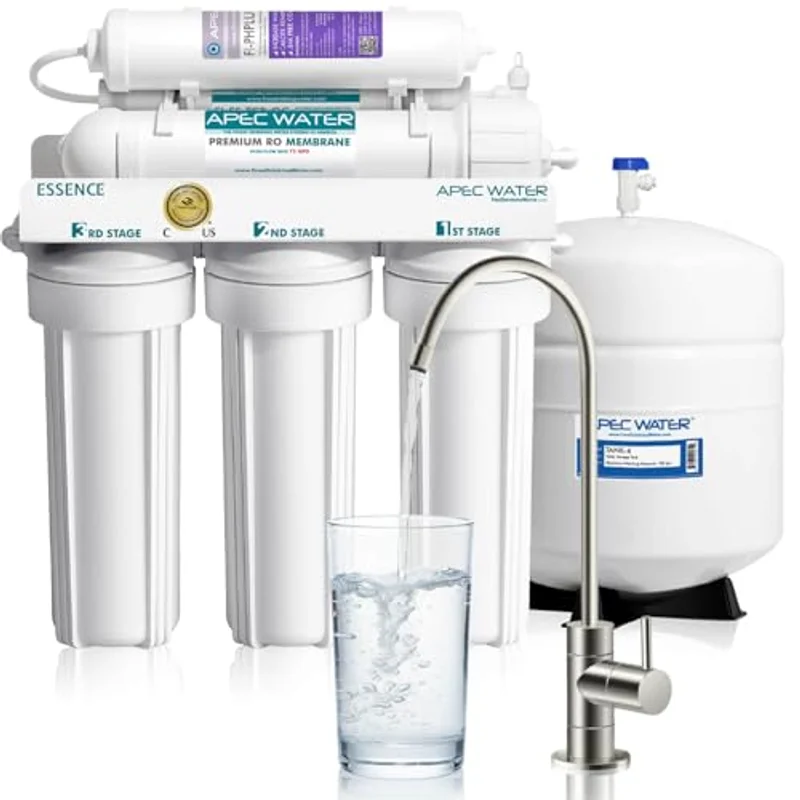
APEC's ROES-PH75 adds a sixth stage over the two picks above it — an alkaline remineralization stage that puts calcium and magnesium back into the water after the membrane has stripped it out, the same basic job the pricier iSpring RCC7AK-BN does further down this list. It matches the RCC7-BN's 75 GPD output and stays inside the same tank-and-standard-housing category, at essentially the same price as VIOMI's tankless unit below. The listing we sourced doesn't state a formal certification the way the two iSpring systems on this page do — worth knowing if a stated cert specifically is what you're shopping for, rather than the alkaline stage itself.

APEC Water ROES-PH75 6-stage alkaline reverse osmosis system
$189.99
Tank · alkalineCheck price →
04Fastest flow

VIOMI Pure B6W

600 GPD at tank-system money — and the most unstated specs here
$189.99 · 600 GPD · tankless · under-sink

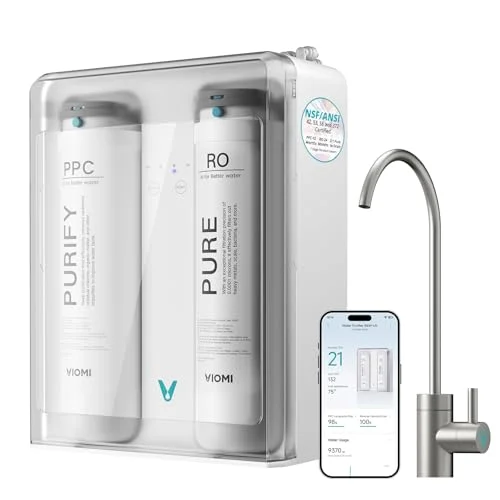
On paper this is the fastest system in the lineup by a wide margin: 600 GPD, more than double the output of every tank pick above it, at a price that matches APEC's alkaline tank system to the dollar. A rating that high puts it in the same output tier as the on-demand tankless systems that typically cost $300 and up elsewhere on the market, which is exactly why it's worth reading the fine print. VIOMI's own listing doesn't state a stage count or a certification, and a 600 GPD tankless design normally leans on a booster pump to hit that number on demand — a component whose quality this listing doesn't speak to either. Fast and cheap is a real combination; fast, cheap, and fully documented is not the same claim, and this is the clearest example of that gap on this page.

VIOMI Pure B6W 600GPD under-sink tankless reverse osmosis water filtration system
$189.99
Tankless · 600 GPDCheck price →
05Tankless remineralization

Waterdrop T3-M

Minerals added back, in a tankless footprint
$199.98 · 450 GPD · remineralization · under-sink

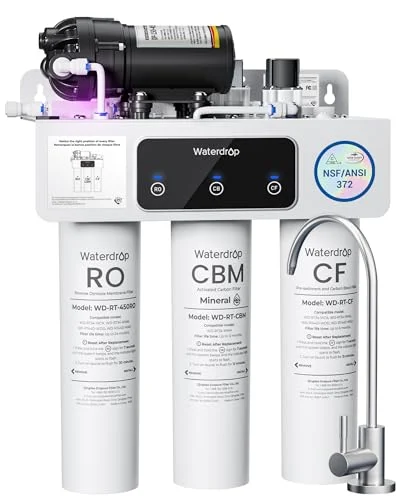
The T3-M sits between VIOMI and the two certified tank systems on price, and its headline feature is remineralization — adding minerals back into water the membrane has stripped, the same category of feature APEC and the iSpring RCC7AK-BN handle with a dedicated alkaline stage. At 450 GPD it sits in the same fast-membrane output range as VIOMI rather than the 50-to-75 GPD tank class above it, which points to a tankless design built around on-demand flow rather than a storage tank. As with VIOMI, the listing we sourced doesn't state a stage count or a certification, so if either matters to your decision, verify on the current product page before buying. Whether losing minerals in the first place is something worth paying to reverse is its own question — our guide to reverse osmosis and minerals works through it.

Waterdrop T3-M remineralization reverse osmosis water filter, 450 GPD
$199.98
Tankless · 450 GPDCheck price →
06Certified + alkaline

iSpring RCC7AK-BN

Both upgrades worth paying for, still under $250
$234.99 · NSF Certified · 6-stage · alkaline · 75 GPD · tank

The priciest system in this roundup, and the only one that combines everything the cheaper picks split between them: a stated NSF certification, a sixth-stage alkaline remineralization block, and the same 75 GPD tank output as its RCC7-BN sibling. It carries the identical patented top-mounted faucet design and standard 10-inch by 2.5-inch housings, so nothing about servicing it is harder than the cheaper iSpring pick — you're paying $49.77 more, entirely for the pH-plus remineralization stage and the peace of mind of buying the fuller-featured version of an already-certified system. If a $250 ceiling still has room in it, this is where that room is best spent.

iSpring RCC7AK-BN NSF Certified 6-stage alkaline reverse osmosis system
$234.99
NSF Certified · alkalineCheck price →
Read the gaps, not just the specs

Where budget tankless units cut corners

Both tankless systems on this page — VIOMI's Pure B6W and Waterdrop's T3-M — undercut or match the price of the certified tank systems while claiming higher output. That's not a red flag by itself; tankless design genuinely produces water faster. What's worth noticing is what their listings leave out compared with their tank-system competitors at the same price.

01

Certification

Both iSpring systems on this page state NSF certification in the listing title itself. Neither VIOMI nor Waterdrop's T3-M does. That doesn't mean the tankless units fail a standard — it means there's no third-party claim on the label for you to verify either way.

02

Stage count

Every tank system here states its stage count plainly: 5-stage, 6-stage. Neither tankless listing we sourced states one. At this price, a missing stage count is the kind of gap worth asking the seller about directly before you buy, not after.

03

Pump quality

A tankless system rated at 450 to 600 GPD typically needs a booster pump to hit that output on demand, since it isn't slowly filling a tank the way a 50-to-75 GPD system does. The pump is usually the component most likely to fail first — and it's also usually the one spec no budget listing volunteers.

04

GPD vs. real flow

A gallons-per-day rating is a lab number, not a guarantee at your faucet. Feed pressure, temperature and a system's actual condition all move the real number — our guide to RO pressure and flow explains why 600 GPD on the box rarely means 600 GPD at the tap.

The consumable nobody prices upfront

Running costs at this tier: standard housings are the budget buyer's real advantage

Four of the six systems here — the Express Water RO5DX, both iSpring models, and the APEC ROES-PH75 — use the same 10-inch by 2.5-inch cartridge housing size that's been an industry standard for decades. That standard is the quiet advantage of buying a tank system at this price tier: iSpring, APEC and a long list of generic third-party brands all make cartridges that drop into it, which keeps replacement filters in open competition rather than locked to one manufacturer's price list. It's the same structural advantage the cost-math case for reverse osmosis depends on — a system is only as cheap as it stays over years of ownership, not just on the day you buy it.

VIOMI's Pure B6W and Waterdrop's T3-M are the two systems where we can't make the same promise. Tankless systems typically use proprietary twist-in cartridges sized to that specific model, and neither listing we sourced states a replacement filter price. That's not unusual for the category — plenty of tankless systems above $250 have the same structure — but at the budget end it's a real unknown you're accepting sight unseen. Before buying either one, search the manufacturer's own storefront for the replacement cartridge and its price; if you can't find one, treat that as part of the cost of the system, not a detail to worry about later.

The part that isn't on the price tag

Install effort as a hidden cost

The four tank systems on this page — Express Water RO5DX, both iSpring models, and the APEC ROES-PH75 — need real cabinet space: three to four vertical housings plus a pressure tank, typically most of what's under a standard kitchen sink. What they generally don't need is an electrical outlet, since a basic tank system runs on ordinary household line pressure to fill its tank rather than a pump. Budget two to three hours for a first install: a feed valve on the cold-water line, a drain saddle on the waste pipe, and a hole for the dedicated faucet — most sinks already have a spare one for a sprayer or soap dispenser.

VIOMI's Pure B6W and Waterdrop's T3-M trade that cabinet-space problem for a different one. A tankless system built around a booster pump generally needs power under the sink, which means an outlet has to already exist there or be added — a real cost if your cabinet doesn't have one, and a detail neither listing spells out plainly. In exchange, the box itself is slimmer, and there's no tank taking up cabinet depth. If you're planning to run the output line further, say to a refrigerator's ice maker, our guide to connecting RO to a fridge line covers the tee and tubing run regardless of which system you land on. And whichever you buy, the sanitizing step at your first filter change is worth doing properly — our maintenance guide walks through it.

Knowing when $250 isn't the right ceiling

Who should spend more, and the two upgrades worth the money

If you're deciding inside this list, the two upgrades worth paying for are certification and an alkaline remineralization stage — and the iSpring RCC7AK-BN is the one system here that bundles both for $234.99, still under the ceiling. Buying the plain RCC7-BN and treating the alkaline stage as optional is a defensible way to save $49.77; buying the RO5DX and giving up the stated certification to save $5.23 more on top of that is a harder case to make, since the certified system is barely more expensive.

Some households should skip this price tier entirely rather than optimize inside it. If you're on well water, sediment load and iron are frequently the bigger problem, and no system on this page is positioned to handle that pre-treatment — our guide to RO for well water explains what a private well actually needs upstream of any of these six. If drilling a faucet hole or finding drain access isn't possible at all — a rental, a stone countertop, a lease that forbids modifications — our roundup of countertop systems covers the no-install alternative, generally at a similar price. And once any of these six is installed, a simple TDS meter is the cheapest way to confirm it's actually performing as rated — our guide to reading a TDS meter explains what the number can and can't tell you.
How we picked

Six systems, one price ceiling

We looked specifically for reverse osmosis systems priced at $250 or under, across both tank and tankless designs, and kept listings with enough stated detail — GPD output, stage count where published, certification where stated, price — to say something concrete about what separates them. We deliberately included two systems whose listings leave real gaps, VIOMI's Pure B6W and Waterdrop's T3-M, because at this price tier those gaps are themselves part of the honest comparison.

How we compared

Research, not a lab

We're honest about this: we don't physically test these systems and we don't run a testing lab. We compare published specifications, stated certifications and live pricing, and we say plainly anywhere a spec — stage count, pump quality, cartridge price — simply isn't published for a given listing rather than filling the gap with a guess. Amazon no longer exposes star ratings through its product API, so you will not find invented scores or rating badges anywhere on this site.

FAQ

Common questions

Can you get a certified reverse osmosis system for under $250?

Yes — two of the six systems in this guide state NSF certification directly on the listing: the iSpring RCC7-BN at $185.22 and the iSpring RCC7AK-BN at $234.99. Both are five-to-six-stage tank systems using standard housings, and both cost less than at least one uncertified tankless system in the same price range.

What's the real difference between a tank and tankless RO system at this price?

The tank systems here run 50 to 75 GPD, fill a pressurized storage tank slowly, generally need no outlet, and use industry-standard 10-inch by 2.5-inch housings that keep replacement cartridges in open competition. The two tankless systems run 450 to 600 GPD, typically need a booster pump and an electrical outlet, and use proprietary cartridges whose replacement price neither listing states. Tank systems trade speed for documented running costs; the tankless picks here trade running-cost certainty for a faster, slimmer box.

Do budget tankless systems really cut corners?

Based on what their listings state, yes, in the sense that matters most for a buying decision: neither VIOMI's Pure B6W nor Waterdrop's T3-M publishes a stage count or a certification, where every tank system in this guide states both. That's not proof the components are worse — it's an absence of the evidence that would let you check.

Is a $180 system worth buying, or should I save for a $300-plus system?

If your budget genuinely stops at $250, the iSpring RCC7-BN at $185.22 is the strongest case in this guide — a stated NSF certification for about $5 more than the cheapest option here. Systems above $300 generally add smart displays, app-connected filter tracking and proprietary tankless designs with fuller documentation. If none of those matter to you, a $180 to $235 tank system with a stated certification gives up very little.

Keep reading

Next, if you're still choosing