Best RO Systems
Home › Guides › Newer RO brands worth the risk
Honest take

Newer RO brands without a long track record: what to check before you trust one

We're reader-supported: buying through our links may earn us a commission at no extra cost to you. We compare published specifications, certifications and prices — we don't run a testing lab.

Unfamiliar under-sink reverse osmosis system still in its retail box next to an established brand's unit already installed

A countertop water gadget with a brand you've never heard of is a low-stakes bet. It sits on your counter, draws from a jug or a quick-connect saddle valve, and if it disappoints you, you unplug it and send it back. The cost of being wrong is the price of the unit and a little counter space for a few weeks.

An under-sink reverse osmosis system from the same unfamiliar name is a different kind of bet, because it is not a gadget sitting near your plumbing — it is plumbed in. A tankless RO system like the three in this piece ties into your cold-water supply line, routes pressurized water through a sealed housing under your sink, and runs a drain line into your P-trap. If a fitting fails, if a housing cracks after eighteen months, or if the manufacturer stops answering email, the failure mode is not "the water stopped" — it can be water on your cabinet floor while you are at work, with no way to reach anyone who sold you the part that failed.

That is why "established versus new" is a materially different question here than it is for a kettle, a pitcher filter or a UV wand. With a countertop product, brand history mostly predicts whether the thing does what the box says. With a plumbed-in system, it also predicts something your home's structure cares about: whether a worn O-ring, a failed solenoid or a cracked quick-connect fitting gets caught by a part you can still buy, from a company that still exists, three or five years after you installed it. iSpring, Waterdrop and Frizzlife have all been selling RO systems in the US long enough that this question has a track record attached to it. VIOMI, Eiree and Philips's RO line, at least on Amazon's US storefront, mostly don't yet — not because the hardware is necessarily worse, but because nobody has owned one long enough to find out.

None of this means a newer name is automatically a bad bet. It means the usual shortcuts — "it has good reviews," "it looks similar to the established ones" — carry less information than they do for a $30 pitcher, and you need other signals to fill the gap. The rest of this piece is about what those signals actually are, and where they run out.

What a listing from a newer manufacturer can still tell you

Before writing off any name you don't recognize, it's worth being precise about what a listing — even a sparse one — genuinely discloses, because it's more than "nothing."

Certification marks, if they're shown. NSF and WQA marks are issued by third-party bodies, not by the manufacturer, and a listing either shows a specific certification (ideally with a standard number like NSF/ANSI 58 for contaminant reduction, or NSF/ANSI 372 for lead-free materials) or it doesn't. A new company can absolutely hold a real certification — age has nothing to do with eligibility — but the mark has to be checkable. A photo of a generic "certified" badge with no standard number attached is not the same disclosure as a specific one, and it's worth treating the two differently regardless of how long the brand has existed. None of the three systems in this piece show a specific certification standard in their current Amazon listing, which is itself useful information: it means that line item simply isn't something we can verify from the product page, old or new brand.

Warranty terms, however short. A stated warranty — even one year — is a disclosed commitment you can hold the seller to, and it's printed on the listing regardless of how long the company has been trading. A newer manufacturer with a modest warranty is telling you something concrete; a listing with no warranty term stated anywhere is telling you something too, and you should read the absence as deliberate until proven otherwise.

Stated GPD. Gallons-per-day is a membrane rating, not a promise about your kitchen — it's the manufacturer's claimed output under specific test conditions, usually fresh membrane, ideal feed pressure and a defined feed-water TDS. It is still real, checkable information: the VIOMI V8 is listed at 800 GPD, and the Philips and Eiree systems below are both listed at 600 GPD. A newer brand publishing a specific GPD figure, right or wrong, is giving you the same data point an established one does — you just have fewer independent sources to cross-check it against.

The throughline: a listing's specs, certifications and warranty terms are facts about the present. They tell you what the manufacturer is claiming today, and some of those claims are independently checkable today. What they can't do is tell you anything about tomorrow.
What it can't tell you yet

Here's the part a well-written listing cannot manufacture, no matter how complete it is: time.

Long-term failure rates. A filter housing, a solenoid valve or a pump either holds up for years of daily pressure cycling or it doesn't, and that is a statistical fact that only accumulates with units in the field for years. Frizzlife and Waterdrop have enough owners, across enough years, that patterns in common failure points are at least discoverable if you go looking. A brand that only started selling tankless RO systems on Amazon in the last year or two hasn't generated that population yet — not because the engineering is worse, but because the clock hasn't run long enough. There is no listing text that substitutes for elapsed time.

How support holds up at year three. This is the one that actually matters for a plumbed-in appliance. A one-year warranty is worth something in year one. The real question is whether, in year three, the manufacturer still sells the replacement cartridges your specific model needs, still answers a support email, and still exists as a company at all. We cover the parts side of this directly in matching the exact replacement filter to your RO model — the mismatch between a brand's model numbers and what's actually available gets worse, not better, the newer and smaller the manufacturer is, simply because there's less inventory and fewer sellers stocking it. An established name's filter ecosystem has survived long enough that you can check it before buying. A newer brand's filter ecosystem for a system launched eighteen months ago is, by definition, untested at the point where it matters most.

Neither of these is a flaw you can spot on the listing. They are the two things that genuinely require time to resolve, and no amount of reading the product page compensates for their absence. This is also where "newer" and "untested" start to diverge in a way worth naming honestly: a newer brand might turn out to have excellent support and a part supply that lasts a decade. It might also disappear from Amazon in fourteen months. From the listing alone, both futures look identical.

Reading seller history and return patterns as an imperfect proxy

Since long-term failure data doesn't exist yet for a newer name, the closest thing available is a cruder, present-tense substitute: the seller's standing on the marketplace itself, separate from the product's own star rating.

On Amazon, that's a different data set than the product review score. Click through to the seller — not the product — and you can usually see how long that seller account has been registered, its own feedback rating as a seller (not the item's rating), and whether the listing is "Ships from and sold by Amazon.com" versus a third-party storefront operating under the brand's name. A brand that has been registered and selling under its own storefront for a couple of years, with a seller feedback history to match, has at least demonstrated it can run a storefront without vanishing — a lower bar than "makes a reliable RO system," but not a worthless one.

Return and complaint patterns are a second, equally imperfect signal. Amazon doesn't publish a clean return-rate number to shoppers, but the "customers say" themes and the lowest-starred reviews, read specifically for recurring mentions of leaks, DOA units or unresponsive support rather than for a star count, tell you something a single average score flattens out. One isolated complaint about a cracked fitting is noise. The same complaint appearing independently across a handful of reviews, worded differently each time, is a pattern — and patterns are the thing a single listing can't fake by being well-written.

Be clear-eyed about the limits here, because it's easy to over-trust a proxy that sounds more rigorous than it is. Seller account age doesn't prove the hardware behind it is good — a storefront can be old and the specific SKU brand-new. A brand can also relaunch under a new storefront name after a previous one ran into trouble, which resets the clock on exactly the signal you're relying on. And a thin volume of reviews, which is normal for a newer listing, makes any pattern you spot statistically shakier than it would be on a product with years of accumulated owners. Seller history narrows the uncertainty. It does not close it.

Three newer names

The picks, read for what each discloses — and what it leaves out

All three are tankless under-sink systems, the category where the plumbed-in stakes above actually apply. None carries a star rating or review count here, because we have no verified review data for any of them — see the note below.

01Self-cleaning claim

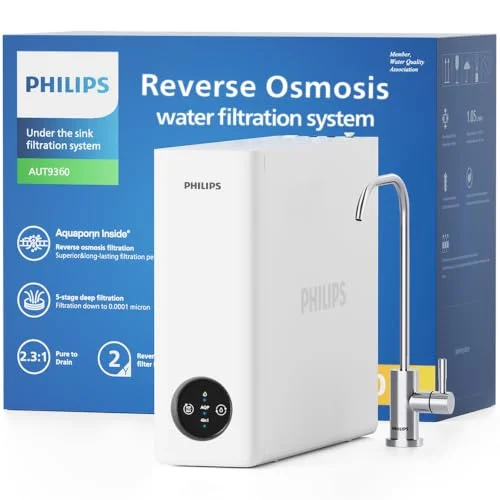
Philips Tankless Reverse Osmosis System

600 GPD, self-cleaning, High-Flow Model
$99.99 · tankless · 600 GPD stated · High-Flow Model variant

Philips is the recognizable name in this group of three, but recognizable-for-electronics is not the same disclosure as established-for-plumbed-in-water-filtration — this is a newer category entry for the brand on Amazon's US storefront, not an extension of decades of RO-specific track record. What the listing discloses clearly: a 600 GPD rating and a "self-cleaning" function, both stated plainly in the title. What it doesn't disclose here: a specific certification standard number, or a stated warranty term you can hold against it. The High-Flow Model label is the only size/variant information on record — if the listing shows other configurations, treat those as separate SKUs with their own specs rather than assuming this page's numbers carry over.

Philips Tankless Reverse Osmosis System, 600 GPD, Self-Cleaning RO System, High-Flow Model
$284.99
600 GPD · High-FlowCheck price →
02Least disclosed

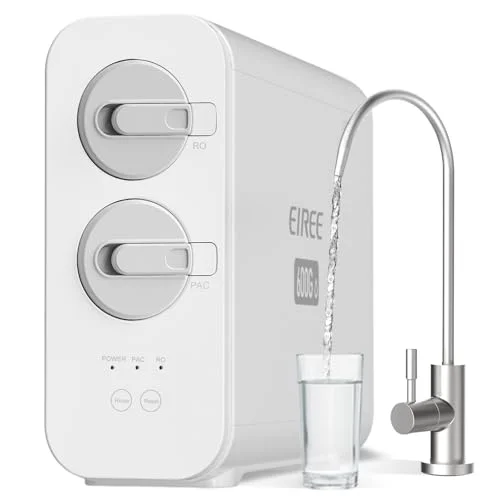
Eiree C6 Tankless Reverse Osmosis System

600 GPD under-sink RO filter
$99.99 · tankless · 600 GPD stated · under-sink

Eiree is the name in this set with the thinnest public footprint — a model number (C6) and a GPD figure are what the listing title itself discloses, and that's genuinely useful as far as it goes: 600 GPD is a checkable claim, and a specific model number means the system isn't an unlabeled generic. What it doesn't give you, at least from the title and the data we could source, is a stated certification standard, a stated warranty length, or any size/variant detail beyond "under sink." That's not an accusation — it's simply a shorter list of disclosed facts than Philips or VIOMI offer, and for a plumbed-in appliance, a shorter disclosed-facts list is exactly the situation where the seller-history check in the section above earns its keep.

Eiree C6 Tankless Reverse Osmosis System, 600GPD Under Sink RO Filter
$99.99
600 GPDCheck price →
03Highest stated GPD

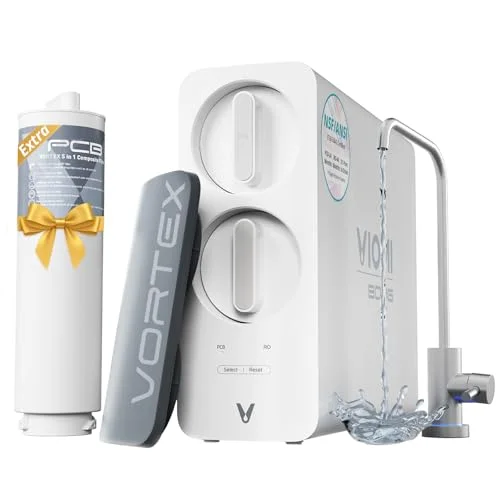
VIOMI V8 Reverse Osmosis Water Filtration System

Tankless, 800 GPD RO filter
$99.99 · tankless · 800 GPD stated · same price tier as the other two

The V8's headline number is the highest GPD figure of the three at the same $99.99 price point as the Philips and Eiree units — which is worth sitting with rather than treating as an automatic win. A higher stated throughput is a real, checkable spec, the same kind of fact an established brand's higher-GPD model would publish. What it is not is proof that the membrane, pump and housings underneath that number are built to the same standard as a long-selling competitor's 800 GPD system, and the listing itself has no certification standard or warranty term to lean on for that part of the picture. Read the GPD claim as exactly what it is — a stated maximum under test conditions — and verify it against your own feed pressure and household draw before assuming it changes the risk calculus versus the other two.

VIOMI V8 Reverse Osmosis Water Filtration System, Tankless 800GPD RO Filter
$219.99
800 GPDCheck price →

A note on what's missing from all three cards above: no star ratings, no review counts, no paraphrased sentiment pulled from buyer feedback. This site publishes those only when we have verified figures tied to a specific listing, and we don't have them for these three ASINs as recorded. Making up a plausible-sounding line about how smoothly these installed, for a product we have no review data on, would be the same offense as inventing a star score — so we didn't, and the absence here is the point, not an oversight.

When sticking with an established brand is worth paying slightly more for

None of the above is an argument to automatically rule out a newer name — plenty of now-established brands were once the unfamiliar one on the shelf. But there are specific situations where the premium an established brand usually commands is worth paying, rather than treating price as the only variable.

You can't easily get under the sink often. If a failed cartridge or a leaking fitting means a service call, a landlord conversation, or crawling into a cabinet you'd rather not revisit every few months, the cost of being wrong about reliability is higher than the $0–40 you might save going with an unfamiliar name. iSpring's RCC7AK family and Waterdrop's X16 both carry years of in-market history specifically because enough owners have put them through exactly that scenario and the brand is still standing.

Replacement filters need to be available on a predictable schedule, for years. This is the parts-supply problem from the "can't tell you yet" section above, made concrete. An established manufacturer selling the same cartridge SKU for five-plus years has a track record of still stocking it; a newer brand's system launched last year is asking you to bet that it will too. If keeping the system running without a gap matters more to you than the sticker price, that's the scenario where checking exact-model filter availability before buying should outweigh a GPD number or a listing photo.

You want a documented NSF/ANSI standard number, not just a certification graphic. If a specific certification matters to your decision — and for contaminant reduction claims, it should — an established brand's listing is more likely to have that standard number spelled out, because the certification itself has been through more renewal cycles. None of the three systems profiled above currently show one; several of the brands in iSpring's product line and Frizzlife's do. That gap alone is a legitimate reason to pay more for the name you recognize, if a verifiable standard number is non-negotiable for you.

Where a newer name is a perfectly reasonable bet: a system that's easy to swap out if it disappoints, a household that doesn't mind sourcing a generic 10-inch cartridge rather than a proprietary twist-in if the manufacturer's own filters become hard to find, and a price gap wide enough to matter. Where it isn't: a rental you can't easily re-plumb, a household depending on a specific certified contaminant reduction claim, or anyone who has already been burned once by a brand that vanished mid-warranty.

FAQ

Questions people ask about buying from a newer RO brand

Is a newer reverse osmosis brand automatically a worse choice?

No. Age doesn't determine build quality, and plenty of now-established brands were once the unfamiliar name on the shelf. What a newer brand genuinely lacks is elapsed time — the years of in-field use that reveal long-term failure rates and whether support and replacement parts are still there in year three. That's a real gap, but it's a gap in available evidence, not proof the hardware is inferior.

What should I check on a newer manufacturer's listing before buying a plumbed-in system?

Three things the listing can actually disclose: a specific certification standard number (not just a generic badge graphic), a stated warranty term, and the stated GPD figure, understood as a maximum under test conditions rather than a guarantee for your kitchen. None of the three systems compared in this piece currently show a specific certification standard, which is itself useful information to factor in.

How do I check a seller's history and return patterns on Amazon?

Click through to the seller name rather than relying on the product's star rating — that page shows how long the seller account has been registered and its own feedback history, and whether the listing is sold directly by the brand or Amazon versus a third-party storefront. For return patterns, read the lowest-starred reviews specifically for recurring, independently worded complaints about leaks or dead-on-arrival units rather than treating the overall star average as the whole story. Both checks are useful but imperfect: a storefront can be old while the specific product is brand-new.

When is it worth paying more for an established RO brand instead?

When you can't easily access the system for repairs, when a specific NSF/ANSI certification standard is non-negotiable for your decision, or when a predictable, years-long replacement-filter supply matters more to you than the sticker price. In those cases, the premium an established name like iSpring or Waterdrop commands is buying documented history, not just a logo.

Keep reading

Related guides