Waterdrop's X16 RO system: bronze vs. silver faucet, and what actually differs between the listings
We're reader-supported: buying through our links may earn us a commission at no extra cost to you. We compare published listing specifications and prices — we don't run a testing lab, and nothing below is a star rating or a paraphrased review.
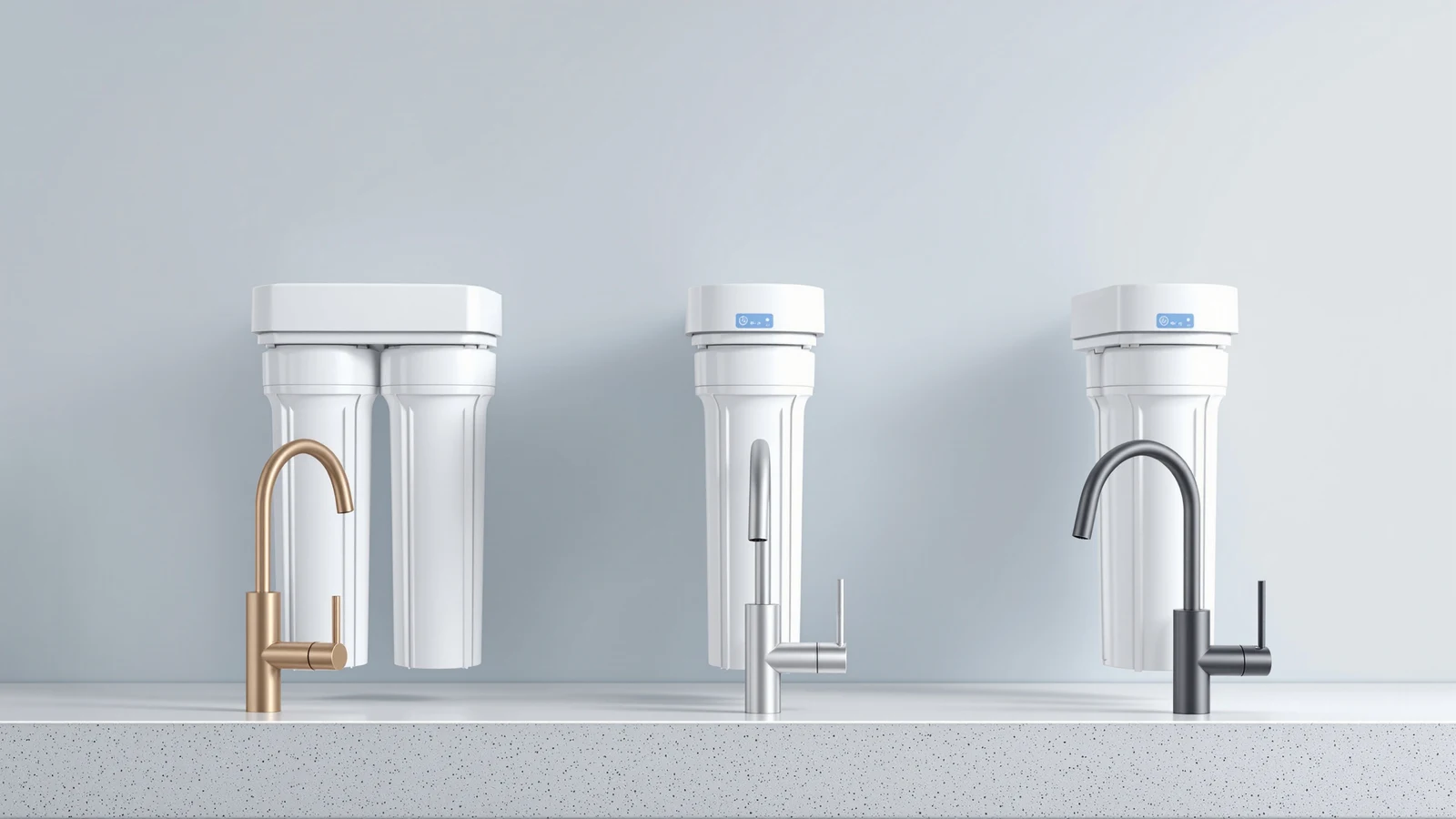
Search "Waterdrop X16" on Amazon and you don't land on one page — you land on at least three. The Bronze Faucet listing, the Silver Faucet listing, and a third, plainer listing that just says "UnderSink" and doesn't name a faucet finish in its title at all. Three ASINs, three separate product pages, three independent buy boxes, and nothing on any of them that says outright "this is the same 1600 GPD system as the other two, just with a different faucet bolted on."
That's not a Waterdrop-specific trick. It's how Amazon's catalog structure handles a lot of mid-size and premium appliances: instead of one listing with a color or finish selector, a manufacturer — or more often, a reseller account tied to the manufacturer — spins up a separate ASIN for each cosmetic variant. Each one then builds its own review count, its own search ranking and its own price history, completely independent of its siblings. We saw the identical pattern with iSpring's RCC7AK family, where a brushed-nickel faucet, a black faucet and a value-pack bundle turned one 6-stage system into three listings with a real price spread between them. The X16 is the same pattern, at a much higher price point, which makes the stakes of picking the wrong listing considerably higher.
Here's what those three listings actually are, at the prices we recorded on October 15, 2026:
- Waterdrop X16 Reverse Osmosis System, Alkaline Mineral, 1600 GPD, UnderSink — $1,299.00. The plain-titled listing: no faucet finish named anywhere in the product title.
- Waterdrop X16 Reverse Osmosis System Alkaline Mineral 1600GPD Bronze Faucet — $1,299.00. Same system, bronze faucet finish named in the title.
- Waterdrop X16 Reverse Osmosis System Alkaline Mineral 1600GPD Silver Faucet — $1,299.00. Same system again, silver faucet finish named in the title.
Unlike the iSpring case, there's no price spread to argue about here — all three are $1,299.00 as of the date we recorded them. Which makes this a cleaner, in some ways more useful comparison: with price held equal across all three, the only things left to compare are what the titles themselves state, and that's exactly where this gets interesting.
What's identical across all three listings
The specs each title states for itself, lined up next to each other.
The GPD rating. All three titles state "1600 GPD" or "1600GPD" — the rated output of the membrane platform, and the headline number in this product line. A 1600 gallon-per-day rating is a substantial step up from the 400–800 GPD range most residential under-sink systems occupy, which is the entire reason this platform commands a four-figure price in the first place. None of the three listings states a different output figure. If one of these were a cut-down version of the platform, the GPD number is the one spec a seller could not quietly change without it reading as an obvious, checkable discrepancy — and none of them did.
The "Alkaline Mineral" designation. Every title includes "Alkaline Mineral," the same remineralization branding Waterdrop uses across its line to describe a post-membrane stage that adds calcium and magnesium back into the water after the RO membrane has stripped dissolved solids out, including the minerals. It's the same functional claim worded identically on all three pages — not a case of one listing using plainer language for the same thing, the way we saw with iSpring's "pH+ Remineralization" versus plain "Alkaline." Here, all three use the identical phrase.
The product line and size/variant. All three are listed as the Waterdrop X16, and all three carry the same size/variant: 1600 Gallon. That's the detail that matters most for fit — the size/variant line on a listing is the only reliable statement of a system's footprint and capacity class, and when it reads identically across listings, as it does here, that's the strongest signal that you're looking at the same physical hardware under three different cosmetic wrappers rather than three different systems sharing a model number by coincidence.
What we won't claim beyond the titles. None of the three titles states a stage count, a certification standard, or a drain ratio — which means we're not going to assert those figures for the X16 based on the other systems in this category. If a specific certification or stage count matters to your decision, that's a detail to confirm on the live listing page rather than something this comparison can responsibly fill in from the title alone. The pattern of titles omitting certification detail is itself familiar — we flagged the same gap in the iSpring certification wording, where one listing in a family named a specific NSF standard and its sibling didn't.
Bronze, silver, and the standard finish, read side by side
Set the shared platform aside, and the genuine distinguishing feature between these listings is sitting in the title itself: the faucet finish named at the end. "Bronze Faucet" and "Silver Faucet" are both explicit, visible, color-of-metal descriptions — the part of the system you'll actually see and touch at the sink every day, the same role the faucet plays in the iSpring comparison. Bronze reads warmer and darker, intended to sit alongside oil-rubbed bronze or matte black kitchen hardware; silver reads as a brighter, cooler metal intended to match chrome or stainless fixtures. Both are cosmetic choices about what shows above the counter, not filtration choices about what happens below it.
The third listing is the more interesting case, and the one worth being precise about rather than guessing at. The "UnderSink" title doesn't name a faucet finish at all — it's silent on the subject where the other two are explicit. That silence could mean a few different things: a default or "standard" finish that the listing simply didn't bother spelling out in the title, a finish that varies by current stock, or a finish described only in the listing's bullet points or photos rather than its title. We don't have a stated finish for this listing to report, and we're not going to guess at a color we can't verify. If the faucet finish matters to how this looks at your sink, the listing's own product photos are the place to confirm it — not this comparison, and not an assumption that "no finish named" means "the same as one of the other two."
What doesn't change, as far as any of the three titles state, is the water path. Bronze, silver or unnamed, all three are specified at the same 1600 GPD output with the same alkaline mineral stage and the same 1600-gallon size/variant. The faucet is downstream of the membrane — it's where filtered water comes out, not part of how it gets filtered. Choosing a faucet finish is the same category of decision as choosing a faucet finish for any kitchen fixture: it changes what you see, not what you drink.
Price differences for hardware that performs the same
As of October 15, 2026, all three listings price at $1,299.00. That's worth stating plainly because it's the opposite of what we found with the iSpring family, where the three listings spread by nearly $75 against each other despite describing the same filtration core. Here, at the moment we recorded these prices, there's no gap to arbitrage — the bronze faucet, the silver faucet and the unnamed finish all cost the same amount for what their own titles describe as the same 1600 GPD alkaline platform.
That equality is a snapshot, not a guarantee. Amazon prices move per ASIN, independently, on each seller's own schedule — a promotion, a stock adjustment or a seller-level price change on one listing doesn't automatically apply to its siblings, even when the underlying product is identical. The same mechanism that let the iSpring AKF3 undercut its siblings by $61 to $75 could, in principle, open a gap between the X16's bronze and silver listings next month, next week, or by the time you read this. The practical takeaway isn't "these will always cost the same" — it's "check all three current prices before you buy, because at $1,299.00 hardware, a price gap that opens up between cosmetically identical listings is real money, and there's no filtration reason to pay more for it."
At the prices we recorded, though, this is the rare case where price isn't the deciding factor between listings — which pushes the actual decision onto something else entirely: how many reviews you can see before you commit to spending fifteen hundred dollars on a single ASIN.
Reviews split across listings, and what that does to the number you see
This is the consequence of the three-listing structure that matters most and gets discussed least. Amazon reviews are tied to the specific ASIN a buyer purchased, not to the underlying product line. When the same physical system is sold under three separate ASINs — bronze faucet, silver faucet, and the unnamed-finish listing — every buyer's review is locked to whichever one of the three they happened to click. A buyer who bought the bronze-faucet version and leaves a review about leak-free installation, fast flow, or a damaged shipping box has that review attached permanently to the bronze ASIN. It will never appear on the silver listing, even though the review has nothing to do with faucet color and everything to do with the system itself.
The result is that whichever review count you see on any single one of these three listings is a fraction of the real-world experience with this hardware, not the whole picture. A newer listing — and the unnamed-finish "UnderSink" listing, with its plainer, less-specific title, reads as the kind of listing that could be either the oldest, most established ASIN in this family or a newer one still building its own independent review history — can look thinner on reviews than a sibling listing simply because fewer buyers have landed on that specific page, not because fewer people own that exact system. We flagged this same mechanism directly in our look at Amazon Renewed listings, where a listing's review count and a system's real-world track record can diverge for reasons that have nothing to do with the hardware itself.
Practically, this means the review count on any one of these three X16 listings understates your real information. If the bronze listing has visibly fewer reviews than the silver listing, that's a statement about Amazon's listing-split mechanics and which page more shoppers happened to click, not a statement about which faucet finish is more reliable. For a $1,299.00 purchase, it's worth the five extra minutes to open all three listings and read across them, rather than judging the hardware by whichever single page's review count you landed on first.
The three listings, lined up
What we could confirm from each listing's own stated title. Prices as recorded October 15, 2026.
| Listing | Price | Faucet finish | GPD / Alkaline | Size/variant | |
|---|---|---|---|---|---|
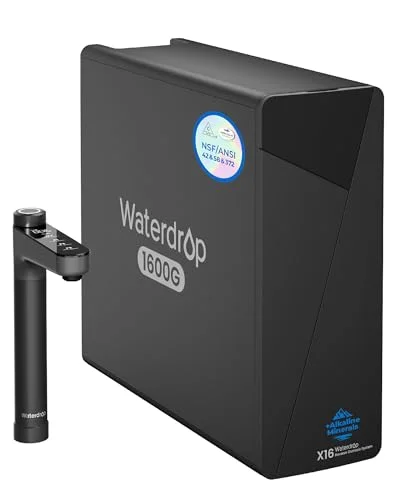 X16 "UnderSink" | $1,299.00 | Not named in title | 1600 GPD · Alkaline Mineral | 1600 Gallon | View |
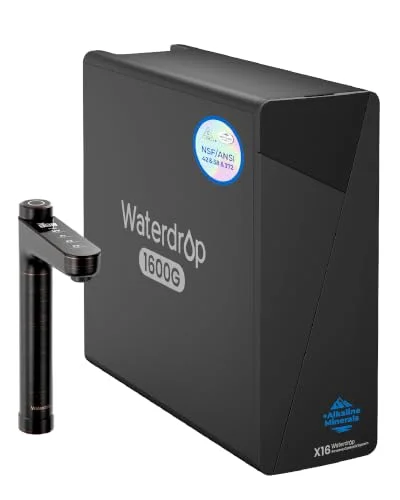 X16 Bronze Faucet | $1,299.00 | Bronze | 1600 GPD · Alkaline Mineral | 1600 Gallon | View |
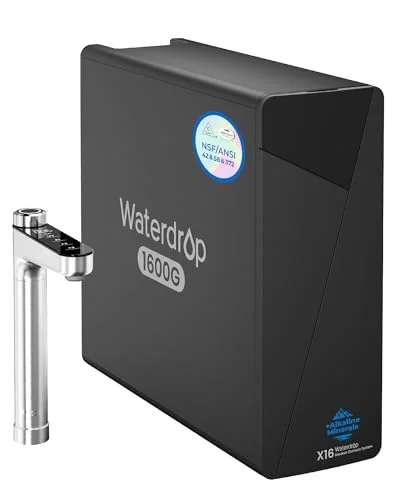 X16 Silver Faucet | $1,299.00 | Silver | 1600 GPD · Alkaline Mineral | 1600 Gallon | View |
All three rows share the "1600 GPD" and "Alkaline Mineral" claims stated in their own titles, plus an identical 1600-gallon size/variant — that's the basis for treating this as one platform sold under three ASINs rather than three distinct systems. The faucet finish column is the one place the titles themselves diverge.
Which listing to actually click, and why price should decide it
Once you accept that the filtration platform — 1600 GPD output, alkaline mineral stage, 1600-gallon size/variant — is the same across all three titles, the faucet finish stops being a performance question and becomes exactly what it looks like: a decision about what color metal you want to see at your sink. Bronze if your kitchen hardware leans warm; silver if it leans cool or you're matching stainless and chrome. There's no filtration reason to prefer one over the other, and at matched $1,299.00 pricing, there's currently no cost reason either.
That equal pricing is also the instruction for how to shop this, going forward: because the one lever that's actually moved in cases like this — as it did by nearly $75 across the iSpring family — is price, not hardware, the right habit is to open all three current listings before you commit, confirm the live price on each, and buy whichever matches your faucet preference at the lowest price in that moment. If a gap opens between the bronze and silver listings next week, that gap is the only real signal worth acting on; it won't mean one faucet filters water any differently than the other.
The unnamed-finish "UnderSink" listing is the one case where we'd pause before clicking "buy" rather than just comparing price. Not naming a faucet finish in the title isn't disqualifying — plenty of accurate listings simply describe the system rather than every cosmetic detail — but it does mean you should open that listing's photos and confirm what finish actually ships before ordering, rather than assuming it matches either the bronze or silver listing by default. Thirty seconds of checking is cheap insurance against receiving a $1,299.00 system in a finish you didn't expect.
And on the review-count question: don't let a thin-looking review count on any single one of these three ASINs talk you out of the platform itself. The split is a structural artifact of how Amazon ties reviews to individual ASINs, not a verdict on the hardware — read across listings rather than judging by whichever one you happened to land on first.
Reading the fine print that reveals shared hardware
The X16's three-listing split is a clean example of a pattern worth having a short checklist for, since it shows up across appliance categories well beyond reverse osmosis systems:
- Compare the core spec number first. Here it's "1600 GPD" — stated identically across all three titles, and the hardest number for a seller to misstate without it being an obvious, checkable discrepancy. If that number matches, you're very likely looking at the same core platform.
- Check the size/variant line, not just the title. On this site, the size/variant field is the only authority we treat as settled on a product's footprint or capacity class. All three X16 listings carry the identical "1600 Gallon" variant, which is a stronger signal of shared hardware than the title text alone.
- Treat a missing detail as a gap to check, not a difference to assume. The "UnderSink" listing's silence on faucet finish doesn't mean it lacks one, and it doesn't mean it matches either named sibling — it means the title didn't say, and the listing's own photos are where that gets answered.
- Price parity across listings is information too. When listings for the same platform price identically, as these three do right now, that's useful: it tells you the decision is genuinely cosmetic. If a gap opens later, that's the signal to act on, the same way stage-count differences are the signal to act on when two systems actually diverge in hardware.
- Remember that reviews don't pool across sibling ASINs. A thin review count on one listing in a family like this is a statement about Amazon's catalog structure, not about the product's track record — read across all the sibling listings before judging reliability from a single page.
None of this requires special tools — it's reading the same titles, specs and listing pages everyone else scrolls past, slightly more carefully.
Questions people ask about this family of listings
Are the Waterdrop X16 bronze, silver and "UnderSink" listings the same reverse osmosis system?
Based on what each title states, yes — all three carry the same "1600 GPD," "Alkaline Mineral" and "1600 Gallon" size/variant claims, which point to one underlying filtration platform sold under three separate ASINs. The difference stated across the titles is the faucet finish: bronze on one listing, silver on another, and no finish named on the third.
What's the actual difference between the X16 bronze and silver faucet listings?
Based on what each title states, it's the faucet finish and nothing else in the filtration specification: bronze metal finish on one listing, silver metal finish on the other, both on the same 1600 GPD alkaline mineral platform at the same 1600-gallon size/variant. The faucet is downstream of the membrane, so it changes what you see at the sink, not what the system does to the water.
Why does the X16 "UnderSink" listing cost the same as the named-faucet versions?
As of the prices we recorded on October 15, 2026, all three listings price at $1,299.00 — there's currently no gap between them. That can change, since Amazon prices move per ASIN independently of its siblings, so it's worth checking all three current prices before buying rather than assuming they'll stay matched.
Why does one X16 listing seem to have far fewer reviews than another?
Amazon reviews attach to the specific ASIN a buyer purchased, not to the underlying product. When the same system is split across three listings — as the X16 is here — review counts split along with it, so a thinner count on any one listing reflects which page fewer shoppers happened to buy from, not a worse track record for that specific faucet finish. Reading across all three listings gives a fuller picture than judging by one.