Countertop auto-flush and tankless auto-flush are two different plumbing problems
The word "self-cleaning" sits on both countertop pitcher-style purifiers and tankless under-sink systems, but the plumbing behind it isn't the same, because the two form factors solve the "where does the reject water go" question differently.
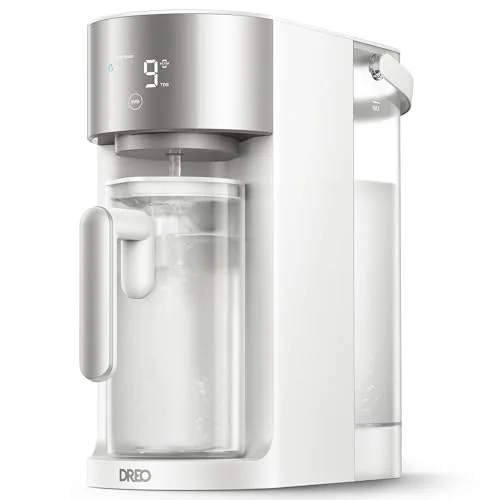
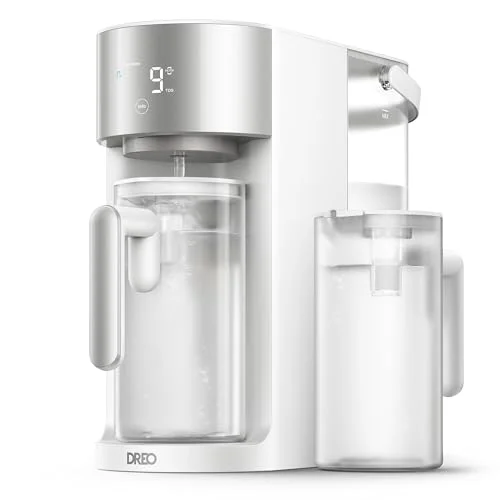
A countertop unit like the DREO Reverse Osmosis Water Filter Countertop is a closed loop: it draws from its own reservoir, produces purified water into an attached pitcher, and routes reject water into an internal drain container or back into the same unit, all without touching your home's plumbing. That's the whole appeal of "installation-free" — no feed-water line, no drain saddle, no faucet hole. An auto-flush cycle on a unit like this runs entirely inside that closed loop: it's flushing the membrane using water the unit already drew from its own reservoir, and the reject volume stays inside the same system you're refilling by hand. The DREO's listing specifies a 3:1 pure-to-drain ratio for normal production, which tells you the baseline reject proportion; the self-cleaning cycle sits on top of that as the same mechanism running on a timer.
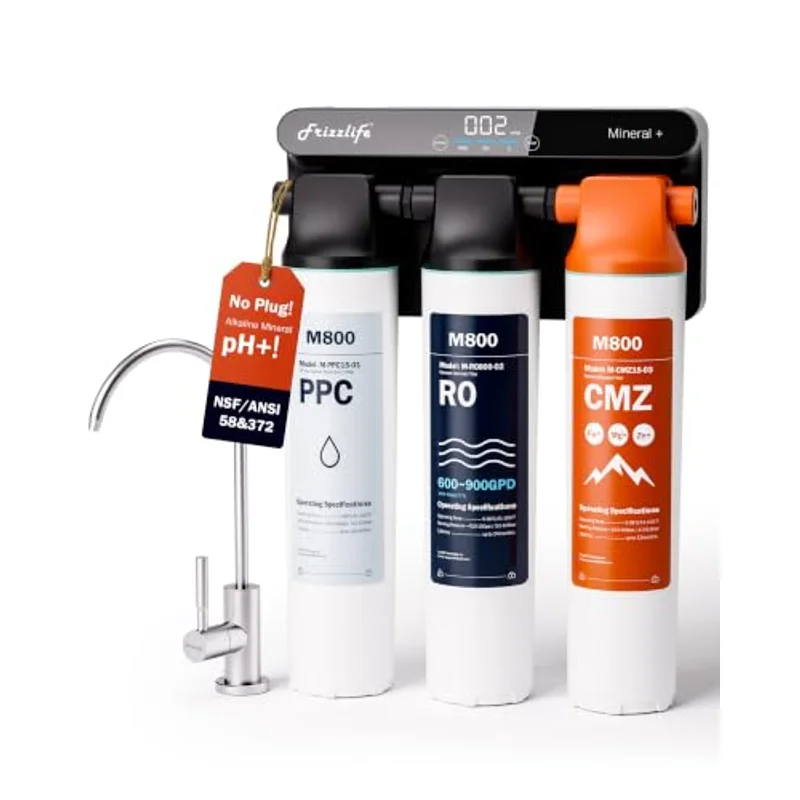
A tankless under-sink system like the Frizzlife M800 is plumbed into the house: a cold-water feed line in, a dedicated faucet out, and a drain line tied into the sink's drain or a saddle valve on the P-trap. Its auto-flush cycle sends water to that same household drain line, not into a container you empty — which is a meaningfully different experience, because it means the flush is invisible unless you happen to be under the sink when it runs. The M800 is also non-electric, running on incoming line pressure rather than a pump, which matters for how its auto-flush is triggered: a non-electric system generally relies on flow and pressure conditions rather than a powered timer and sensor board, since there's no outlet to run one from. The listing specifies "Huge Filter with Auto Flush" and a 4:1 pure-to-drain ratio at up to 900 GPD — both numbers worth knowing, since a bigger membrane housing between flushes and a better drain ratio are both relevant to how the system behaves over time, independent of the flush feature itself.
The practical takeaway: don't assume a countertop unit's self-cleaning and a tankless unit's auto-flush behave identically just because the marketing word is the same. One is contained inside a reservoir-fed loop you can watch; the other is plumbed into your house and happens out of sight.