What's Actually in the Box: RO Installation Kits Compared Before You Buy Tools
We're reader-supported: buying through our links may earn us a commission at no extra cost to you. We compare published listings, specifications and prices — we don't run a testing lab.
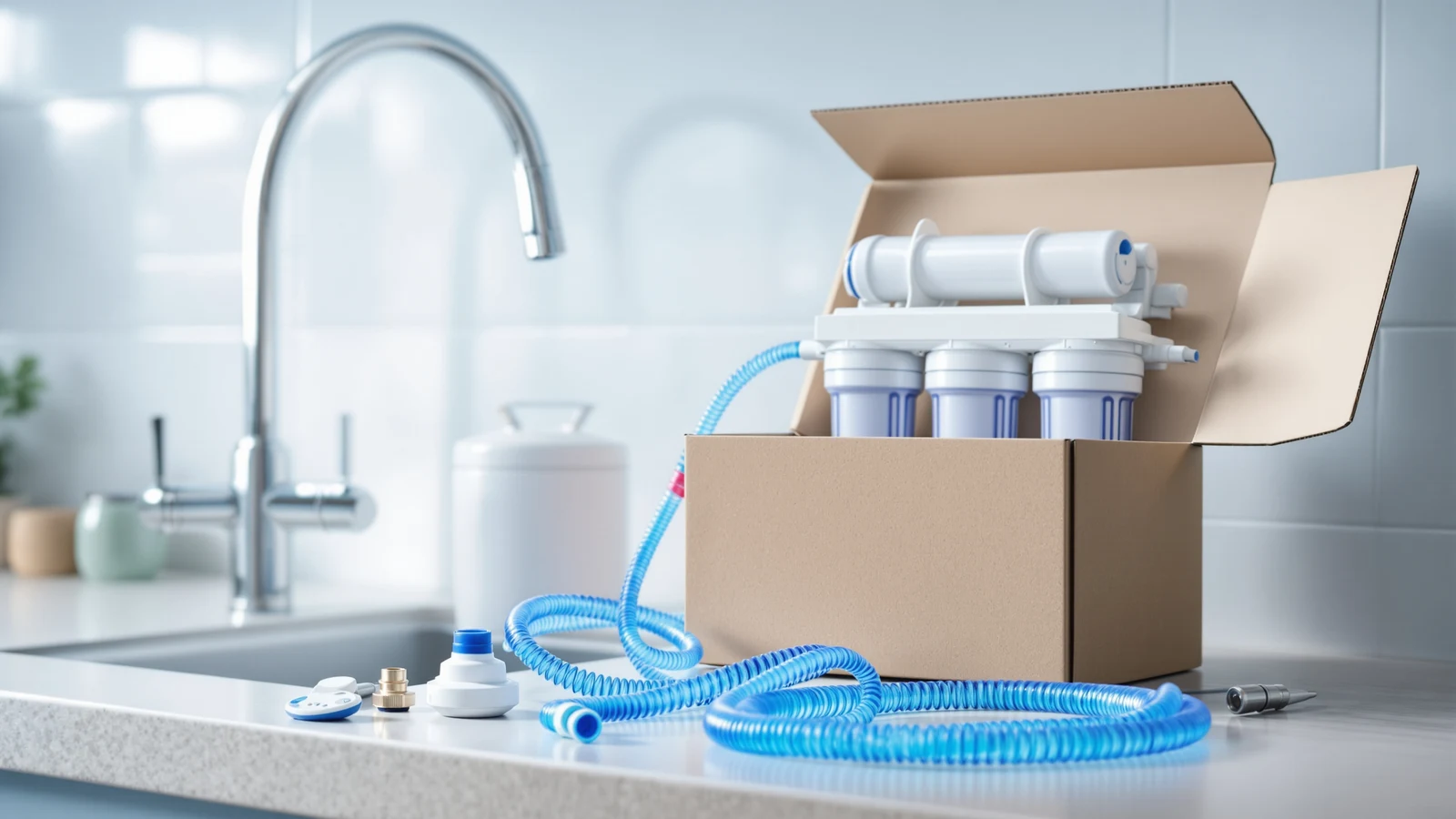
Every reverse osmosis listing shows the same finished photo: a clean white unit tucked into a cabinet, faucet gleaming above the sink. What the photo does not show is the thirty-odd loose parts that got it there — a feed valve, a drain saddle, a coil of tubing in two different diameters, a bag of fittings you have never seen before, and instructions that assume you already know what half of them are called. Some kits include everything down to the leak detector. Others include the system and expect you to already own the fittings your specific plumbing needs.
None of that is dishonest, exactly. It is just rarely stated near the price. The "what's included" section of a listing is often a single bullet buried under six bullets of contaminant-reduction marketing, and the difference between a kit that has everything and one that assumes a lot about your under-sink plumbing is the difference between an hour with a wrench and a delayed trip to the hardware store. This guide is about reading that bullet correctly, before the box arrives rather than after you've opened it.
The three things every kit should include — and the one that's easy to miss
Strip a reverse osmosis installation down to its essentials and every kit, tank or tankless, is solving the same three connection problems. If a listing's included-parts section does not clearly address all three, that is the moment to ask a question before you buy, not after the box is open.
- A way to tap the cold-water line. Almost always a feed water adapter or angle-stop valve that clamps onto your existing cold supply — under the sink, at the shutoff — and diverts a small branch to the RO system. This is the part that has to physically match the fitting already under your sink, which is exactly where mismatches show up first.
- A way to get rid of the reject water. A drain saddle or drain clamp that fastens around your sink's drain pipe (or garbage disposal tailpiece) and gives the RO system's waste line somewhere to go. It typically needs a hole drilled in the drain pipe itself, which is why the saddle usually ships with its own small drill bit.
- A dedicated faucet, and a place to put it. A separate faucet mounted through a hole in the sink or countertop, connected back to the storage tank (or directly to a tankless unit) so RO water never has to compete with your regular tap. Most kitchen sinks already have a spare hole for a sprayer or soap dispenser; some don't, and that changes the job considerably.
The part that's easy to miss isn't a fitting at all — it's length. A kit can include every adapter it needs and still leave you short, because the tubing coiled inside the box was sized for a "typical" installation: a tank a couple of feet from the faucet, a feed valve within arm's reach of the unit. If your cabinet is deeper than average, if the tank sits in a different cabinet than the system, or if you're running a second line to a dishwasher or coffee maker as well as the fridge, the stock length can come up short right at the last connection. Tubing itself is cheap and sold by the foot at any hardware store — the problem is realizing you need more of it mid-install, with the water already shut off and half the system apart.
Leak detectors: which systems include one, and why it's worth checking for
A leak detector for an under-sink RO system is a small battery-powered sensor that sits on the cabinet floor, under the tank or the lowest fitting, and sounds an alarm the moment it touches water. Some models can also be wired to a shutoff valve so they cut the supply automatically. Either way, the job is the same: catch a slow drip before it has had days or weeks to soak into a cabinet floor, because that's exactly the kind of leak an RO installation is prone to — dozens of small push-fit and compression connections, all made once, by hand, usually by someone doing it for the first time.
Whether one is in the box varies by listing, and it is worth reading the title as carefully as the description, because manufacturers who include a detector tend to say so up front rather than bury it. The VIVA21 5-Stage Reverse Osmosis System (ASIN B0FNM7D95H, $199.99) names its leak detector directly in the product title, alongside its WQA Gold Seal certification to NSF/ANSI 58 & 372 and a lead-free faucet — a sign the detector is treated as a headline feature of the kit, not an afterthought. By contrast, neither the VonWater 600GPD Under Sink RO System (ASIN B0DBGKN88S, $153.99) nor the iSpring RCC7AK-BLK Alkaline 6-Stage System (ASIN B0CN7JB1VD, $249.99) mentions a leak detector in its listed title — which doesn't necessarily mean the box is missing one, only that you should scroll to the full parts list and the product images before assuming either way.
If a system you're set on doesn't include one, it's not a deal-breaker — a standalone water-leak sensor is a normal, common accessory purchase for any under-sink appliance. The reason to check before ordering is simpler than protection: it's one fewer thing to add to the same shopping trip, and one fewer excuse to skip once the system is already installed and working.
Adapters and fittings: what "standard 1/2 inch" assumes about your plumbing
Reverse osmosis listings routinely describe their feed adapter as fitting a "standard" cold-water line — usually a 1/2-inch compression or NPT-threaded connection at the shutoff valve under your sink. For a large share of American kitchens, built or renovated with standard copper or braided-steel supply lines, that assumption holds and the included adapter simply works. But "standard" is doing a lot of work in that sentence, worth checking against what's actually under your sink before you order rather than trusting the word on faith.
A few situations where the assumption breaks down, and none are exotic: older homes with a compression angle stop that predates the modern 1/2-inch standard; PEX supply lines terminated with push-fit connectors instead of a threaded valve; multi-family buildings on shared risers where the shutoff itself is a different size or style; and well-water systems, where the plumbing between the pressure tank and the kitchen sometimes uses larger-diameter fittings than a typical municipal hookup. In any of these cases, the adapter that ships in the box may simply not thread onto the valve you have, and the fix is a two- or three-dollar hardware-store adapter — cheap, but only useful if you know you need it before the install is underway.
The practical move costs nothing and takes two minutes: before you order, open the cabinet under your kitchen sink and look at the valve on the cold line. Note whether it is a compression fitting, a threaded connection, or a push-fit connector, and whether there is a shutoff valve there at all — some older setups don't have one, which is its own separate problem to solve first. Cross-reference that against the listing's stated fitting size, which is usually in the specifications section rather than the title. This is the same due-diligence habit that matters when deciding between proprietary quick-change filters and universal housings down the line — knowing exactly what standard your hardware follows, rather than assuming it matches the box, is what keeps a straightforward install from turning into an extra trip.
Tools you'll need regardless of what's in the box
No kit ships with tools — and a handful come up in nearly every under-sink RO install regardless of which system you buy:
- An adjustable wrench or two, for tightening compression fittings snugly without over-torquing the plastic housings many systems use.
- A drill, plus a bit sized for your faucet hole — needed only if your sink doesn't already have a spare hole for the RO faucet. Cutting a new hole in stainless steel is straightforward with the right bit; cutting one in granite or quartz generally is not, and is the point where most people call in a professional.
- Plumber's tape (PTFE/Teflon tape), for sealing threaded connections. It is inexpensive, sold everywhere, and not always included even in kits that supply every other fitting.
- A bucket and towels, because shutting off the cold-water line to install the feed adapter does not empty the line, and the first cut or connection is reliably wetter than expected.
- A flashlight or headlamp, for the parts of the job spent looking up into the dark of a cabinet at a fitting you can't quite see.
- A basic tubing cutter or sharp utility knife, for trimming the push-fit tubing to length — a straight, clean cut matters more than it sounds like it should, since a ragged edge is a common cause of a push-fit connection that leaks.
None of this is specialized equipment, and most people already own the bulk of it. The point is narrower: it's the set of things worth having on the counter before you open the box, so a missing tool doesn't become the reason the install stalls at the same moment as a missing part.
Reading a listing's parts list before you order, not after
The included-parts information on an Amazon listing is rarely in one place. The bullet points near the top tend to focus on filtration stages, certifications and output — the marketable specs — and the actual "in the box" contents show up, if at all, in a smaller section further down, in the product images (often as a labeled flat-lay photo of every part), or in the Q&A section where a previous buyer has already asked the exact question you have.
A short checklist, worth running through before you click buy rather than after the box is on your counter:
- Does the listing explicitly show or state a feed water adapter, and does it name a fitting size or type?
- Is a drain saddle included, and does the description mention a drill bit or hole-saw for mounting it?
- Is the faucet included, and is it the kind that needs a new hole or one that reuses an existing sprayer or soap-dispenser opening?
- Does the listing mention a leak detector by name, the way the VIVA21 system does — or is it silent on the point?
- Are tubing lengths specified anywhere, and do they look adequate for where the tank or system will actually sit in your cabinet?
- Is there a printed or PDF installation manual referenced, and can you find it (often linked in the listing or the manufacturer's own site) before you buy — so you know the process, not just the parts, ahead of time?
This is also the moment to think about anything beyond the sink itself. If the plan includes plumbing RO water to a second appliance, that's an additional length of tubing and usually an additional fitting the base kit was never sized for — worth confirming, per our guide on running RO to a dishwasher or coffee maker, before assuming the box covers it. The five minutes this checklist takes is the same five minutes a returns department spends processing the box that came back because a part nobody checked for wasn't there.
What a missing part costs in a delayed install
The part itself is rarely expensive. A feed adapter, a length of tubing, a tube of plumber's putty — none of it runs more than a few dollars at a hardware store. The cost that matters is time, and it shows up in a predictable shape: the water is already shut off, the old faucet is already out, the sink is unusable, and the one fitting that would finish the job is not in the box and not in the house.
For a household with one kitchen sink, that means either a trip to the hardware store mid-install — with the cold line capped and the sink out of commission until you're back — or reassembling everything just well enough to restore water overnight and finishing the next day. A project budgeted for an afternoon stretches into two, and the inconvenience compounds if the missing piece is something a generic hardware store doesn't stock, like a proprietary quick-connect fitting specific to one manufacturer's tankless unit. That's the same lock-in problem explored in our piece on quick-change versus universal filters: proprietary parts are convenient when they're in the box, and an obstacle when they're the one thing that isn't.
Multiply that by however many people are inconvenienced by a kitchen sink being out of service, and the true cost of a missing three-dollar part is never really three dollars — it's an evening, or a rescheduled attempt, or a plumber's callout fee if patience runs out first. None of that shows up on the listing page. Reading the included-parts section carefully, against your own plumbing, before you order is the only place that cost gets paid in advance instead of on install day.
The three kits, side by side
What each listing states about its class and headline features. Confirm the exact box contents on the current listing before you order — specifications and included parts can change between print runs.
| System | Class | Leak detector named in listing | Price | |
|---|---|---|---|---|
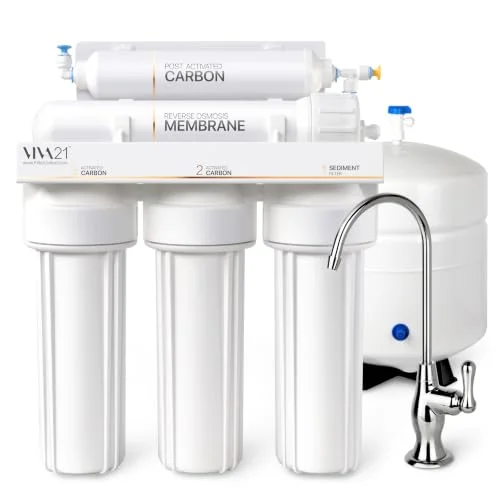 VIVA21 5-Stage RO System VIVA21 5-Stage RO System | Tank · WQA Gold Seal, NSF/ANSI 58 & 372 | Yes | $199.99 | Price |
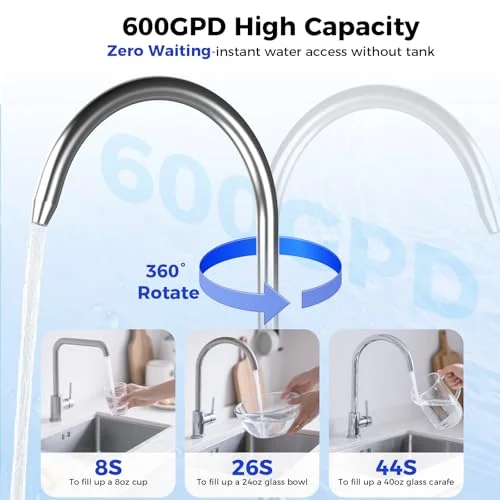 VonWater 600GPD VonWater 600GPD | Tankless · 600 GPD | Not stated | $153.99 | Price |
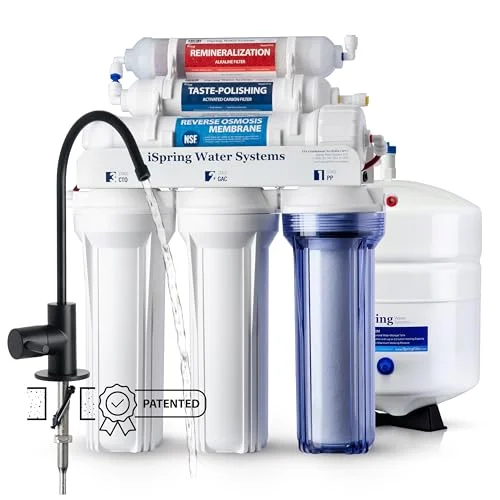 iSpring RCC7AK-BLK iSpring RCC7AK-BLK | Tank · Alkaline 6-stage, NSF/ANSI 58 | Not stated | $249.99 | Price |
Read this table for what it is: a comparison of what each listing states, not a verified teardown of every box. "Not stated" means the product title and our sourced data don't mention a leak detector — it does not mean the kit definitely lacks one. It means confirm it on the current listing, the same way you'd confirm the feed-adapter size, before you order. The VonWater is worth a separate note on its own class: a 600 GPD output tankless unit is a slim, plug-in system rather than a tank-and-three-housings layout, which changes both the cabinet footprint and, per our guide on electric versus non-electric systems, whether you need an outlet under the sink at all — a separate box-contents question worth checking alongside the fittings.
If you're weighing a countertop or no-install option instead of any of these — a legitimate choice if you rent or simply don't want to touch the plumbing — our guide to the best reverse osmosis systems for renters covers what changes when there's no feed valve, no drain saddle and no faucet hole to plan around at all.
Questions people ask about install kits
What comes standard in a reverse osmosis installation kit?
At minimum, expect a feed water adapter to tap the cold line, a drain saddle to route reject water to the drain pipe, and a dedicated faucet with mounting hardware. Beyond those three, coverage varies: tubing length, a leak detector, plumber's tape, and a drill bit for the drain saddle are included on some listings and left out of others. Check the specific listing's parts section rather than assuming a standard.
Do all RO systems include a leak detector?
No. Some manufacturers name it directly in the product title, like the VIVA21 5-Stage system, which signals it as a headline feature. Others don't mention one at all, which doesn't confirm its absence but does mean it's worth checking the full listing and product images before ordering. A standalone water-leak sensor is a normal, inexpensive accessory purchase if a system you want doesn't include one.
What does "standard 1/2 inch" fitting actually mean for my plumbing?
It typically refers to a 1/2-inch compression or NPT-threaded cold-water shutoff valve, which is common in many US kitchens but not universal. Older compression valves, PEX push-fit connectors, shared risers in multi-family buildings, and some well-water setups can all use different fittings. Look under your own sink before ordering and compare what you see to the listing's stated fitting type.
What tools do I need beyond what's in the box?
An adjustable wrench, plumber's tape, a bucket and towels, and a flashlight cover most installs. A drill and the right bit are needed only if your sink lacks a spare hole for the RO faucet — straightforward in stainless steel, and usually a job for a professional in granite or quartz.