1-Year, 2-Year and 5-Year Under-Sink Filters: Are the Lifespan Claims Realistic?
We're reader-supported: buying through our links may earn us a commission at no extra cost to you. We compare published specifications, certifications and prices — we don't run a testing lab.
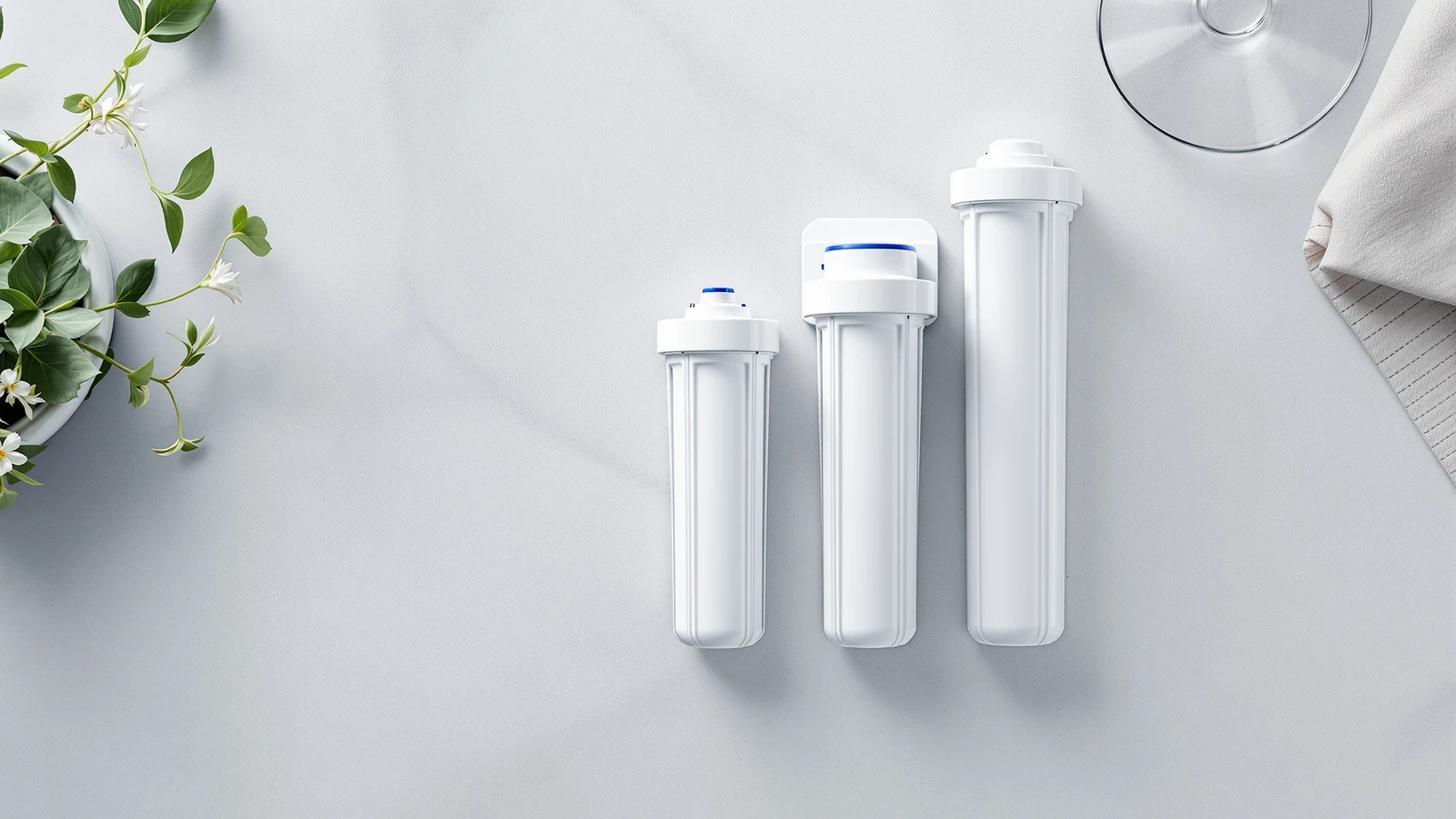
Waterdrop sells three under-sink filter systems that look, from the listing thumbnail, like the same product photographed three times. Same white housing, same single-cartridge format, same basic pitch: twist it under your sink, forget about it. The number that's supposed to tell them apart sits in the title — 1 Year, 2 Years, 5 Years — and it is doing an enormous amount of work for three or four words. It's a pattern that shows up elsewhere in this category too; we found something similar in Frizzlife's 800 GPD and 1000 GPD listings, two near-identical product pages from one brand that turn out to differ on a narrower point than the titles suggest.
A lifespan claim like that is not a law of physics. It is a manufacturer's estimate, built on an assumed household and an assumed water supply, printed as if it were a fact about the cartridge. This page is about what actually earns a filter the longer number, what has to be true in your kitchen for the claim to hold, and where the three Waterdrop systems — the 10UA, the 15UA and the UA-5Y — genuinely differ versus where they're the same filter wearing a different sticker.
Same format, three lifespan numbers
Prices as we recorded them. All three are single-cartridge, under-sink, NSF/ANSI 42 certified systems from the same manufacturer.
| Model | Rated lifespan | Gallons rated | Certification | Price | |
|---|---|---|---|---|---|
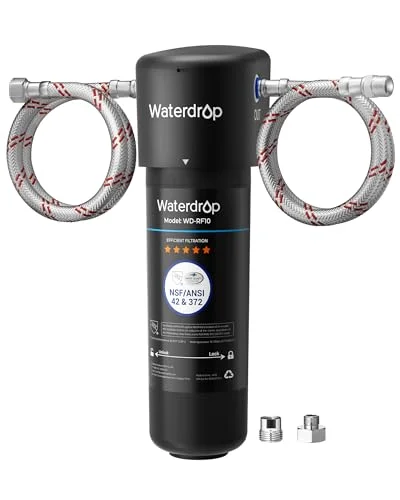 Waterdrop 10UA | 1 Year | Not stated on this listing | NSF/ANSI 42 | $36.09 | Price |
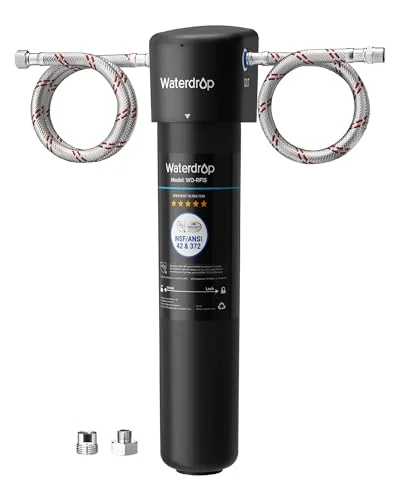 Waterdrop 15UA | 2 Years | 19,000 gallons | NSF/ANSI 42 | $46.29 | Price |
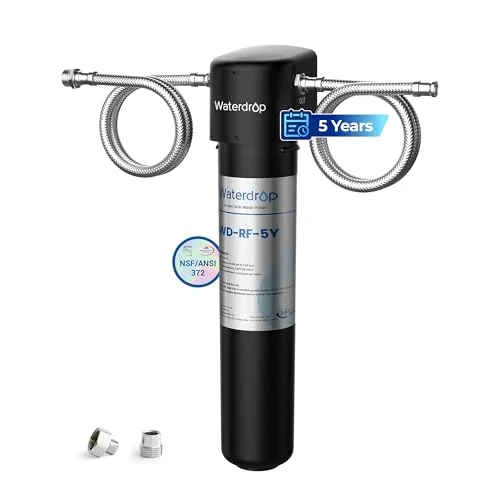 Waterdrop UA-5Y | 5 Years | Not stated on this listing | NSF/ANSI 42 | $85.48 | Price |
Only the 15UA's listing gives a gallon figure alongside its year figure. The 10UA and UA-5Y listings state the lifespan in time only — which matters for the section on gallons versus months below.
What actually changes between the 1-year and the 5-year version
Read the three listings side by side and the honest answer is: less than the price gap implies, and what does change is concentrated in filtration media and capacity, not in the housing or the install. All three are described as single-stage, single-cartridge, under-sink systems that connect inline to the cold-water supply ahead of your existing faucet — none of the three listings describes a different housing size, a different connector standard, or a different install procedure. If you've installed one, you could install any of the three the same way.
What the listings do call out, and what plausibly explains the spread from one to five years, is the filtration media packed into the cartridge. The 10UA's listing describes it as a carbon-block filter certified to NSF/ANSI 42 for chlorine taste and odor reduction — the standard single-purpose under-sink cartridge. The 15UA's listing adds the 19,000-gallon rating explicitly, which is the detail that lets you sanity-check the 2-year claim against a flow assumption (more on that below). The UA-5Y's listing leans on "Ultra Long Life" media and a larger stated gallon capacity as the reason for reaching five years on the same basic form factor — denser or higher-capacity carbon media packed into the same housing shape, by Waterdrop's own description, rather than a mechanically different filter. It's the same kind of single-line-item difference we ran into comparing Waterdrop's own X16 bronze and silver faucet listings: two listings from the same brand that look interchangeable until you isolate the one spec actually doing the work.
What none of the three listings claims is a different contaminant scope. All three carry the same NSF/ANSI 42 certification, which covers aesthetic effects — chlorine taste and odor — not the broader health-effects testing of NSF/ANSI 53 or the dissolved-solids reduction of NSF/ANSI 58. Paying more for the UA-5Y buys you more time between cartridge changes on the same basic job, not a filter that removes more from your water. If what you actually want is dissolved-solids or heavy-metal reduction, that's a different certification and a different product category — see our breakdown of ultrafiltration versus reverse osmosis under-sink systems for how the categories differ.
The usage assumption behind every lifespan claim
A "2 years" or "5 years" printed on a filter box is not a measurement of your kitchen. It's the output of an equation: rated gallon capacity, divided by an assumed daily draw, converted to a calendar figure. Every manufacturer in this category — not just Waterdrop — runs that same equation, and every one of them has to pick a household to run it against. Three assumptions do almost all of the work, and all three are baked into the number before it ever reaches the listing title.
- Municipal water. The rated capacity assumes a treated municipal supply with sediment and chlorine levels inside a normal, regulated range — not well water, not a supply mid-construction-work, not water with elevated iron or manganese. A heavier contaminant load exhausts the same cartridge faster regardless of what the box says.
- Cold-water only. These are inline cold-water filters, installed ahead of a kitchen faucet. The rated life assumes the water passing through stays at cold-tap temperature. Nothing in any of the three listings describes a hot-water-rated cartridge or housing.
- One household's worth of draw. The gallon rating divided by the time rating implies a daily or weekly draw the manufacturer considers typical — more people drinking from the tap, filling pots, running a coffee maker or an ice maker off the filtered line all pull that number down. "Lasts 12 months" is a gallon number wearing a calendar costume, and your household is not necessarily the one the manufacturer assumed.
Change any one of those three inputs and the printed number stops describing your situation, even though the cartridge itself hasn't changed at all.
Gallons rated versus months rated, and why they don't always agree
The 15UA's listing is the useful one here because it states both numbers: 19,000 gallons and 2 years. Divide one by the other and you get the daily draw the manufacturer assumed to reach that figure — roughly 26 gallons a day, which is a plausible number for a household using the filtered line for drinking, cooking and a few appliances, not for every gallon that passes through the house. That's the arithmetic underneath the "2 Years" headline, made visible because this particular listing happens to publish both inputs.
The 10UA and UA-5Y listings, by contrast, state only the time figure — 1 Year and 5 Years respectively — without a published gallon number on the pages we reviewed. That is a real gap in what the manufacturer discloses, not a detail we're choosing to omit: if a listing gives you only the calendar number, you cannot run the same sanity check, and you're trusting the time figure on its own. A system rated by gallons will drain out faster in a high-draw household and slower in a low-draw one; a system rated only by time gives you no way to see that happening until the filter is already past whatever capacity it actually had.
The practical takeaway: wherever a listing gives you a gallon figure, use it. Estimate your own household's daily filtered-water draw — even roughly — and divide the rated gallons by that number instead of trusting the printed year. Where a listing gives you only a time figure, treat it as the manufacturer's household, not necessarily yours, and watch for the physical signals in the next section rather than waiting for a date on a calendar.
What voids the clock early
None of the three listings here markets itself for well water, hot-water lines, or installation without a pre-filter stage — and each of those three conditions works against the rated lifespan in a different way.
Well water. Untreated well supplies routinely carry sediment, iron and mineral loads well outside what a municipal-water lifespan rating accounts for. A carbon-block cartridge rated for 19,000 gallons of treated municipal water will not reach 19,000 gallons of unfiltered well water before it's exhausted or physically clogged — the rating simply does not apply to that input. If your supply is a private well, the gallon and time figures on any of these three listings should be treated as unreliable rather than conservative.
Hot water. All three systems are described as inline cold-water filters. Running heated water through a cartridge built and rated for cold-tap temperature is outside the design the lifespan figure was calculated against — it isn't a listed use case for any of the three, and treating one as a hot-water filter isn't something these specific listings support.
Skipping the pre-filter stage. These are single-cartridge systems, which means the one cartridge inside is doing sediment and carbon-block filtration at once with nothing upstream protecting it. On a supply with any meaningful sediment load — city water after nearby utility work, an older service line, anything beyond a clean, low-particulate municipal feed — that single cartridge absorbs the particulate load that a two- or three-stage system would split across a dedicated sediment pre-filter. The lifespan rating assumes a clean feed; a loaded one exhausts the cartridge faster. It's the same reason getting the exact replacement filter for your model matters as much as the schedule you replace it on — a near-match cartridge can leave a gap in protection the lifespan rating never accounted for.
Cost per year, sticker price and replacement cartridge counted together
The sticker price is one purchase. Judging these three fairly means dividing the full cost of ownership — sticker plus the cartridges you'll buy inside the rated window — by the number of years each is rated to cover.
Waterdrop 10UA — 1 Year
Rated for one year. Over a five-year span covering the same ownership window as the UA-5Y below, that means buying the $36.09 cartridge roughly five times: about $219.95 total, or $36.09 a year, on the manufacturer's own replacement schedule — assuming you actually replace it on time every year rather than stretching it.
Check price →Waterdrop 15UA — 2 Years
Rated for two years or 19,000 gallons. Over the same five-year span that's two and a half replacement cycles — call it two full cartridges at $46.29 each plus a partial third, roughly $121.83 across five years, or about $24.37 a year, the cheapest per-year figure of the three on sticker-plus-cartridge math alone.
Check price →Waterdrop UA-5Y — 5 Years
Rated for five years, which — if the claim holds in your kitchen — means a single $85.48 purchase covers the entire five-year window with zero replacement cartridges needed, or $18.996 a year. That's the lowest per-year number of the three, but it's also the one most dependent on the usage assumptions above actually matching your household; it's a single cartridge with no scheduled maintenance point to catch a problem early.
Check price →On paper, the 5-year system wins the per-year math by a wide margin, and the 1-year system is the most expensive way to own filtered water over any multi-year span. But that ranking only holds if the rated lifespan is actually realistic for your water and your household — and as the sections above lay out, two of these three listings don't even publish the gallon figure that would let you check. If your supply is well water, runs warm, or carries more sediment than a clean municipal feed, the 5-year cartridge is the one with the furthest to fall from its rated number, because there's no pre-filter or scheduled check-in between purchase and the day it's exhausted. A 1-year or 2-year cycle, however much less economical it is on paper, gives you more frequent natural checkpoints to notice that your actual usage doesn't match the manufacturer's assumption.
The honest reading of the claim
The lifespan number on any of these three listings is realistic in the specific sense that it describes a real calculation someone ran — rated gallon capacity against an assumed draw, on an assumed water supply, at an assumed temperature. It is not realistic in the sense of being a guarantee that applies regardless of your plumbing. The 15UA's published 19,000-gallon figure is the most checkable of the three because it gives you both halves of the equation; the 10UA and UA-5Y ask you to trust the calendar figure on its own.
None of that makes the longer-rated cartridges a bad buy — the per-year math favors them clearly, on the manufacturer's own numbers. It does mean the "5 Years" on the UA-5Y's box is a starting assumption to verify against your own water and usage, the same way we'd treat any single-cartridge, single-stage claim in this category: anchored in what the listing states, not in what would be convenient to believe. If your installation includes a pre-filter stage, runs on treated municipal cold water, and serves a household in the range the gallon-and-time math implies, the rated number should hold close. Change any one of those conditions and it's worth checking the cartridge rather than the calendar.
Questions people ask about filter lifespan claims
Why do three filters from the same brand have such different lifespans?
By each listing's own description, the differences concentrate in the filtration media and rated capacity packed into an otherwise similar single-cartridge, under-sink housing — not in a different install, a different connector, or a different contaminant scope. All three carry the same NSF/ANSI 42 certification for chlorine taste and odor. The UA-5Y's "Ultra Long Life" media and higher stated capacity are what the listing credits for reaching five years in the same basic form factor.
Should I trust a filter's gallon rating or its time rating?
Use the gallon figure when a listing publishes one, because it lets you check the manufacturer's assumption against your own household's draw. The Waterdrop 15UA states both: 19,000 gallons and 2 years, which works out to roughly 26 gallons a day assumed. The 10UA and UA-5Y list only a time figure on the pages we reviewed, which means you're trusting the calendar number without a way to verify it against your own usage.
Does well water shorten a filter's rated lifespan?
Yes, and by a meaningful margin. None of these three listings markets itself for well water. Rated capacities assume a treated municipal supply with sediment and chlorine inside a normal regulated range; an untreated well supply with higher sediment, iron or mineral content exhausts the same cartridge far faster than its rated gallons or months would suggest, because the rating was never calculated against that input.
Is the 5-year filter actually cheaper to own than the 1-year filter?
On sticker-plus-cartridge math over the same five-year span, yes: the UA-5Y at $85.48 for the full window works out to roughly $19 a year if the rating holds, against about $44 a year for the 10UA bought annually. The trade-off is that the 5-year cartridge has no scheduled maintenance point to catch an early problem, so it depends more heavily on your water and usage matching the manufacturer's assumptions than a filter you're already replacing every year.