Waterdrop's TSB vs. TSA: what a dedicated second faucet adds to a carbon filter
We're reader-supported: buying through our links may earn us a commission at no extra cost to you. We compare published listing titles, prices and specifications — we don't run a testing lab, and nothing below is a star rating or a paraphrased review.
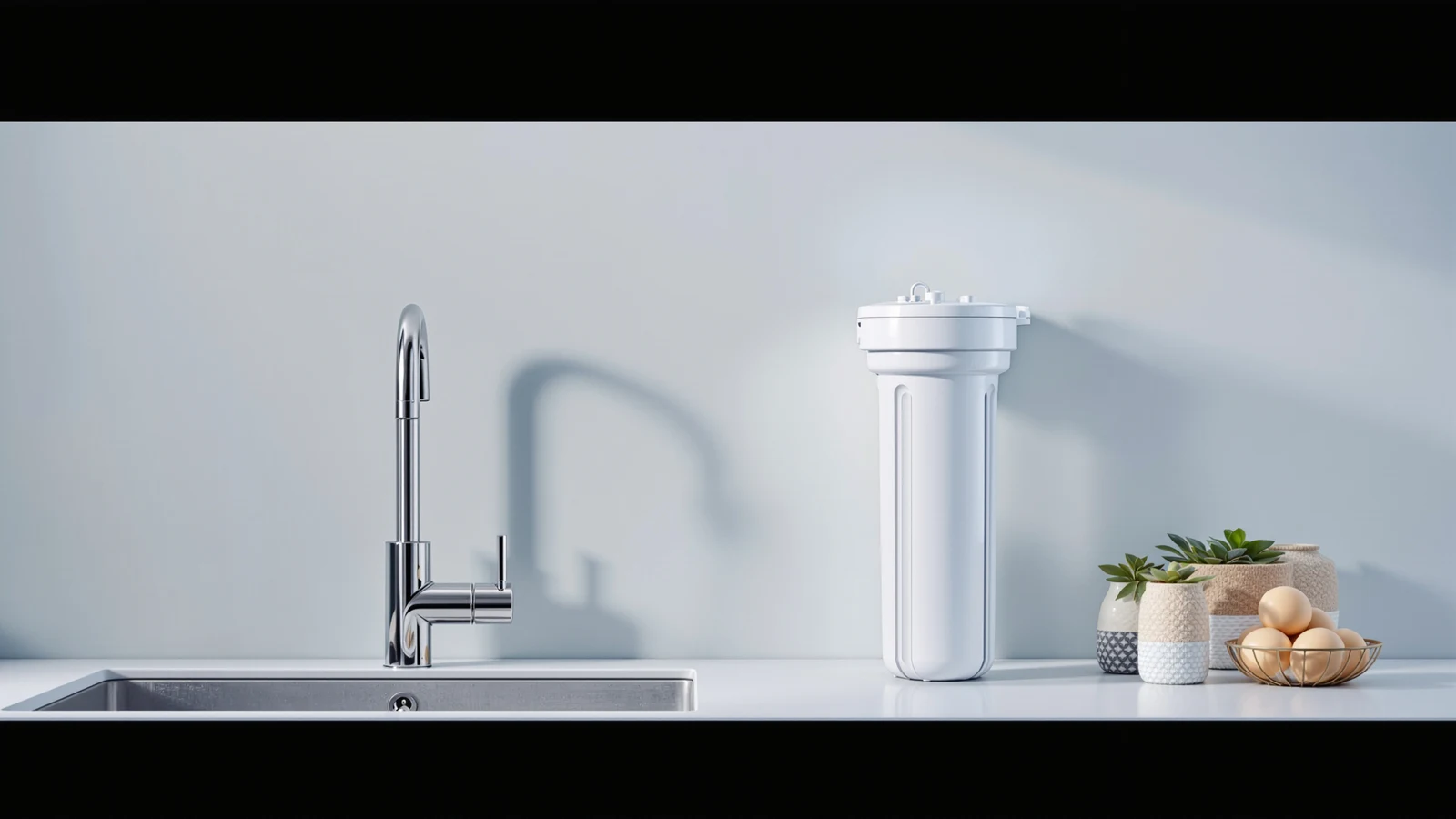
Shop Waterdrop's under-sink carbon filters and the TSA and TSB turn up next to each other often enough that it's easy to assume one is simply a newer revision of the other. It isn't. Both listings describe the same core product — an 8 Layer Under Sink Water Filter System — and the only difference either title states is in the TSB's full name: with Dedicated Faucet. Here are both listings exactly as their titles state them, with the prices we recorded:
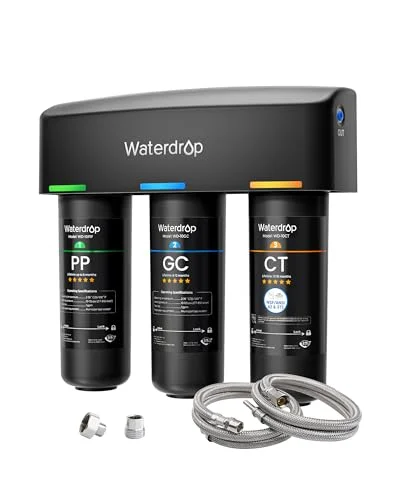
- Waterdrop TSA 8 Layer Under Sink Water Filter System, NSF/ANSI 42 Certified — $90.24, recorded October 29, 2026. Size/variant: 3 stage.
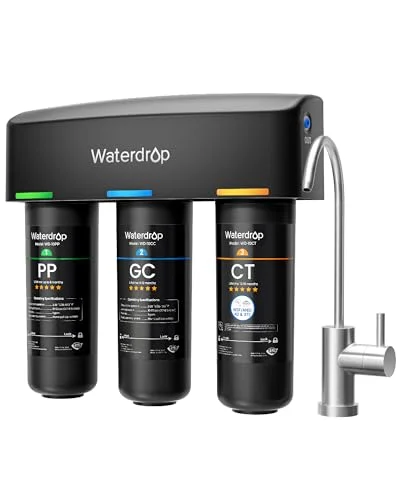
- Waterdrop TSB 8 Layer Under Sink Water Filter System, with Dedicated Faucet — $94.99, recorded November 2, 2026. Size/variant: 1 Count (Pack of 1).
Do the subtraction on the actual numbers we recorded, not a rounded headline figure, and the gap between them is $5.26 — $94.99 minus $90.24. That's a narrower premium than a lot of faucet upgrades across this brand's catalogue charge, and it buys exactly one named thing: a second, dedicated spout that the TSA's listing doesn't include at all. Neither title claims a difference in filtration, stage count, or certification beyond that one line item, which is the question this whole comparison exists to answer honestly — does a dedicated faucet change anything about the water coming out of it, or is it purely a plumbing decision bolted onto an identical filter?
One asymmetry worth flagging up front, because it's the kind of thing a quick skim misses: the TSA's title explicitly states NSF/ANSI 42 Certified. The TSB's title does not restate that certification anywhere in its own name. We've run into this exact pattern before on a different Waterdrop pair — the 10UA and its two upgraded siblings — where an add-on listing's title named its one headline feature and left the base certification unmentioned, without that certification actually being dropped. "8 Layer Under Sink Water Filter System" is common to both titles here, which reads far more like a shared platform than a filtration downgrade. But a title that doesn't restate a certification number isn't the same as a title that confirms one, and we're not going to collapse that distinction just because it would make for a tidier paragraph. If the NSF/ANSI 42 citation specifically matters to your purchase — a landlord's water-quality clause, your own documentation — confirm it's still printed on the current TSB listing before you buy.
The TSA's Size/variant field also states something the TSB's doesn't: 3 stage. The TSB's own variant field just reads "1 Count (Pack of 1)" — a quantity, not a stage count. Given the two share the identical "8 Layer" phrase in their titles, it's reasonable to read the TSB as the same 3-stage core with a faucet added rather than a different internal architecture. It's just that only one of the two listings states the stage count in the field we treat as authoritative, so we're naming that gap rather than quietly filling it in.
A direct cold-line connection versus a dedicated faucet, physically
The TSA's title doesn't mention a faucet at all, which tells you how it gets filtered water to a glass: a direct cold-line connection. In practice, that means the filter housing ties into the cold-water supply line under the sink, and the filtered output routes back out through the kitchen faucet you already have — usually through a diverter valve that lets you switch between filtered and unfiltered flow, sometimes with the entire cold line running through the filter and no switch at all. Either way, there's no new hole to cut and no new spout to mount. It's the lower-friction install of the two, and it's also why the TSA is the cheaper listing: you're not paying for a second piece of faucet hardware or the fittings and tubing that connect to it.
The TSB's title claims the opposite: a dedicated faucet, meaning its own small spout mounted through its own hole in the sink deck or countertop. That hole is sometimes already there — plenty of kitchen sinks have a spare opening left for a sprayer or a soap dispenser that never got installed — and sometimes it isn't, in which case you're drilling one. A step bit handles stainless steel and most laminate countertops without much drama. Granite and quartz are a different job: the material needs a diamond-tipped bit and a steady hand, and that's usually the point where people call someone rather than do it themselves on a Saturday afternoon. None of that is a Waterdrop-specific detail — it's true of any under-sink system that ships with its own tap — but it's the real cost sitting next to the $5.26 on the TSB's price tag, and it's a cost the listing price doesn't show you.
What the dedicated faucet buys, physically, is independence from your main kitchen faucet. The TSA's filtered water and your regular tap water share the same spout and the same valve; the TSB's filtered water gets a spout that only ever dispenses filtered water, leaving the main faucet completely untouched. We walked through the same trade-off in more detail — warranty exposure on the main faucet, two streams available at once, no diverter valve for someone to accidentally leave in the wrong position — in our look at the 10UA's own faucet upgrade, the 10UB. The mechanics there carry over here almost exactly; what's different is the price of entry, and the underlying filter.
Pricing a replacement cartridge against what the TSA and TSB already cost
The sticker price is the easy half of this decision. The harder half — what either system costs to keep alive — is where we have to be careful about which Waterdrop part numbers actually apply here. The one Waterdrop replacement cartridge in our records with a confirmed price is the Waterdrop RF10 Water Filter Replacement, at $25.99, recorded August 25, 2026. Size/variant: 1 Count (Pack of 1).
Here's the catch, stated plainly rather than glossed over: the RF10's own title names exactly which systems it replaces a filter for — Waterdrop 10UA/10UB/10UB-B. That's a different Waterdrop under-sink line entirely, the same 10U-series we covered in our comparison of the 10UA, UL12A and 10UB, not the TSA/TSB pair this article is about. Neither "TSA" nor "TSB" appears anywhere in the RF10's title. We're not going to tell you it's a confirmed fit for either system covered here, because the one document we have — the part's own listing title — doesn't say so.
What the RF10 is useful for is a sense of scale, not a confirmed running cost. It's the closest same-brand, similarly-positioned replacement cartridge we have priced: a single-count filter replacement for a comparable direct-connect-or-faucet under-sink carbon system from the same manufacturer, at $25.99. Whether a TSA- or TSB-specific replacement cartridge costs more, less, or roughly the same, we can't tell you — we don't have a part number or a price for either model's own-brand filter on record, and inventing one to fill the gap would be exactly the kind of guess this site doesn't make. Neither the TSA's nor the TSB's listing title states a filter-life interval either, in gallons or months, so we're not going to assign one here that isn't on either box.
That absence is itself worth weighing before you buy. A $5.26 gap at checkout is trivial either way. What isn't trivial is buying a system without knowing what its own-brand replacement part costs or how often you'll need one — and on the data we have, that's true of both the TSA and the TSB equally. If a confirmed running cost matters to your decision, check the current listing's own "frequently replaced together" section or Q&A for the specific TSA or TSB cartridge part number and price before you commit, the same caution we'd extend to any Waterdrop system whose maintenance cost isn't printed next to its purchase price.
Does the dedicated faucet change flow rate or filtration? No
This is the cleanest fact in the whole comparison, and it's worth stating without hedging: a dedicated faucet is downstream plumbing hardware, not a filtration component. Water passes through the TSA's or TSB's eight-layer filter housing first, in exactly the same sequence, regardless of which spout it eventually exits through. Whether that water then comes out through a diverter valve routed back into your existing kitchen faucet, or through a small dedicated spout mounted in its own hole, is a question about where the pipe ends, not about what happened to the water before it got there. Nothing in either title suggests otherwise — "with Dedicated Faucet" describes an added tap, not an added or removed filtration stage.
The same logic applies to flow rate. Flow through a filter housing is a function of the filter media, the stage count, and incoming line pressure — none of which a different spout at the end of the line can touch. A dedicated faucet can have its own flow characteristics as a piece of hardware (a narrower spout aerator, for instance, can feel slower at the glass even when the filter behind it is pushing the same volume), but that's a property of the tap, not the filter, and neither title gives us a flow-rate figure to compare in the first place.
It's also worth being precise about what kind of filtration this is, since the category gets blurred constantly in buying guides. Neither the TSA's nor the TSB's title uses the words "reverse osmosis," "membrane," or states a gallons-per-day output — and the TSA's title names NSF/ANSI 42 specifically, the standard covering chlorine taste, odor and particulate reduction, not NSF/ANSI 58, the standard that certifies total dissolved solids reduction and applies to the dedicated RO membrane systems we cover elsewhere on this site. Based on what's actually printed in front of us, the TSA and TSB are under-sink carbon filtration systems, not reverse-osmosis systems — there's no membrane in either title to reference, which makes a question like matching a replacement RO membrane's GPD rating simply not apply here. That's a different kind of under-sink purchase than the RO systems in that guide, and treating it as the same category is where a lot of buying confusion about this brand starts.
Who the extra tap is actually for
Once filtration and flow are off the table as reasons to pick one over the other, the decision comes down to something simpler: do you want one shared line, or a separate point of use. The TSA's direct cold-line connection means filtered and unfiltered water share the same faucet and the same valve. That's fine for a lot of households — it's one less thing mounted in the sink, one less hole to account for, and a diverter you flip when you want filtered water rather than a second tap to remember exists. It's also the better fit for renters or anyone who doesn't want to make a permanent change to a sink they don't own, since nothing about a direct-connect install requires drilling.
The TSB's dedicated faucet earns its $5.26 for a narrower but real use case: households that want filtered water available as its own, separate point of use, independent of whatever's happening at the main faucet. That matters if more than one person might want water from the sink at the same time — someone filling a pot from the regular tap while someone else draws a glass of filtered water from the second spout — or if you simply want a tap that's unambiguously "the filtered one," with no diverter valve for a housemate or a kid to leave switched to the wrong setting and quietly go a week drinking unfiltered water without anyone noticing. It's a similar instinct to the one behind LED faucet indicators on RO systems: both are ways of making "is this the filtered water" a visible, unambiguous fact at the tap rather than something you have to remember.
Both systems also sit at a price point worth placing in context. At $90.24 and $94.99, the TSA and TSB are priced well under what a dedicated reverse-osmosis system typically costs, closer to the bracket we cover in our look at the cheapest under-sink filters that aren't reverse osmosis at all. If your actual goal is RO-level total-dissolved-solids reduction, neither the TSA nor the TSB's stated NSF/ANSI 42 certification gets you there, dedicated faucet or not — that's a separate shopping decision, not a faucet upgrade.
The TSA and TSB, lined up
What each listing's own title and variant field state, and the prices we recorded. Confirm the live price before buying — Amazon prices move.
The pick for a spare sink hole, and the pick for one without
If your sink already has a spare hole — left over from a sprayer or soap dispenser you never installed, or a countertop template that includes one — the TSB is the straightforward buy. You're paying $5.26 over the TSA for a manufacturer-matched faucet that drops into a hole you already have, with none of the drilling cost or compatibility guesswork that would come from adding a faucet to the TSA later. We don't have a confirmed Waterdrop retrofit accessory for turning a TSA into a TSB after the fact, so paying the small premium up front, while it's a known $5.26 rather than an unpriced aftermarket spout and fitting kit, is the cleaner path if you already know you want the second tap.
If your sink doesn't have a spare hole — and especially if the countertop is granite or quartz, where drilling means calling someone with a diamond bit rather than doing it yourself — the TSA is the pick, and not as a compromise. You get the identical "8 Layer" filtration platform, the certification the TSB's own title doesn't restate, and a $5.26 lower price, in exchange for routing filtered water back through the faucet you already have via a diverter valve. For a renter, or anyone who'd rather not commit to a permanent hole in a sink, that's not a downgrade — it's the correct version of this system for a kitchen that isn't set up for a second tap.
What should decide this for you is never the filtration — both listings point at the same 8-layer carbon system, and nothing in either title suggests otherwise. It's whether you have, or are willing to make, a hole for a second faucet. Everything else, including the $5.26, is a rounding error next to that one physical fact about your sink.
Questions people ask about the TSA and TSB
What's the actual price difference between the Waterdrop TSA and TSB?
On the prices we recorded, the TSA was $90.24 (October 29, 2026) and the TSB was $94.99 (November 2, 2026) — a gap of $5.26. The only difference either title states is the TSB's dedicated faucet; neither title claims a difference in filtration or stage count.
Does the TSB's dedicated faucet change the filtration or flow rate?
No. A dedicated faucet is plumbing hardware at the end of the line, not a filtration stage — water passes through the same eight-layer housing either way before it reaches any spout. Flow rate is a function of the filter media, stage count and incoming line pressure, none of which a different faucet at the outlet can change. Neither listing states a flow-rate figure to compare in the first place.
Can I use the Waterdrop RF10 replacement filter in a TSA or TSB?
Not confirmed. The RF10's own title states it replaces filters for the Waterdrop 10UA, 10UB and 10UB-B — a different Waterdrop under-sink line — and does not mention the TSA or TSB. We don't have a TSA- or TSB-specific replacement cartridge price on record, and we're not asserting the RF10 fits a system its own title doesn't name. Confirm the correct part number on the current TSA or TSB listing before buying a replacement.
Do I need to drill a new hole in my sink for the TSB's faucet?
Only if your sink doesn't already have a spare one — many have an unused hole left for a sprayer or soap dispenser. If you need a new hole, stainless steel and most laminate countertops are manageable with a step bit; granite or quartz typically needs a diamond-tipped bit, which is usually the point where calling a professional makes more sense than a DIY attempt. The TSA avoids this entirely by connecting directly to the cold line and routing through your existing faucet.