iSpring's RO500-ORB vs. RO500AK-ORB: same $633.60 price, one has alkaline
We're reader-supported: buying through our links may earn us a commission at no extra cost to you. We compare published listing titles, specifications and prices — we don't run a testing lab, and nothing below is a star rating or a paraphrased review.
Search iSpring's 500 GPD lineup on Amazon and two listings sit almost on top of each other in the results: the RO500-ORB and the RO500AK-ORB. Both are tankless under-sink systems. Both are rated 500 gallons a day. Both carry NSF/ANSI 58 certification in their titles, both name an oil-rubbed-bronze faucet with the same "ORB" suffix, and both price, at the time we recorded them, at exactly $633.60. Put the two titles side by side and the only character that differs is two letters in the middle of one model number: AK.
Here are the two listings as their own titles state them, plus a third we'll bring in shortly because it changes the math on both:
- iSpring RO500-ORB Reverse Osmosis System, NSF/ANSI 58 Certified, 500 GPD | Under Sink Tankless Reverse Osmosis Water Filter, 2:1 Low Drain Ratio, TDS PFAS Reduction, Auto Flush, Filter Reminder — $633.60.
- iSpring RO500AK-ORB RO System, NSF/ANSI 58 Certified, 500 GPD with Alkaline — $633.60.
- iSpring RO5004F-AK UV Alkaline Reverse Osmosis Water Filter, SGS Tested PFAS and TDS Reduction, 500 GPD Tankless Remineralization RO System Under Sink, Filter Life Monitor, 2:1 Pure to Drain — $319.49, price recorded October 22, 2026.
That single-letter gap between the first two listings is the whole visible story if you only glance at the model numbers. "AK" is iSpring's shorthand for alkaline — the same suffix the brand uses across its catalog, including on the RO500AK we looked at in our 500 GPD price comparison, where adding the ORB faucet finish to that plain-AK model cost $8.54 more. Here, the comparison runs the other direction: same ORB faucet, same 500 GPD rating, same certification claim, and the only thing one title adds that the other skips is the alkaline stage — for $0 more.
What the alkaline stage physically adds that the plain RO500-ORB skips
A reverse osmosis membrane doesn't distinguish between contaminants and minerals — it rejects dissolved solids indiscriminately, which is exactly why the "TDS PFAS Reduction" claim on the plain RO500-ORB's own title is true, and exactly why that same mechanism also strips out calcium, magnesium, sodium and potassium along with everything else. An alkaline or "with Alkaline" designation, the kind the RO500AK-ORB's title states, means there is a mineral cartridge downstream of the membrane whose job is to add some of that back before the water reaches the faucet — raising the pH slightly and restoring a mineral presence the membrane just removed. It is the identical functional role we described for Waterdrop's standalone MNR35 remineralization cartridge in our filter replacement cost guide: an inline stage, physically positioned after the membrane, that exists purely to reintroduce what reverse osmosis took out.
The RO500-ORB's title doesn't make that claim anywhere, which is the entire basis for calling it the "plain" listing in this comparison: it states a 500 GPD membrane, a 2:1 drain ratio, auto-flush and a filter reminder, but nothing about an alkaline or remineralization stage. Skip the mineral cartridge and the water coming out the tap is, by the mechanism itself, lower in dissolved minerals than the alkaline sibling's — not necessarily "purer" in the way marketing copy for alkaline water sometimes implies, just mineral-light, because the membrane already stripped the minerals and nothing added them back. Whether that distinction matters to you is a taste-and-preference question more than a health one; we're not making a medical claim about alkaline water either way, only describing what the added stage does mechanically. If the broader mineral-removal question interests you, we work through it more generally in our guide to how under-sink filter lifespan claims hold up against the gallon ratings that drive them.
One thing worth being precise about, because the two titles invite a lazy assumption: an extra cartridge is a real, physical, line-item cost to manufacture, stock and box. iSpring is not giving away a free part for sentimental reasons. The more useful question isn't whether the alkaline stage costs the company something — it almost certainly does — it's why that cost doesn't show up as a price difference between these two particular listings, which is the question the next section actually answers.
Why a brand sells both versions at the same capacity and price point
We don't have iSpring's internal cost sheet, so we're not going to invent a margin breakdown that explains this to the dollar. What we can do is point at what's actually unusual here, because it isn't the existence of a plain-and-alkaline pair — it's that this particular pair costs the same. In our separate comparison of four 500 GPD systems, the plain RO500AK and the ORB-finished RO500AK-ORB — two listings that differ only in faucet color, not in filtration stages — carry an $8.54 gap between them. A cosmetic difference, in other words, moved the price here by more than a functional one does between the RO500-ORB and RO500AK-ORB.
A few explanations are consistent with what the titles show, and we're flagging them as plausible readings rather than confirmed facts, since neither title states a reason: a maker pricing a product line around a target shelf price rather than a strict bill-of-materials markup, a decision to use the alkaline version as the default SKU a reseller account promotes and the plain version as the lower-volume sibling priced to match it, or simply two listings launched at the same list price that neither seller has had a reason to separate since. What we can say with more confidence is what this means for a shopper: on these two listings specifically, "does it have alkaline" is a feature question with no price consequence attached, which is the opposite of what the ORB-finish pair showed us and worth knowing before you assume more features always costs more.
It also means the $633.60 you'd spend on either one buys you the choice itself, at no premium either direction — which is a cleaner decision than most product lines offer, and the reason this comparison is really about matching the stage to your water rather than justifying a price gap that doesn't exist.
The $319.49 RO5004F-AK: iSpring's own cheaper alkaline alternative
Here's where the "AK is free" framing gets more complicated, because iSpring doesn't only sell alkaline at $633.60 — it also sells it, under a different model line, at $319.49. The RO5004F-AK, priced as we recorded it on October 22, 2026, is $213.61 less than either ORB listing — roughly a third less — and its title states more features than the RO500AK-ORB's does, not fewer: "UV Alkaline," "SGS Tested PFAS and TDS Reduction," "Tankless Remineralization," a "Filter Life Monitor," and a "2:1 Pure to Drain" ratio, all in the same 500 GPD class.
Read that list against the RO500AK-ORB's spare title — which states only "NSF/ANSI 58 Certified, 500 GPD with Alkaline" — and the cheaper system's title discloses considerably more about what's actually in the box. It names a UV stage the two ORB listings don't mention at all, and it states the drain ratio and a filter-monitoring feature that the AK-ORB's title is silent on. If you're buying purely on what each title tells you, the $319.49 system reads as the more documented one, not the stripped-down one.
What it leaves out is the specific certification claim. "NSF/ANSI 58 Certified" doesn't appear anywhere in the RO5004F-AK's title; "SGS Tested" does. SGS is a real, independent testing and inspection firm, but a testing-lab name isn't the same statement as a named NSF/ANSI standard — SGS can test a product against any number of specifications, and the title doesn't say which one it used. That's a meaningfully different claim from "NSF/ANSI 58 Certified," which names the specific voluntary standard that governs TDS and contaminant-reduction performance for the category. We flagged this exact distinction — a testing claim versus a named-standard certification claim — in our look at whether a UV stage on a countertop RO purifier actually matters, where the presence of one extra stage didn't tell you anything about whether the base filtration was certified the same way. The second thing it leaves out is a Size/variant line of the kind we have on record for the two ORB listings — we don't have one for the RO5004F-AK, so we're not going to assert that it shares the ORB pair's footprint or fits the same cabinet space. If physical fit or the exact certification standard decides your purchase, that's confirmed on the live listing, not assumed from the model name.
The three listings, lined up
What each listing's own title states. Prices as we recorded them; the RO5004F-AK's price dated October 22, 2026.
| Listing | Price | Alkaline stated | Certification stated | Drain ratio stated | Auto-flush / filter tracker stated | |
|---|---|---|---|---|---|---|
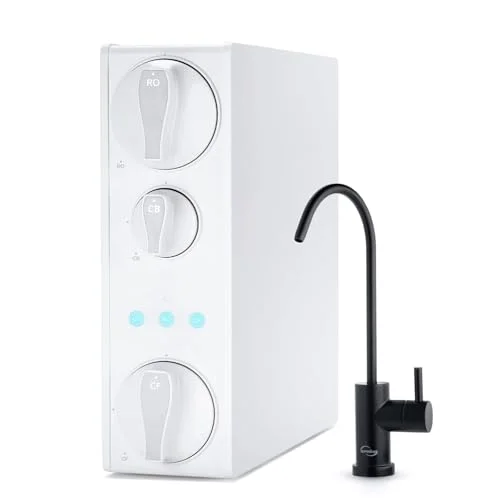 RO500-ORB | $633.60 | No | NSF/ANSI 58 | 2:1 Low Drain Ratio | Auto Flush, Filter Reminder | View |
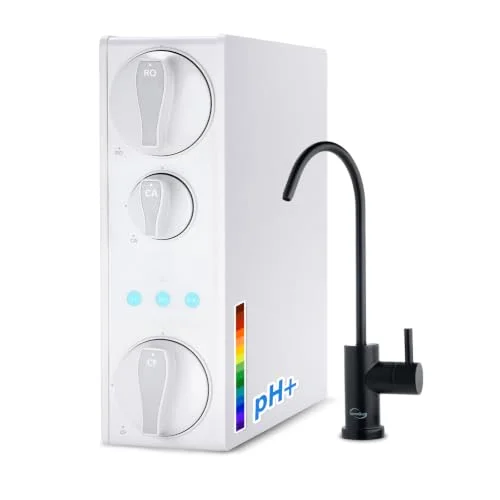 RO500AK-ORB | $633.60 | Yes (alkaline) | NSF/ANSI 58 | Not stated | Not stated | View |
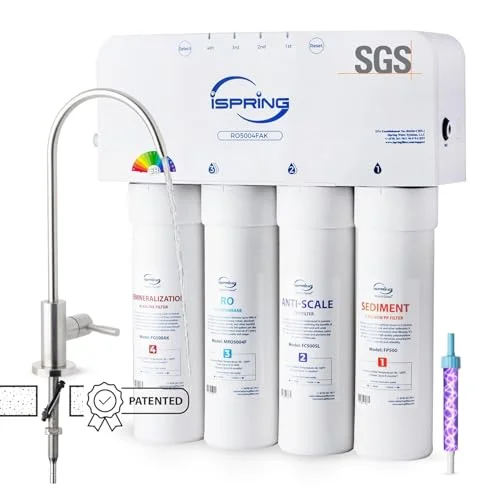 RO5004F-AK | $319.49 | Yes (UV alkaline) | SGS Tested (no NSF/ANSI standard named) | 2:1 Pure to Drain | Filter Life Monitor | View |
All three titles agree on one thing — a 500 GPD tankless platform — and diverge everywhere else: which stages are named, which certification language is used, and which maintenance features get a mention. The highlighted row is the one this comparison centers on; the third row is the context that changes what "the alkaline option" actually costs once you widen the search past a single model family.
Which one to buy if you don't want the mineral stage, and why the price doesn't change
If you've read this far because you specifically don't want remineralized water — maybe you're already supplementing minerals elsewhere, or you simply prefer the taste of water with nothing added back after the membrane — the answer sitting in these two titles is straightforward: the RO500-ORB is the one that skips the alkaline stage, and at $633.60 it costs exactly the same as the sibling that includes it. There's no discount for declining the mineral cartridge and no premium for keeping it. The only trade you're actually making between these two specific listings is a feature decision, not a budget one.
That changes if budget is genuinely part of the decision and you're open to a different model line. The RO5004F-AK's $319.49 price undercuts both ORB listings by $213.61 while still naming an alkaline stage — plus UV, which neither ORB listing claims — but it does so without the "NSF/ANSI 58 Certified" language either ORB listing carries, and without a confirmed Size/variant to tell you how it compares physically. If the specific NSF/ANSI 58 citation matters to your own records or your installer's requirements, that's the deciding factor in favor of either ORB listing over the cheaper alternative — not the alkaline stage itself, which the budget option also has.
Put plainly: choosing alkaline versus plain inside the RO500-ORB / RO500AK-ORB pair costs you nothing either way, so make that call on taste and water chemistry alone. Choosing between that pair and the RO5004F-AK is the decision where price, certification wording and UV actually trade off against each other — and that's the comparison worth spending the extra five minutes on before you click "buy," not the single letter sitting between two otherwise identical model numbers.
Questions people ask about this pair of listings
What's the actual difference between iSpring's RO500-ORB and RO500AK-ORB?
Based on what each title states, it's the alkaline mineral stage and nothing else in the headline specification: the RO500AK-ORB's title states "with Alkaline," while the RO500-ORB's title states a 2:1 drain ratio, auto-flush and a filter reminder with no alkaline claim. Both are 500 GPD, both state NSF/ANSI 58 certification, and both carry the same ORB oil-rubbed-bronze faucet designation, at the same $633.60 price we recorded for each.
Why do the plain and alkaline versions cost the same?
We don't have iSpring's cost breakdown, so we can't say definitively — only that it's the case for these two specific listings as priced when we recorded them. It's worth noting as unusual: in our separate comparison of RO500AK versus RO500AK-ORB, the ORB faucet finish alone added $8.54 over the plain-finish version, meaning a cosmetic change moved the price here more than the functional alkaline stage does between this pair.
Is the $319.49 RO5004F-AK the same system as the RO500AK-ORB, just cheaper?
Not provably — they're different model lines (RO5004F versus RO500), and we don't have a Size/variant on record for the RO5004F-AK to compare against the ORB pair's stated footprint. Its title does state more features than the RO500AK-ORB's does, including UV and a filter life monitor, but it also drops the "NSF/ANSI 58 Certified" language in favor of an "SGS Tested" claim that doesn't name a specific standard. Treat it as a related but distinct listing, not a confirmed twin.
Does skipping the alkaline stage mean the RO500-ORB filters worse?
No — alkaline and filtration performance are separate claims. The alkaline stage sits after the membrane and adds minerals back; it doesn't change what the membrane itself removes. The RO500-ORB's title states the same NSF/ANSI 58 certification and the same 500 GPD rating as its alkaline sibling, plus an auto-flush cycle and filter reminder that the alkaline listing's title doesn't mention. Choosing plain over alkaline is a water-taste decision, not a filtration downgrade.