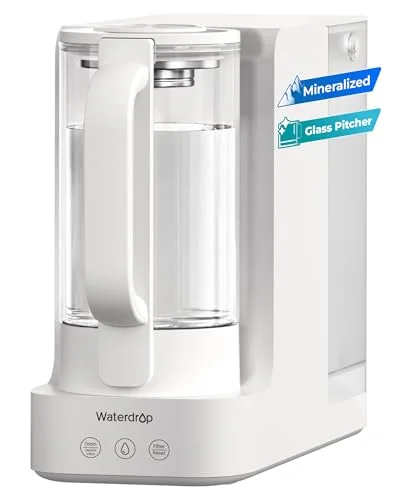
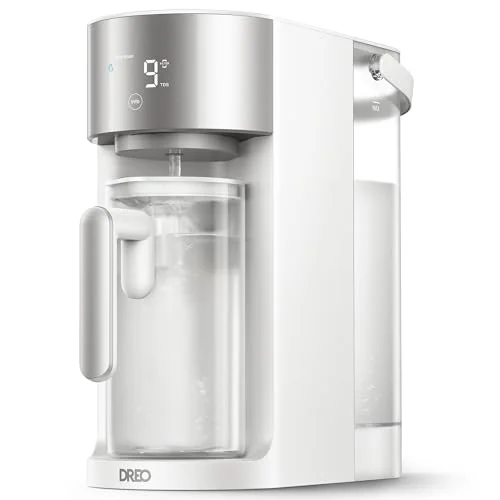
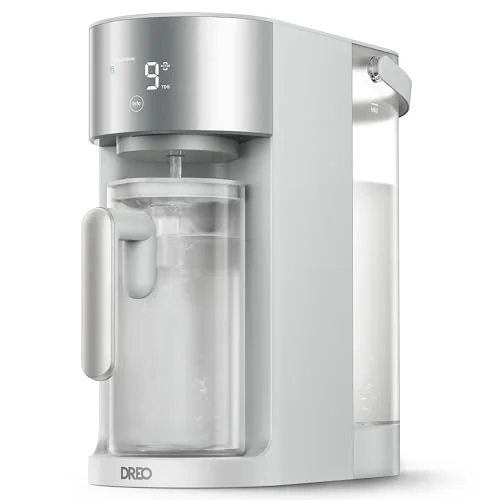
Somewhere between $300 and $400, a countertop reverse osmosis purifier starts looking like a genuine kitchen appliance: a larger built-in tank, a dispensing faucet that behaves like one, sometimes a touchscreen or a hot-and-cold spout. Below $200, you land in a different category entirely — three plug-in units we found priced at $139.99, $144.49 and $169.99, each small enough to sit next to a coffee maker and none of them asking for a drill, a drain saddle or a call to a landlord.
The three are Waterdrop's C2SL at $139.99, and two listings from DREO that share a product name, a 3-liter reservoir and a 3:1 pure-to-drain claim, priced at $144.49 and $169.99 respectively. That last pair is the most useful data point in this piece before we even get to specs: we could not find a documented feature that separates the $144.49 DREO listing from the $169.99 one. Same title, same reservoir size, same drain ratio claim, a $25.50 gap. If you're choosing between those two specifically, that gap is the thing to investigate on the current listing — a bundle, an extra filter, a color option — not assume away.
What all three skip, by being in this tier at all, is the headroom that the $300-$400 countertop and tankless systems we point people to elsewhere on this site are built around: bigger membranes rated for higher daily output, in some cases a direct hookup to the cold line that removes manual refilling altogether, and extra stages beyond the core sediment-carbon-membrane sequence. None of that is a defect in the cheaper units — it's the thing the price difference is buying, and it's worth naming plainly rather than discovering by trial and error after the purchase.
What the sub-$200 tier is actually optimized for is the install-free promise: unbox it, fill the reservoir, plug it in, and you have RO water in the time it takes the unit to run its first cycle. That convenience is real and it is the correct reason to buy at this price. The rest of this page is about what else comes with it.