A break room shopping for a reverse osmosis system almost always starts by comparing the same number every home buyer looks at first: gallons per day. It's the wrong number to lead with, and not because it's meaningless — it's a published production rating, usually measured by the manufacturer under a fixed feed pressure and temperature, and it's a legitimate way to compare the top-line output of different systems. The problem is what a GPD figure doesn't tell you: how fast the system is ready for the next person at the tap, which is the thing that actually determines whether a shared kitchenette feels like it has enough water or feels like it's always running behind.
A single-family kitchen mostly draws water in a handful of concentrated bursts a day — filling a pot, running a kettle, cooking. A break room draws water in a long scatter of small pulls spread across eight or more hours: someone topping off a bottle on the way to a desk, someone refilling a coffee maker's reservoir, someone filling a kettle for tea at 3 p.m. No single draw is large. What matters is whether the tap is ready again a minute later when the next person shows up, not whether the system could theoretically make 800 gallons in a day nobody is going to ask it to.
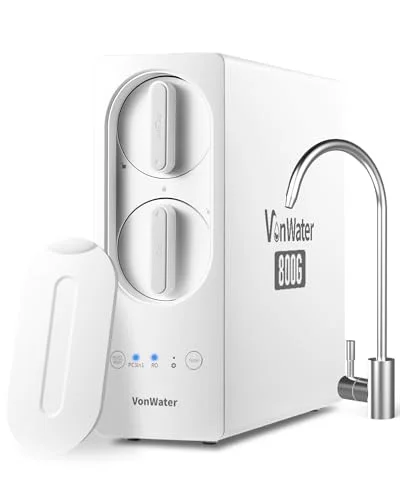
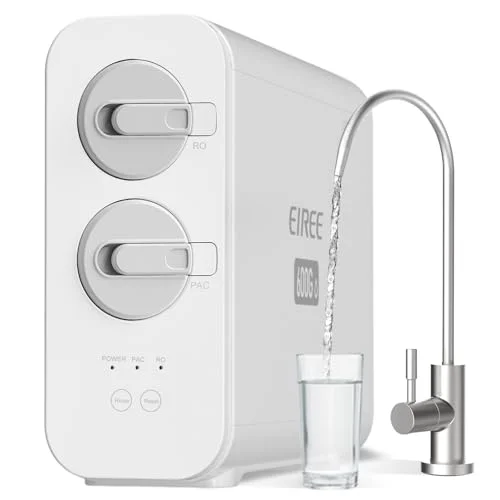
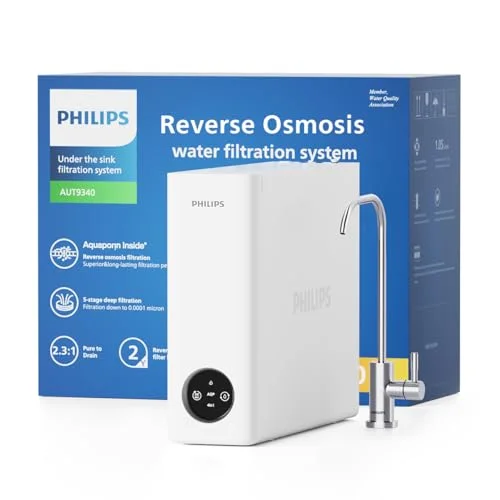
This is exactly where a tankless design earns its keep over the classic three-housings-and-a-pressure-tank layout. A tank system stores pre-made water in a bladder and needs time to refill that bladder's pressure after a draw — fine for one household's spaced-out meals, a real bottleneck if three or four coworkers queue up at the same tap inside a few minutes. A tankless unit produces on demand instead of drawing down a finite reserve, so as long as draws aren't overlapping and asking for more simultaneous flow than the unit is rated for, there's no tank to wait on between one person's bottle and the next. All three systems below are tankless for exactly this reason — a break room's problem is recovery, and recovery is the one thing the tankless format was built to solve.
That still leaves the GPD number with a job to do: it's the ceiling on how much the tap can produce across a whole day, which matters once you're thinking about ten or fifteen people instead of four. The three systems here span 800, 600 and 400 gallons a day by their own listed capacity — plenty of headroom for a typical kitchenette, and worth matching to your actual headcount rather than defaulting to the biggest number on the page, which usually also carries the biggest price tag.