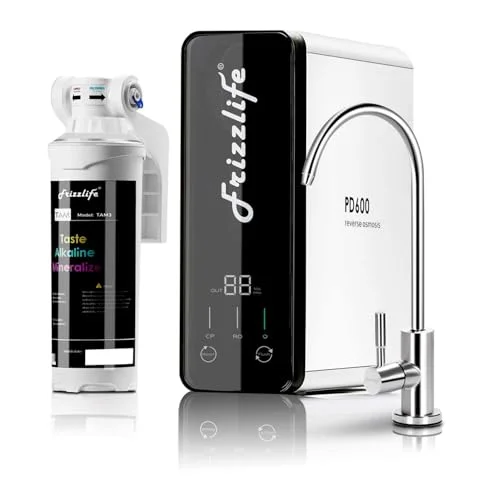
The first glass out of a brand-new reverse osmosis system is rarely the one on the box. Instead of tasting like nothing — the whole promise of the category — it can taste like the inside of a vinyl beach ball, or carry a faint plastic sweetness. That reaction is close to universal, and on its own it does not mean the system is faulty. What matters is how long it lasts, and whether a second, different taste joins it and never goes away.
This page works through the taste complaints that actually generate calls to manufacturer support lines: the new-system taste, a chlorine note that will not quit, a metallic or mineral edge, and the stale taste that shows up after the tap sits unused. Each traces back to a specific stage in the system, which is why "it just tastes bad" is the wrong way to describe the problem to anyone trying to fix it — including yourself.
Where the plastic-and-box smell actually comes from
A reverse osmosis system arrives as a stack of new parts: injection-molded housings, silicone and EPDM o-rings, polyethylene tubing, a food-grade storage tank with a rubber bladder inside it, and — on tankless units — a sealed plastic manifold. None of that is dangerous, and none of it is unusual for a product that sits boxed for months before installation. But it is not inert either: plasticizers and residual manufacturing compounds sit on those surfaces, and the first water through picks some of it up, the same way a new water bottle or garden hose tastes faintly of plastic before it has been rinsed a few times.
The storage tank is usually the biggest contributor, because it holds standing water against a large area of new rubber for hours before the first glass. A tankless system skips that reservoir, which is one reason its owners sometimes report a milder version of the same taste. Either way, the fix is displacement, not chemistry — you are rinsing the residue away, not neutralizing it.
Manufacturers are fairly consistent on the number: fill the storage tank, drain it fully through the faucet, and repeat two to three times before drinking the water. That clears the worst of it within the first few gallons on a tank system. Trace off-gassing from the tank liner and tubing can continue at a lower level for one to two weeks, so a faint edge that fades daily is expected; one that is just as strong on day ten as day one is not. If you skipped the initial flush when you installed the faucet, our guide to sanitizing and maintaining a system covers the same flush-and-drain sequence you should repeat at every future filter change, not just the first one. And if you are wondering why a "brand new" tank seems to empty faster than its rated capacity suggests, that is a separate, normal quirk of how the bladder holds pressure — covered in our storage tank guide — and unrelated to taste.