Best RO Systems
HomeGuidesBest tankless reverse osmosis systems
Buying guide

The Best Tankless Reverse Osmosis Systems

We're reader-supported: buying through our links may earn us a commission at no extra cost to you. We compare published specifications, certifications and prices — we don't run a testing lab.

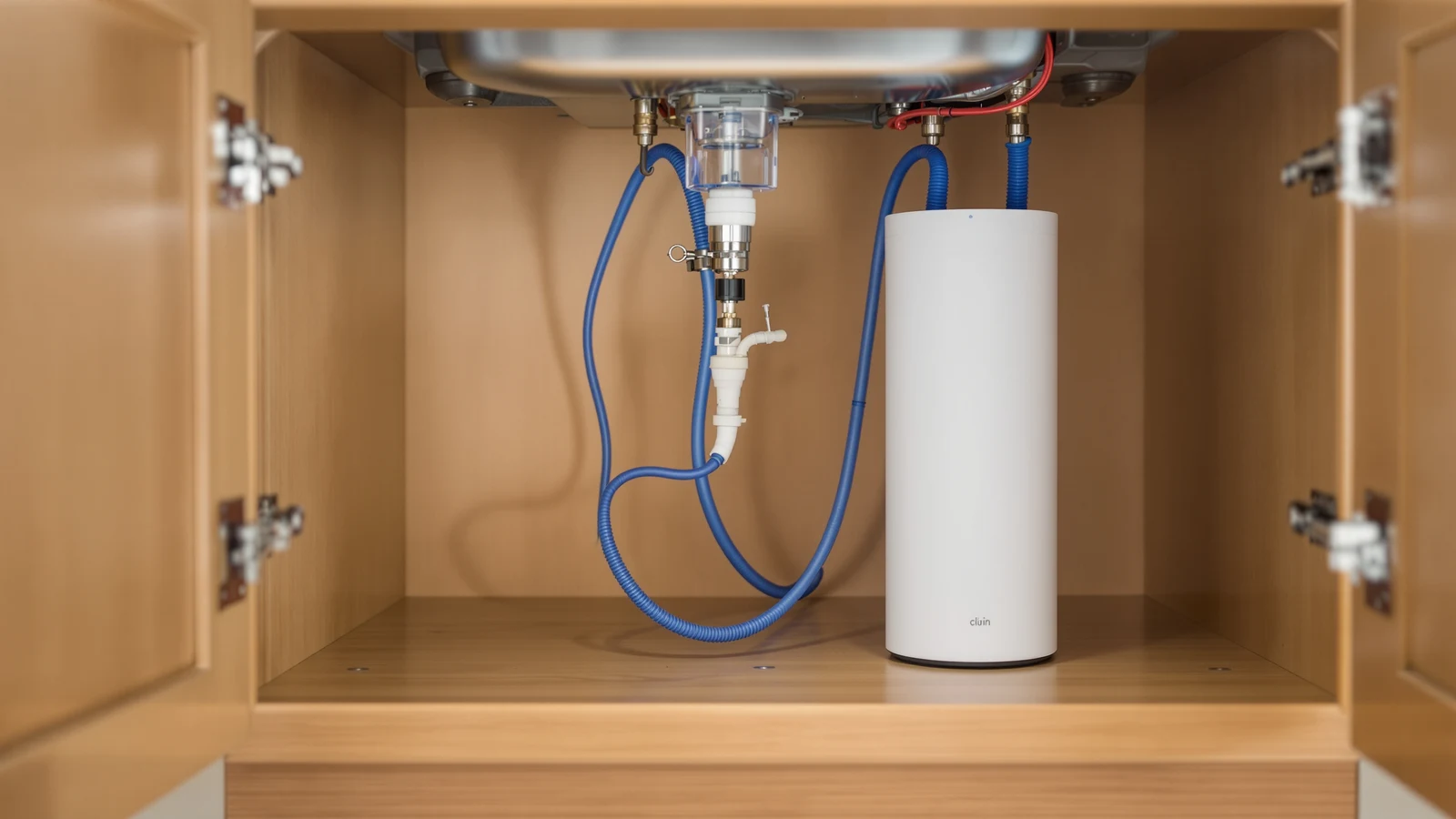
Slim tankless reverse osmosis system installed under a kitchen sink with no bulky storage tank taking up cabinet space

The reverse osmosis systems that showed up under American kitchen sinks for thirty years all shared a piece of hardware that had nothing to do with filtration: a squat, air-charged pressure tank, usually a foot tall, sitting between the last filter housing and the faucet. It was there because reverse osmosis membranes are slow — a classic unit produces water at a trickle compared to a kitchen tap — so the tank's whole job was to stockpile a few gallons in advance and release them fast when you turned the handle. Without it, the faucet would run at a fraction of normal speed.

"Tankless" removes that piece. It does not remove the membrane, the pre-filters, or the RO process itself — a tankless system still forces water through a semi-permeable membrane and still sends a portion to the drain, the same as a system with a tank. What changes is what happens after the membrane. Instead of accumulating slowly in a bladder tank until you draw it down, the water is produced closer to the rate you'd actually use it, so there's nothing sitting in storage waiting to be poured.

That's possible because tankless units add a small booster pump ahead of or at the membrane, raising the pressure the membrane sees and, with it, the rate of production. A pump is also the reason most tankless systems ship with a power brick — more on that in the power section below — and it's the mechanical trade at the center of this whole category: you gain speed and give back cabinet space, in exchange for a plug and, on most models, a somewhat more complex piece of equipment than three passive canisters and a tank. If you're not sure reverse osmosis is even the filtration level you need in the first place, our carbon filter vs. reverse osmosis comparison is the place to settle that before you shop by form factor.

One thing tankless does not change is what comes out of the faucet chemically. A membrane rated to reduce total dissolved solids does the same job whether the water passes straight to the tap or spends twenty minutes resting in a tank first — the tank was a buffer, not a filtration stage. If you want to understand what your system is actually removing and how to verify it's working, that's a separate question from tank versus tankless, and it's the subject of our guide to reading a TDS meter.
GPD ratings: what 600 gallons a day is really telling you

Every product in this guide is rated in GPD — gallons per day — and every one of them is rated at 600, except one that claims up to 900. It's worth being precise about what that number is and isn't, because it's the single most-quoted spec in this category and also the most misread.

GPD is a manufacturer's laboratory figure: the volume of permeate (product water) the membrane can theoretically produce over a continuous 24-hour period, under a specific set of test conditions the manufacturer chooses — typically a stated feed pressure, feed temperature and feed TDS. It is not a measurement of how fast water comes out of your faucet when you fill a glass, and no household runs a tap continuously for 24 hours to actually harvest that number. Run the arithmetic and 600 GPD works out to 0.42 gallons per minute averaged across a full day — a modest number that undersells what the pump-assisted flow at the faucet actually feels like in the thirty seconds you're standing there filling a pot, and oversells what you'd get if your home's incoming pressure or temperature falls short of the manufacturer's test bench.

Why the number matters anyway: it's a genuinely useful point of comparison between two systems tested under comparable conditions, and it tells you the general performance tier a unit belongs to. Older tank-fed systems were commonly rated at 50 to 100 GPD, because with a storage tank doing the buffering, the membrane never needed to keep pace with faucet demand — it just needed to refill the tank before you needed it again. A tankless system has no buffer, so it needs a materially higher GPD rating to feel normal at the tap, which is exactly why 600 GPD has become close to a baseline figure across the tankless category rather than a premium one. Feed pressure and temperature both move the real number in your kitchen up or down from the rated one — general facts about how RO membranes behave, not something any of these five listings spells out for a specific address, so treat the printed rating as the ceiling under ideal conditions rather than a guarantee. For the mechanics of why pressure moves output and how to tell if yours is limiting a system you already own, see our guide to reverse osmosis pressure and flow rate.

The one outlier here is the Frizzlife M800, rated "up to 900GPD" in its own listing title. That "up to" phrasing is doing real work — it's the manufacturer's own hedge, and it's worth taking at face value rather than rounding up to a flat 900 in your head. We come back to why that one runs differently in the non-electric section below.

The cabinet space you get back, measured

Here's the shape of the trade, stated honestly. A classic reverse osmosis install is commonly three or four upright filter housings, each a few inches across and roughly the height of a two-liter bottle, standing in a row — plus the pressure tank itself, a separate cylinder about the size and footprint of a small fire extinguisher, usually tucked in the back corner of the cabinet because it's the tallest single piece. Between the housings, the tank, the tubing, the shutoff valves and the drain saddle, a tank-fed system routinely claims most of the usable floor space under a standard 24-inch-wide sink cabinet, leaving a narrow strip for the trash can or the recycling bin and not much else.

A tankless unit collapses that into a single enclosure — one box instead of four to five separate pieces of hardware. That's the space you get back: not a specific number of cubic inches we can promise for your kitchen, but the removal of an entire redundant category of hardware (the tank) plus the consolidation of the remaining filtration stages into one footprint instead of several spread across the cabinet floor.

What we won't do is hand you exact dimensions for these five specific units. None of the five listings in this guide published cabinet-fit measurements we could verify against a spec sheet, so we're not going to print a width-by-depth-by-height figure and let you assume it's confirmed. Measure your cabinet — width, depth including the P-trap clearance, and height to the underside of the sink basin — and check it against the product listing's own dimensions before you buy, the same way you'd check a dishwasher will actually clear your countertop. That single measurement decides more purchases in this category than any spec on this page. If freeing up that space matters because you're also trying to plumb a line to your refrigerator or ice maker, a slimmer under-sink footprint tends to leave more room for the extra tubing run — a case we walk through in our guide to connecting RO to a fridge and ice maker.

Power: the outlet under the sink most units now need

Removing the tank is what gets talked about; the outlet is the part that catches people off guard during install. Here's the mechanism: without a pressurized tank storing water in advance, a tankless system needs another way to hit an acceptable flow rate at the faucet, and the common solution is a small electric booster pump built into the unit. A pump needs power, and that's why most tankless RO systems on the market today ship with a wall adapter and a cord that needs to reach an outlet — not a design flourish, a direct consequence of deleting the tank.

Of the five systems in this guide, four are plain "tankless" listings with no non-electric claim anywhere in their title or spec sheet — the VIOMI Pure B6W, the VIOMI V6, and both Waterdrop models, the G2P600 and G3P600. Following the general mechanism above, the reasonable working assumption is that all four use a booster pump and therefore need a nearby outlet, but we're not going to print that as a confirmed spec for a specific product when the listing itself doesn't state it plainly. Before you buy any of the four, check the listing's photos and Q&A section for a power cord and confirm there's a GFCI outlet or a spare receptacle within reach under your sink — an extension cord running through a cabinet full of plumbing is not a fix, it's a second problem.

The fifth system, the Frizzlife M800, is the exception, and it's explicit about it: "Non-Electric" is in the product name itself. No pump, no cord, no outlet required — which is exactly the scenario where that matters most, and it's the subject of the next section.

The picks

Five tankless systems, ranked by price

These five share the core spec that defines the category — tankless, under-sink, 600 GPD or better — so the honest way to rank them, absent a deeper spec sheet from every manufacturer, is by what they cost. Confirm the live price before buying.

ModelTypeRated outputPowerPrice
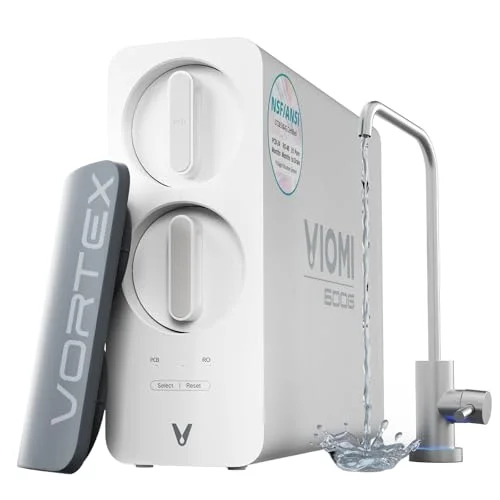
VIOMI Pure B6WTankless · under-sink600 GPDCheck listing$189.99Price
VIOMI V6Tankless · under-sink600 GPDCheck listing$239.99Price
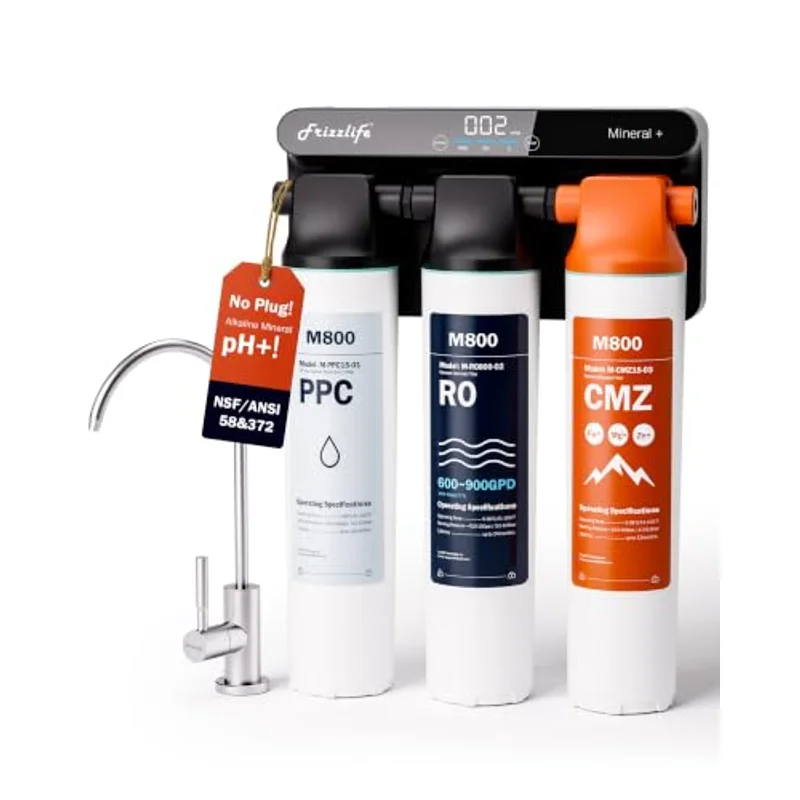
Frizzlife M800Tankless · non-electricup to 900 GPDNone needed$279.99Price
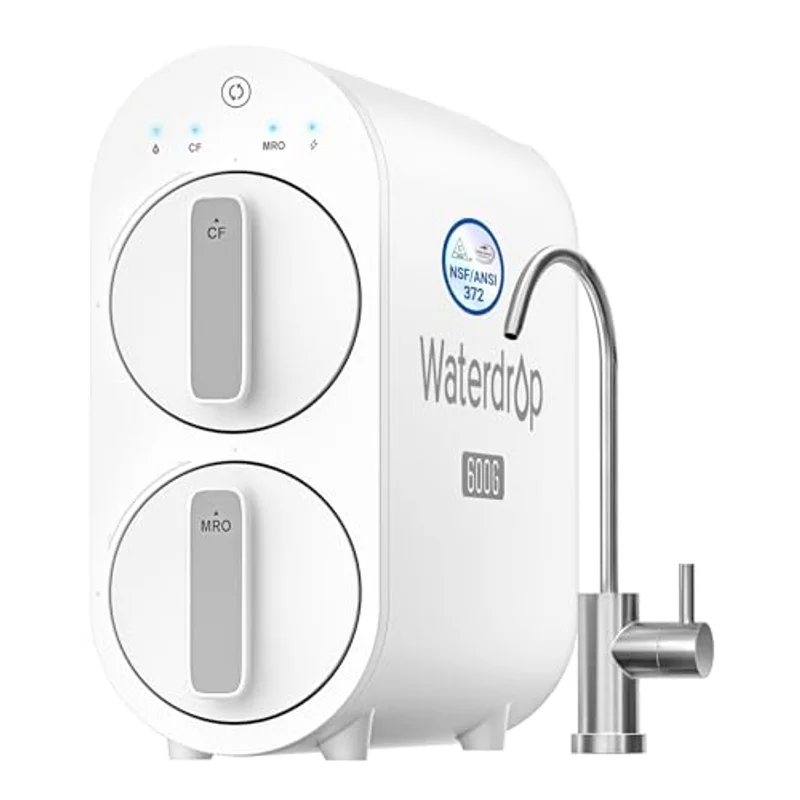
Waterdrop G2P600Tankless · under-sink600 GPDCheck listing$299.00Price
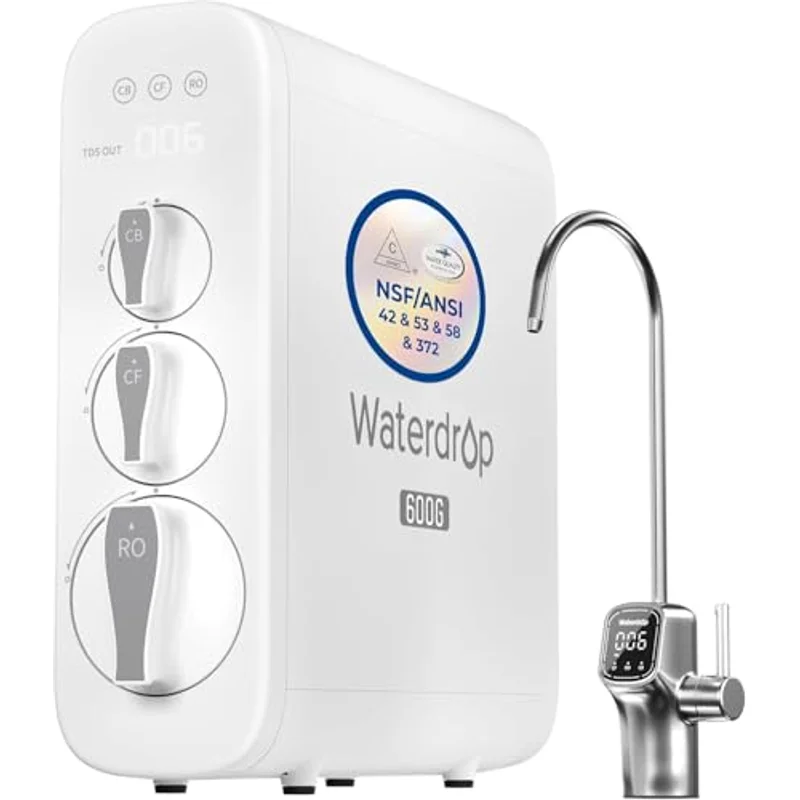
Waterdrop G3P600Tankless · under-sink600 GPDCheck listing$439.00Price
01Cheapest tankless

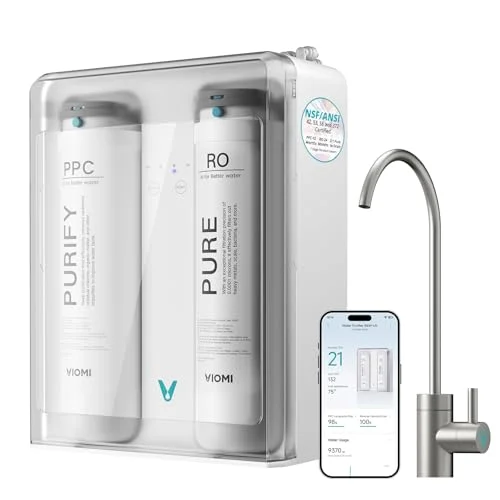
VIOMI Pure B6W

The lowest entry price into the tankless category here
600 GPD · Tankless · under-sink

At $189.99 this is the least expensive way into a tankless, under-sink 600 GPD system in this lineup — it undercuts the next-cheapest pick here by $50 and the priciest by nearly $250. If cabinet space and losing the tank are your priority and you don't need extras beyond that, this is where to start. It's also the pick worth pairing with our roundup of reverse osmosis systems under $250 if you want to see how it stacks up against tank-style systems at a similar price.

VIOMI Pure B6W 600 GPD tankless under-sink reverse osmosis system
$190
Tankless · 600 GPDCheck price →
02Step-up budget

VIOMI V6

$50 more than the B6W, same rated output
600 GPD · Tankless · under-sink

Same brand, same 600 GPD rating, same tankless under-sink format as the Pure B6W, at a $50 premium. Where two listings share the headline spec and differ mainly in generation or trim, the honest advice is to read both product pages closely for the details that don't show up in a title — included fittings, faucet style, warranty length — since neither of us can see a difference the spec sheet doesn't show.

VIOMI V6 600 GPD tankless under-sink reverse osmosis water filtration system
$240
Tankless · 600 GPDCheck price →
03No outlet needed

Frizzlife M800

The one system on this list that skips the power cord entirely
Non-electric · up to 900 GPD · NSF/ANSI 58 & 372 · alkaline mineralized · auto flush · 4:1 pure-to-drain

The exception to almost every other pick here: no pump, no cord, no outlet requirement, and the only system in this guide carrying a stated NSF/ANSI 58 and 372 certification and a published pure-to-drain ratio. We cover its trade-offs in full in the section below — it earns its own discussion rather than a single paragraph here.

Frizzlife M800 non-electric tankless reverse osmosis water filter with auto flush
$280
Non-electricCheck price →
04Mid-price

Waterdrop G2P600

A recognizable brand at the middle of this lineup's price range
600 GPD · Tankless · under-sink

At $299.00, the G2P600 sits almost exactly at the midpoint between the cheapest and priciest picks here, carrying the same 600 GPD tankless under-sink specification as the two VIOMI units and its own stablemate, the G3P600. As with the others, the listing itself is the authority on anything beyond output and form factor — check it directly for the details this guide's source data doesn't include.

Waterdrop G2P600 under-sink 600 GPD tankless reverse osmosis system
$299
Tankless · 600 GPDCheck price →
05Top of this range

Waterdrop G3P600

The most expensive pick in this guide
600 GPD · Tankless · under-sink

At $439.00 this is the priciest system in this lineup by a wide margin — $150 more than its own G2P600 sibling for the same rated 600 GPD output on paper. That gap is exactly the kind of thing worth resolving before you pay it: pull up both Waterdrop listings side by side and compare stage counts, warranty terms and included accessories directly, because on the specs available to us here, output and form factor are identical.

Waterdrop G3P600 600 GPD tankless reverse osmosis water filter
$439
Tankless · 600 GPDCheck price →

The non-electric exception, and its limits

Every tankless system in this guide except one relies on a booster pump, and a booster pump needs an outlet. The Frizzlife M800 is the one that doesn't: it's described in its own listing as non-electric, meaning it produces water on demand using nothing but the pressure already present in your home's cold-water line — no pump, no cord, no adapter, no outlet requirement. For a cabinet with no nearby receptacle and no realistic way to add one, that single fact can decide the purchase before any other spec matters.

The listing also carries more published detail than the four electric units in this guide: it's rated "up to 900GPD," it's described as alkaline mineralized — meaning it adds minerals back into the water after the membrane strips them out, a category of feature we cover in more depth in our remineralization filters guide — it includes an auto-flush function, and it's the only system here with a stated certification, NSF/ANSI 58 and 372, plus a published 4:1 pure-to-drain ratio. If you want to understand exactly what those two certification numbers do and don't cover before you take them at face value, our NSF 58 vs. NSF 372 explainer walks through the difference — one certifies contaminant-reduction performance, the other certifies that the materials are lead-free, and they are not interchangeable claims even when a single listing carries both.

The limits are the flip side of the same design choice. Because there's no pump doing mechanical work to push output higher, a non-electric system's real-world flow is more directly at the mercy of your home's actual incoming water pressure and temperature than an electric tankless unit's is — the "up to" in "up to 900GPD" is carrying real weight here, more than it would on a pump-assisted system that can compensate somewhat for a weaker feed. If your household's incoming pressure runs low, expect the gap between the rated ceiling and your faucet's real output to be wider on a non-electric unit than on an electric one. And the trade only makes sense if the thing you're actually short on is an outlet, not counter or cabinet time: giving up a booster pump buys you freedom from needing power, and nothing else about the rest of the system — the membrane, the housings, the drain connection — goes away or gets simpler.

How we picked

Five listings, one shared spec

We looked for systems explicitly sold as tankless, under-sink reverse osmosis units, and kept the five with a clear published rated output and a real, current Amazon listing. We didn't require every unit to carry a full spec sheet — several of the listings here publish only output and form factor, and we say so plainly rather than filling the gaps with an inferred number. Where one listing genuinely published more (certification, drain ratio, features), we reported it; where four did not, we didn't pretend they had.

How we compared

Research, not a lab

We're honest about this: we don't physically test these systems and we don't run a testing lab. We compare published specifications, listed certifications, and live pricing, and we're explicit anywhere a listing simply doesn't publish a spec we'd want to compare — GPD is a lab-rated figure from the manufacturer, not a field measurement we collected ourselves. Amazon no longer exposes star ratings through its product API, so you will not find invented ratings or review counts anywhere on this page.

FAQ

Common questions

What does "tankless" actually mean on a reverse osmosis system?

It means the system has no pressurized storage tank between the membrane and the faucet. A classic RO system produces water slowly and stockpiles it in a bladder tank in advance so the faucet can deliver it quickly on demand; a tankless system instead uses a booster pump (or, on non-electric models, your home's own line pressure) to produce water closer to the rate you'd actually draw it, so nothing sits in storage waiting to be poured.

What does a 600 GPD rating actually tell me about my faucet's flow?

GPD — gallons per day — is a manufacturer's lab-rated figure for continuous production over 24 hours under a specific set of test conditions, not a measurement of how fast water fills your glass. 600 GPD works out to roughly 0.42 gallons per minute averaged over a full day. It's a useful way to compare two systems tested under similar conditions and a rough indicator of performance tier, but your real-world flow depends on your home's feed pressure and water temperature, which the printed number does not account for.

Do all tankless reverse osmosis systems need a power outlet?

Most do, because removing the storage tank usually means adding an electric booster pump to keep flow fast enough at the faucet, and a pump needs power. There are exceptions — non-electric tankless systems exist and rely on your home's incoming line pressure instead of a pump — but a listing needs to say so explicitly. Check the product page for a power cord or an explicit "non-electric" claim before assuming either way, and confirm there's a usable outlet under your sink before you buy.

How much cabinet space does a tankless system actually save?

A classic tank-fed system is typically three or four upright filter housings plus a separate pressurized storage tank about the size of a small cylinder — together, often most of a standard under-sink cabinet's usable floor space. A tankless system consolidates that into a single enclosure. We can't promise exact inches for any specific model, since none of the listings in this guide published verified cabinet-fit dimensions — measure your own cabinet and check it against the product listing before buying.

Keep reading

Next, if you're still choosing