Countertop RO purifiers with a built-in fruit infuser: worth paying for?
We're reader-supported: buying through our links may earn us a commission at no extra cost to you. We compare published listing specifications, prices and general product-class facts — we don't run a testing lab, and nothing below is a star rating or a paraphrased review.
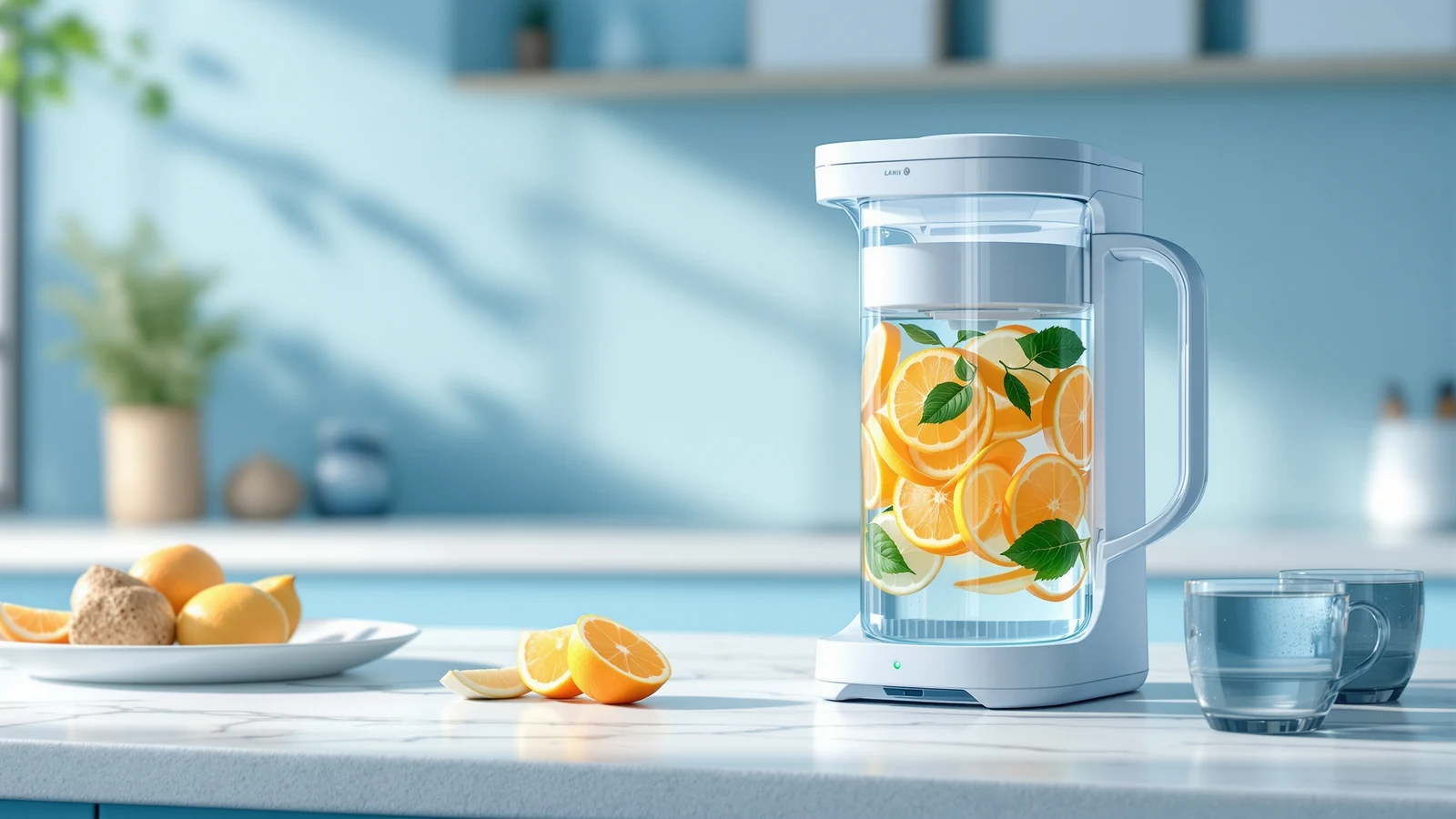
Two Bluevua listings for the same RO100ROPOT-Lite countertop purifier — one recorded under ASIN B0CZ475FBC, the other under B0CZ6HKWNQ, both priced at $219.00 when we recorded them — build a glass fruit infuser into the purifier's carafe. That's an unusual feature to find on an RO system, and it's the kind of line item that can make a purifier look like the more thoughtful, more complete product sitting next to one that doesn't bother with it. The honest question is whether the infuser is doing anything a $10 pitcher insert wouldn't, or whether it's a feature that exists mainly to be a feature.
Start with what it mechanically is. A built-in glass infuser is a narrow, usually cylindrical chamber fixed inside the carafe — sealed off from the main body of water by perforations or a mesh section, so sliced fruit sits inside that inner tube rather than floating loose through the whole container. Purified water circulates around the outside of the chamber and diffuses in through the perforated wall, picking up flavor from the fruit without the fruit's pulp, seeds, or skin fragments ending up in the water you actually pour. That's the entire mechanical difference from dropping cut fruit straight into any open pitcher: containment. Loose fruit in a pitcher sits directly in the water you're about to drink — every piece of rind, pith, or seed that comes off it goes into your glass along with the water, and the fruit itself sits in standing water for as long as the pitcher is in the fridge, which is also exactly how long it has to start breaking down. An infuser chamber keeps the solid fruit physically separated from the pour spout while still letting flavor move through the perforations.
What a built-in infuser does not do differently from a standalone infuser pitcher you'd buy at any kitchenware store is the underlying principle. Flavor transfer by diffusion through a perforated or meshed chamber is a decades-old pitcher design, sold everywhere, in plastic and glass, for a fraction of what either Bluevua listing charges for the whole purifier. The only thing that changes when the infuser is built into an RO purifier's carafe instead of sold as its own pitcher is that you're no longer buying two separate vessels — the water container and the flavor container become one object on the counter. Whether that consolidation is worth $166.01 over a comparable purifier that skips it entirely is the question the rest of this piece works through.
The price difference, measured against a purifier without one
The cleanest comparison we can make with the products in front of us is the DREO Reverse Osmosis Water Filter Countertop (RO Water Filter 112, 3L) — $169.99 when we recorded it — against either Bluevua RO100ROPOT-Lite listing at $219.00. That's a $166.01 gap, or the Bluevua costing just over double the DREO.
We're not going to pretend that $166.01 is the isolated price of a glass infuser, because it isn't. The DREO and the Bluevua are different purifiers from different brands with different feature sets on top of the infuser question — the DREO's listing states a 3:1 pure-to-drain ratio, a TDS and filter-life display, and an autofill pitcher function, none of which we have a confirmed equivalent spec for on the Bluevua listings. So the fair way to read the gap is not "the infuser costs $166.01" — it's "the purifier that includes a fruit infuser, among whatever else separates these two product lines, costs roughly double the one that skips the feature entirely." If you're shopping on filtration specs and nothing else, that framing matters, because it means you can't isolate what you're actually paying extra for just by looking at the two prices.
One more honest note on the Bluevua side specifically: the same product name, same stated features, and the same $219.00 price appear under two separate ASINs. We have no spec in either listing that distinguishes B0CZ475FBC from B0CZ6HKWNQ — no different carafe size, no different accessory bundle, nothing we can point to as a reason to prefer one over the other beyond whichever listing currently shows the better availability or seller rating on Amazon's side. Treat them as the same purchase decision twice over, the way price gaps between otherwise similar RO listings tend to track catalog position as much as hardware difference.
What each listing actually states
Prices as we recorded them. The Size/variant line is the only confirmed source for carafe size — where a listing doesn't state one, we don't invent it.
| Purifier | Fruit infuser | Carafe size | Notable stated features | Price | |
|---|---|---|---|---|---|
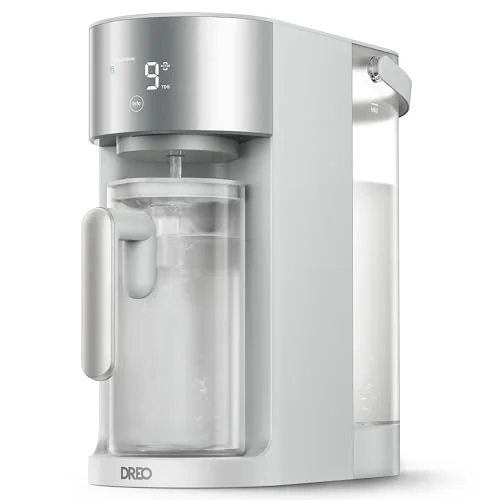 DREO RO Water Filter 112 | Not included | 3L, per listing | 3:1 pure-to-drain, TDS & filter-life display, autofill pitcher, installation-free, self-cleaning | $169.99 | View |
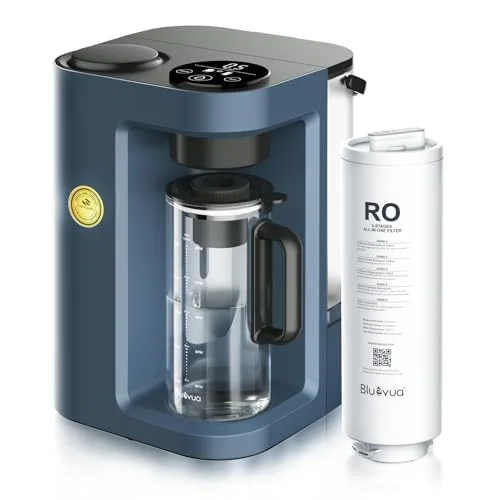 Bluevua RO100ROPOT-Lite | Built-in glass infuser | Not stated — check current listing | Countertop reverse osmosis, glass infuser carafe | $219.00 | View |
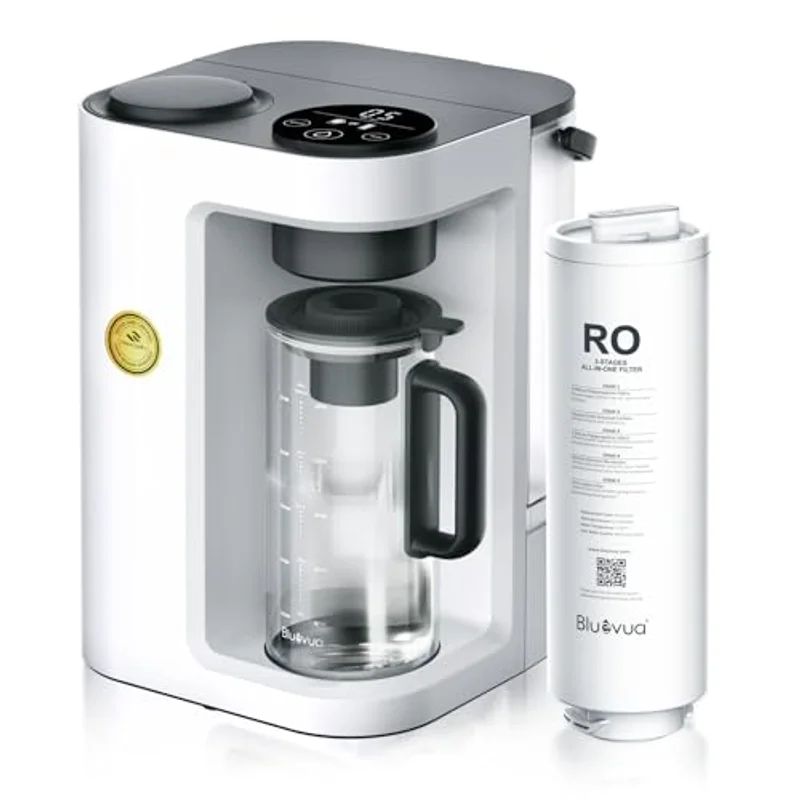 Bluevua RO100ROPOT-Lite | Built-in glass infuser | Not stated — check current listing | Same name, same stated features — a second ASIN for the same listing | $219.00 | View |
Cleaning the infuser is a second chore, not a free add-on
A built-in infuser chamber is a narrow, perforated glass tube fixed inside the carafe — which, by its own shape, is harder to clean than the flat interior wall of a plain pitcher. Fruit left sitting in any infuser for more than a day or two is a well-established kitchenware problem, not one specific to Bluevua: citrus pith and oils leave a residue on the chamber wall, and any wet, enclosed space that isn't rinsed out regularly is a candidate for mold or bacterial growth, regardless of what's filtering the water on the other side of the carafe. That's general food-safety information that applies to any fruit-infused water vessel, not a claim about this specific product's quality.
What's genuinely different about a built-in chamber versus a standalone infuser pitcher is that you can't set it aside to soak or run it separately — it's part of the carafe that also holds your drinking water, so cleaning it well means reaching a narrow, perforated tube attached to the thing you drink out of, rather than lifting out a removable insert and scrubbing it at the sink on its own schedule. Neither Bluevua listing we recorded states whether the infuser chamber is removable or dishwasher-safe, so we're not going to claim either way — if that's a deciding factor for you, it's a question for the current listing's images and Q&A section, not something either listing's title or our record of it settles.
The DREO, by contrast, has no fruit chamber to think about at all. Its carafe is just a carafe — whatever cleaning routine its listing recommends for the autofill pitcher and reservoir is the entire maintenance picture, with nothing narrow or perforated to reach into. That's a real point in favor of skipping the feature if flavored water isn't something you'd actually use daily, since every infuser you don't empty and rinse promptly is a maintenance task with a worse outcome than just not having one.
Does infused water change anything about the RO filtration itself? No — and here's why that matters
This is the point worth being precise about, because it's easy to let a built-in feature imply more than it delivers. The glass infuser sits in the carafe — the holding vessel downstream of the purifier's actual filtration stages. Water has already passed through whatever membrane and filter stages a given RO system uses before it ever reaches the carafe; the infuser does nothing to that water's path through the system. It doesn't touch TDS reduction, doesn't touch contaminant rejection, and has no bearing on a filter-life countdown of the kind DREO's listing describes for its own unit. The infuser's entire job happens after purification is finished.
That matters for a specific reason: whether a countertop purifier has a fruit infuser tells you nothing about how well it actually purifies water. Those are two unrelated specifications bolted onto the same product, and a shopper comparing listings on infuser presence alone is comparing the wrong column. The DREO's listing states a 3:1 pure-to-drain ratio and a TDS display — real, checkable filtration specs — while neither Bluevua listing we have states a comparable filtration figure we can point to. That's not evidence the Bluevua filters worse; it's evidence that the infuser and the filtration performance are specified (or left unspecified) completely independently of each other, exactly as the mechanics of the system would predict, and exactly why pairing a flavor feature with filtration marketing can be misleading if you don't separate the two in your own head before comparing prices.
The one place the infuser and water quality do intersect, loosely, is freshness rather than filtration: fruit oils and residue left in the chamber can affect the taste of water sitting in the carafe afterward, the same way any uncleaned vessel affects what comes out of it next. That's a cleaning issue, covered above — it is not a reverse-osmosis issue, and no amount of filter maintenance on the purifier's own cartridges (the kind we go through in matching the exact replacement filter to your RO model and in our look at how realistic lifespan claims are for other systems) changes anything about how clean the infuser chamber itself needs to stay.
Who the feature genuinely suits, versus who's paying for a pitcher accessory
The infuser earns its place for a specific household: people who already drink flavored or fruit-infused water regularly, who'd otherwise own a separate infuser pitcher sitting next to the purifier anyway, and who'd rather consolidate two vessels into one object on a counter that's already crowded with a purifier taking up space it doesn't need to drill or plumb for. That last part is the actual selling point of a countertop format to begin with — no drain saddle, no cabinet modification, the kind of install-free setup we cover for small kitchens and tight cabinets generally — and a built-in infuser extends that same "one less thing on the counter" logic from the purifier itself to the flavor pitcher you'd otherwise also own.
It does not suit a shopper who is choosing primarily on filtration specs, capacity, or an established brand's track record with its stated numbers — the kind of due diligence we lay out in what to check before trusting a newer RO brand without a long history. For that buyer, an infuser is a feature with zero bearing on the number that actually matters, bolted onto a listing at a price point that happens to be double a comparable purifier without it. Paying $166.01 more for a feature you could add to any carafe for a fraction of that is paying for consolidation and presentation, not for better water.
It also doesn't suit anyone who rarely drinks flavored water, or who has tried infuser pitchers before and found the cleaning step more of a chore than the flavor was worth. In that case the feature is dead weight on the purifier — not harmful, since it sits downstream of filtration and changes nothing about water quality, but also not free, since you're carrying its purchase price and its cleaning schedule either way.
A standalone glass infuser does the identical job, in any carafe
If the appeal is genuinely the flavor and not the consolidation, the honest alternative is a standalone glass fruit-infuser insert — the kind sold widely in any kitchenware aisle or online store, designed to drop into an open pitcher or carafe rather than being fixed in during manufacturing. It works on the identical principle described above: a perforated or meshed inner chamber holding sliced fruit, suspended in the surrounding water, keeping pulp and seeds out of your glass. There's nothing the built-in version does mechanically that a removable insert doesn't — the only difference is that one is sold as a bundled feature tied to a single $219.00 purifier, and the other is a separate, inexpensive accessory you can buy once and use in whatever pitcher, carafe, or purifier reservoir you already own.
The practical check before going that route is opening size: a removable insert needs enough clearance at the carafe's mouth to drop in and lift back out, so measure your purifier's carafe opening before assuming any generic insert will fit. We have a confirmed 3L carafe size for the DREO from its own listing, but no confirmed opening diameter for it or for either Bluevua listing — that's a measurement to take with the actual carafe in hand, or a question for the current listing's product images, rather than something either spec sheet answers directly. Buy the cheaper purifier, add a $10–15 insert if the carafe opening allows it, and you've recreated the Bluevua's headline feature for a small fraction of the $166.01 gap — with the added benefit of being able to lift the infuser out entirely and scrub it properly at the sink, something neither Bluevua listing confirms you can do with its built-in chamber.
What we'd actually do
If flavored water is a daily habit in your house and you specifically want one fewer vessel on the counter, the built-in infuser on either Bluevua RO100ROPOT-Lite listing is a legitimate convenience — just go in knowing you're paying roughly double a comparable purifier without it, that the infuser has no effect whatsoever on how the water is actually purified, and that the narrow chamber is a cleaning commitment you need to keep up with, not a set-and-forget accessory.
If you're shopping primarily on filtration specs, price, or a stated brand track record, the DREO RO Water Filter 112 at $169.99 gets you a 3L autofill carafe, a TDS and filter-life display, and an installation-free, self-cleaning setup — all for $166.01 less than either Bluevua listing — and a standalone infuser insert, checked against your carafe's opening size, gets you the flavor feature back for a fraction of that difference, with an insert you can actually pull out and clean at the sink.
Questions people ask about the fruit infuser feature
Does a built-in fruit infuser change how the RO filtration works?
No. The infuser sits in the carafe, downstream of the purifier's actual filtration stages — water has already been through the membrane and filter stages before it reaches the carafe. The infuser has no effect on TDS reduction, contaminant rejection, or a filter-life display of the kind the DREO RO Water Filter 112's listing describes. It's a flavor feature bolted onto the holding vessel, not part of the purification path.
What's the actual price difference between an infuser model and a comparable purifier without one?
$166.01, comparing the Bluevua RO100ROPOT-Lite at $219.00 against the DREO RO Water Filter 112 at $169.99 as we recorded them. That gap isn't the isolated price of the infuser alone — the two purifiers differ on other stated features too — but it is the real-world premium between a purifier that includes the feature and one that skips it entirely.
How do I clean a built-in glass fruit infuser?
Empty and rinse it promptly — fruit left sitting in any infuser chamber for more than a day or two can leave residue and become a mold or bacteria risk, the same as any fruit-infused water vessel. Neither Bluevua RO100ROPOT-Lite listing we recorded states whether its infuser chamber is removable or dishwasher-safe, so check the current listing's images and Q&A if that matters to your routine.
Can I add a fruit infuser to a purifier that doesn't have one built in?
Yes. A standalone glass or plastic infuser insert, sold separately in any kitchenware aisle, works on the same perforated-chamber principle and drops into most open carafes, including the DREO's 3L pitcher, for a small fraction of the price gap between it and either Bluevua listing. Check your carafe's opening size before buying one, since neither purifier's listing states that measurement.