Best RO Systems
Home › Guides › Is RO water safe for pets
Honest take

Is reverse osmosis water safe for cats and dogs? What to know

We're reader-supported: buying through our links may earn us a commission at no extra cost to you. This article compares published product specifications and general veterinary consensus — it is not veterinary advice, and it is not a substitute for a conversation with your vet.

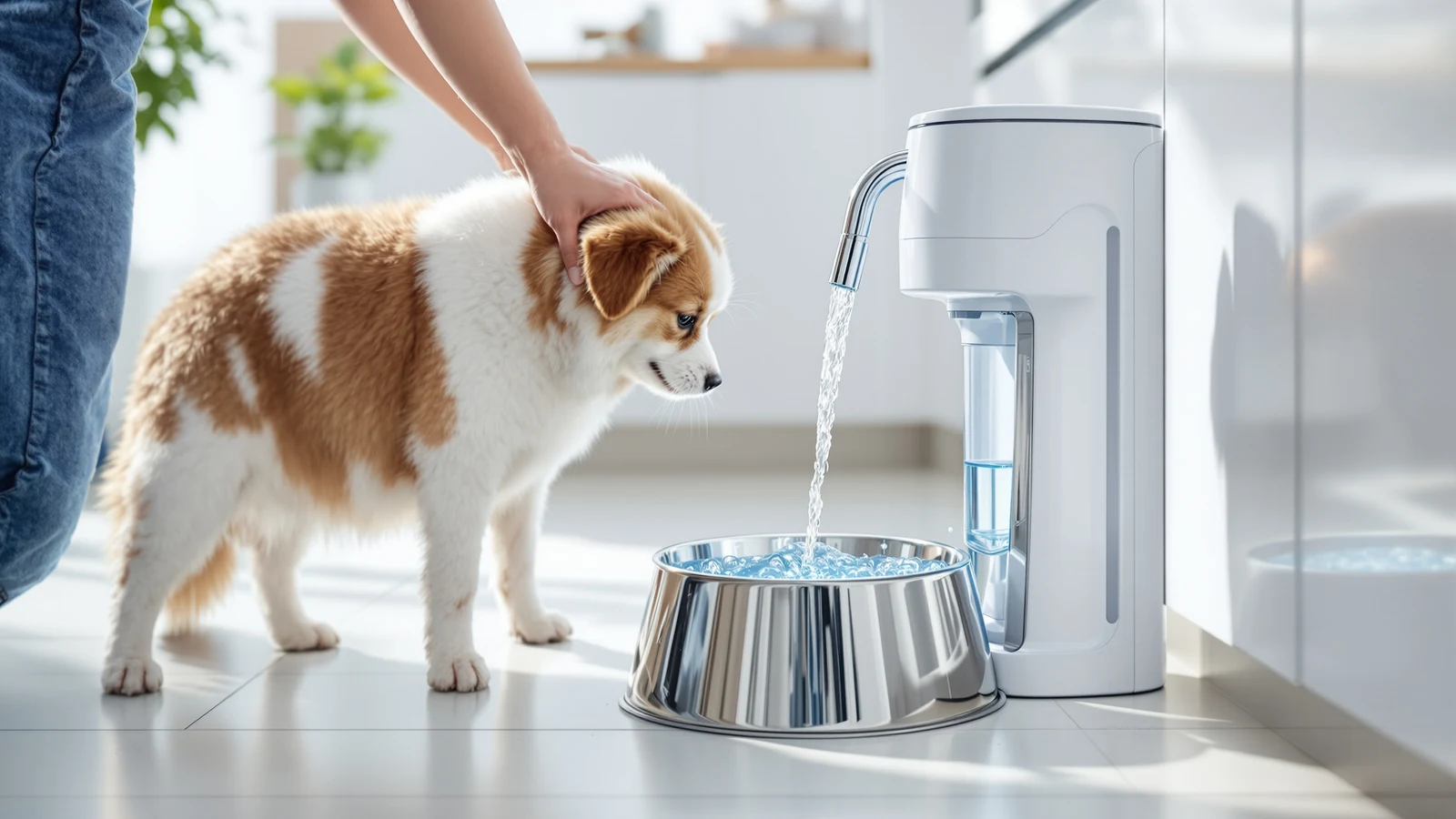
A dog and a cat drinking from bowls filled with water from a countertop reverse osmosis filter in a kitchen

The question usually arrives the same way the baby-formula version of it does: a family installs an RO system for their own drinking water, fills the dog's bowl or the cat's fountain from the same tap out of convenience, and only afterward wonders whether that was fine to do. It is a reasonable thing to wonder, because reverse osmosis does not work like a carbon pitcher — it does not just pull out chlorine and improve the taste. A membrane under pressure forces water through pores small enough to leave behind the large majority of whatever is dissolved in the feed water, not only visible particles. We go through that mechanism contaminant by contaminant in what reverse osmosis actually removes — and what it misses; the short version that matters here is that RO produces water with a near-total mineral content, not a partially reduced one, and that is also true of whatever comes out of a bowl filled from the same tap.

For a human adult, that near-total reduction is a minor fact about a glass of water, because an adult's mineral intake comes overwhelmingly from food. For a dog or a cat it is worth the same framing: a healthy pet eating a complete, commercially formulated diet gets the calcium, magnesium, potassium and trace minerals it needs from that food, which is engineered to be nutritionally complete on its own. Water, for pets exactly as for people, is a hydration source rather than a meaningful mineral source. What actually changes when the water comes from an RO system is the removal of chlorine, chloramine, and whatever else was dissolved in the tap supply — some of which pets can taste and smell far more acutely than we can.

One thing worth separating out early, because it gets conflated with drinking water: the reject stream an RO system sends down the drain is not the same water that comes out of the dispensing tap. That concentrate carries the minerals and contaminants the membrane rejected, at a higher concentration than the tap water it started from, and it is not meant for drinking by anyone, pet or person. If you are curious about repurposing that stream for something around the house rather than losing it down the drain, our guide to RO reject water covers the safe uses — watering plants and similar outdoor tasks, not a water bowl.

The mineral-stripping question pet owners ask most

The question that comes up more than any other, in some phrasing or another, is whether stripping minerals out of a pet's water will cause a deficiency, or — the more specific version that circulates in cat-owner forums — whether low-mineral water somehow causes or worsens urinary crystals and bladder stones in cats. Both deserve a straight answer, stated as general information rather than a diagnosis for any individual animal.

On deficiency: it is extremely unlikely to be a meaningful concern for a pet eating a complete and balanced commercial diet, for the same reason it is not a concern for an adult human on a normal diet. AAFCO-formulated pet foods are built on the assumption that drinking water is not the animal's primary mineral source, so removing minerals from the water does not create the gap the question worries about. The scenario where it could matter is narrower and specific — an animal on an unsupplemented homemade or raw diet that itself under-delivers certain minerals, where water had been doing more nutritional work than it was designed to — and that is a diet question for a veterinarian or veterinary nutritionist to evaluate, not something a filtration comparison can resolve in general terms.

On urinary crystals, the honest answer is more nuanced than either side of the forum argument usually allows. Struvite and calcium oxalate crystal formation in cats is driven primarily by urine pH, concentration, and diet — factors veterinary nutrition addresses through prescription and therapeutic diets, not through the mineral content of drinking water, which contributes a comparatively small and indirect effect next to diet. Some veterinary sources note that very low-mineral water is not obviously harmful and, in some discussions, comes up as neutral-to-favorable rather than as a risk factor, since less dissolved mineral load runs opposite to what concentrated, mineral-dense urine looks like. None of that is a recommendation to switch a cat with a history of urinary issues onto RO water, or off it, without your vet weighing in — it is background on why the alarm you may have read about tends to overstate a mechanism that diet, not the tap, actually controls. We work through the adjacent "does adding minerals back actually do anything" question, for the human side of the same instinct, in does alkaline RO water actually do anything.

Why most veterinary guidance treats RO water as fine for healthy pets

Set aside the specific crystal question and the general shape of veterinary guidance on purified water for pets is fairly consistent: distilled, deionized, and reverse-osmosis water are routinely described as safe for healthy dogs and cats to drink, including as a full-time water source, provided the animal is eating a normal complete diet. The reasoning tracks the mineral point above almost exactly — purified water removes things a pet's diet is not relying on it to provide, and it also removes things, like chlorine, chloramine, and whatever sediment or local contaminants an older service line might be contributing, that nobody particularly wants an animal drinking either.

Where veterinary guidance gets more specific rather than more cautious is for pets with existing kidney disease or certain metabolic conditions, where a veterinarian may have opinions about water mineral content, electrolyte balance, or fluid intake tailored to that animal's bloodwork and treatment plan. That is the exact case this article cannot speak to, because it depends on numbers we do not have about your specific pet. If your dog or cat has a diagnosed kidney, urinary, or metabolic condition, ask your vet directly whether RO water changes anything about their care plan — most of the time the answer is no, but "most of the time" is not "always," and that gap is what a veterinarian closes and a blog post cannot.

What the guidance does not generally treat as a concern is the basic act of switching a healthy pet from tap to RO water, or offering both and letting the animal choose. The switch itself is not the kind of thing that shows up in veterinary case literature as a problem; the cases that do show up involve pre-existing conditions, not reverse osmosis as a category.

Filling the bowl: a countertop unit versus an under-sink line

The practical question is rarely "is RO water safe" in the abstract — it's "how do I actually get it into a bowl twice a day without turning it into a chore." The two common setups answer that differently. An under-sink system plumbed to its own dedicated faucet means filling a bowl is the same motion as filling a glass: hold the bowl under the tap, done. The tradeoff is that the faucet lives wherever the installer put it, usually right at the kitchen sink, which is fine if that's near where pets eat and less convenient if the water bowl lives in a mudroom or a different floor entirely.

A countertop unit changes that math because it is not fixed to one spot. It sits wherever there's counter space, fills a reservoir by hand, and dispenses from a tap or into an included pitcher that then travels to wherever the bowl actually is — which is the more common real-world setup for pet owners who don't want to carry a dog bowl to the kitchen sink every time. It is also the format every product we reference below belongs to, and for a household whose main reason for RO water is pet bowls and drinking glasses rather than a whole-kitchen plumbing project, that is usually the simpler starting point. We compare the two formats directly, beyond the pet-specific angle, in countertop vs. under-sink reverse osmosis.

Three countertop systems illustrate the format and the differences worth knowing before you fill a bowl from one.

01Fastest to refill

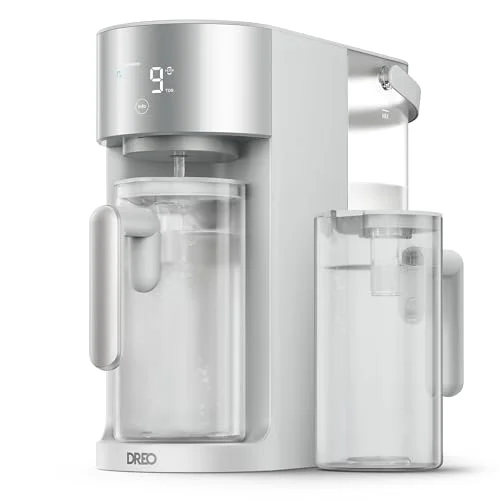
DREO Reverse Osmosis Water Filter Countertop

Two pitchers, so one is always full while the other fills
3:1 pure-to-drain · TDS & filter-life display · install-free · self-cleaning · 5L

This one ships with two autofill pitchers, which solves a specific pet-bowl problem: a 3:1 pure-to-drain system still takes time to produce a pitcher's worth of water, and running out mid-refill with one pitcher cycling means a wait before the next bowl gets filled. With a spare pitcher already full, topping off a bowl or a fountain reservoir doesn't depend on the system's output speed in the moment. It's install-free and self-cleaning, which matters for a unit refilled daily rather than occasionally — see our guide to what self-cleaning actually does. The TDS and filter-life display is the same tracking tool we'd point a human drinking-water buyer to; it works identically whether the water's destination is a glass or a bowl.

DREO Reverse Osmosis Water Filter Countertop with two autofill pitchers
$199.99
Countertop · 5LCheck price →
02Minerals added back

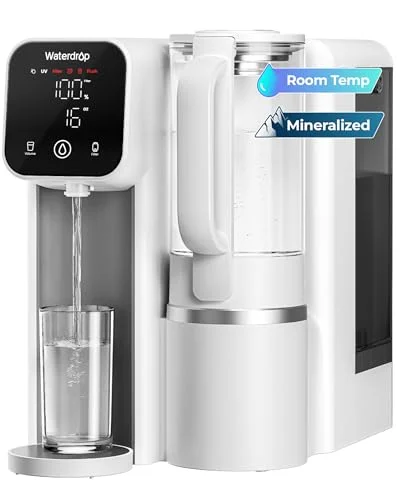
Waterdrop M6SL Mineral Reverse Osmosis Water Filter

For owners who'd rather not serve a completely mineral-free bowl
Mineral / remineralizing · room-temp dispense · countertop · 75 GPD

The "Mineral" in the name means this unit reintroduces some mineral content after the membrane rather than leaving the water stripped, the same remineralization concept covered above. Whether that matters for a pet is the same answer as whether it matters for the humans in the house: a water-chemistry preference, not a documented requirement either way, since a healthy pet on a complete diet isn't relying on either version of the water for its mineral intake. It's a reasonable pick if your household already prefers remineralized water for everyone's glasses and would rather not run two separate water sources. At 75 GPD it produces water faster than lower-output countertop units, worth knowing if more than one bowl or fountain draws from it through the day.

Waterdrop M6SL Mineral Reverse Osmosis Water Filter Countertop
$141.93
Countertop · 75 GPDCheck price →
03Extra stage, extra portability

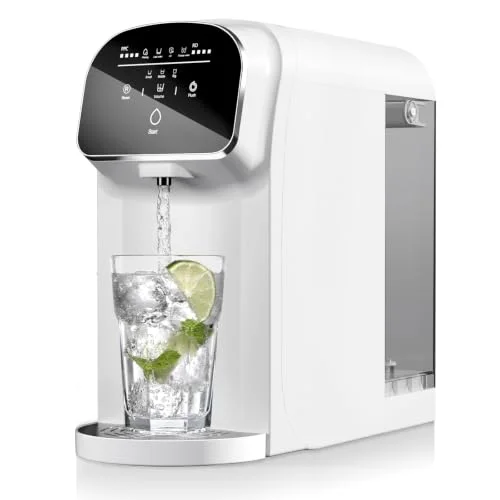
Aigerri Countertop Reverse Osmosis Water Filter with UV

For a bowl or fountain that sits out between fills
5-stage · UV stage · 5:1 pure-to-drain · no installation · portable (home, office, RV)

The UV stage is the detail worth noting for pet water specifically: a bowl or fountain reservoir sits out at room temperature between fills, sometimes for most of a day, and a UV stage addresses microbial growth in the source water before it reaches that bowl — a different job from the mineral-removal work the membrane does. Its 5:1 pure-to-drain ratio is also the most water-efficient figure among the three, worth noting if you're filling bowls daily on top of the household's own drinking water. Being listed for home, office, and RV use is relevant if your pets travel with you. The listing doesn't publish a reservoir capacity, so check it before assuming it matches either unit above.

Aigerri Countertop Reverse Osmosis Water Filter with UV stage
$319.99
Countertop · UV · 5-stageCheck price →

Cats, dogs, and the species-specific notes worth knowing

Treating "pets" as one category misses a genuinely useful difference between how cats and dogs tend to respond to a change in water.

Cats are notoriously sensitive to water taste, smell, and even the container it's served in, and low water intake in cats is a real, well-documented concern — a contributing factor behind the chronic kidney disease and urinary tract issues that show up so often in older cats, since cats evolved as desert animals with a weak thirst drive relative to their water needs. This is the one place RO water has a plausible upside worth naming directly: removing chlorine and anything else a cat can detect but a human mostly can't may make the water more palatable to a picky drinker, and anything that gets a reluctant cat to drink more is generally working in the right direction. That's a plausible mechanism, not a guarantee for any individual cat — some are indifferent to water source and far more responsive to movement (a fountain) or temperature than to filtration — but it's worth trying if your cat already drinks too little.

Dogs are, as a rule, considerably less discriminating about water taste and will drink tap, filtered, or RO water without much apparent preference, so the "will my pet even accept this" question that comes up with cats rarely applies the same way. The more relevant dog-specific note is activity and volume: a dog drinking heavily after exercise or in hot weather goes through more water per day than most countertop units are sized to produce continuously, a reason to weigh output rate — the GPD figure in the picks above — over filtration quality when sizing a system for a multi-dog or larger-breed household.

One note that applies to both species and gets skipped surprisingly often: fluoride. Municipal water fluoridation, where it exists, is dosed and justified as a human dental-health measure, and an RO membrane removes it along with everything else dissolved in the feed water. There is no established guidance suggesting pets need fluoridated water, and no established concern about them not getting it — it is simply a non-issue for animals in a way that it genuinely is a documented, if narrow, consideration for human infants on formula, which we cover in more depth in reverse osmosis water for baby formula if you're weighing both questions in the same household.
What this article is not

This is a comparison of published product specifications and general veterinary consensus — the same kind of research-based comparison we do for every product on this site. We're not a veterinary clinic and we don't run a testing lab: nothing here was verified on an actual cat or dog, and nothing in it is a recommendation for or against RO water for your specific pet. Whether a mineral change in drinking water matters for an animal with an existing kidney, urinary, or metabolic condition is a question that depends on bloodwork and a treatment history we have no visibility into from a blog post. If you take one thing from this page, take the question to ask your veterinarian, not a conclusion to act on without them.

FAQ

Questions pet owners ask about RO water

Is reverse osmosis water safe for my dog or cat to drink every day?

For most healthy pets eating a complete, commercially formulated diet, general veterinary guidance treats distilled, deionized, and RO water as safe for everyday drinking, including as a full-time water source. Pets with an existing kidney, urinary, or metabolic condition are the exception where a veterinarian's input matters, since their guidance may depend on that individual animal's bloodwork. This is general information, not veterinary advice for your specific pet.

Does reverse osmosis strip minerals my pet needs from their water?

RO does remove the large majority of dissolved minerals, but a healthy pet on a complete commercial diet gets its calcium, magnesium and other minerals from food, which is formulated on the assumption that water isn't the primary mineral source. Water is a hydration source for pets, the same as it is for people on a normal diet.

Does RO water cause urinary crystals or bladder stones in cats?

Struvite and calcium oxalate crystal formation in cats is driven mainly by urine pH, concentration and diet, not by the mineral content of drinking water, which plays a comparatively small and indirect role next to diet. Low-mineral water is not generally treated as a risk factor in veterinary guidance, but a cat with a history of urinary issues should have any water change discussed with a veterinarian first.

Can I give my pet the RO system's reject (wastewater) output?

No. The reject stream carries the minerals and contaminants the membrane filtered out, concentrated rather than removed, and it isn't meant for drinking by anyone. It has safe non-drinking reuses around the house, covered in our RO reject water guide, but a pet's bowl should always be filled from the purified side of the system.

Keep reading

Next, if you're still deciding