Best RO Systems
Home › Guides › Delta's $799 Clarifi
Comparison

Delta Faucet's $799 Clarifi: what a plumbing brand charges for reverse osmosis

We're reader-supported: buying through our links may earn us a commission at no extra cost to you. We compare published specifications, stage counts and prices — we don't run a testing lab, and nothing below is a star rating or a paraphrased review.

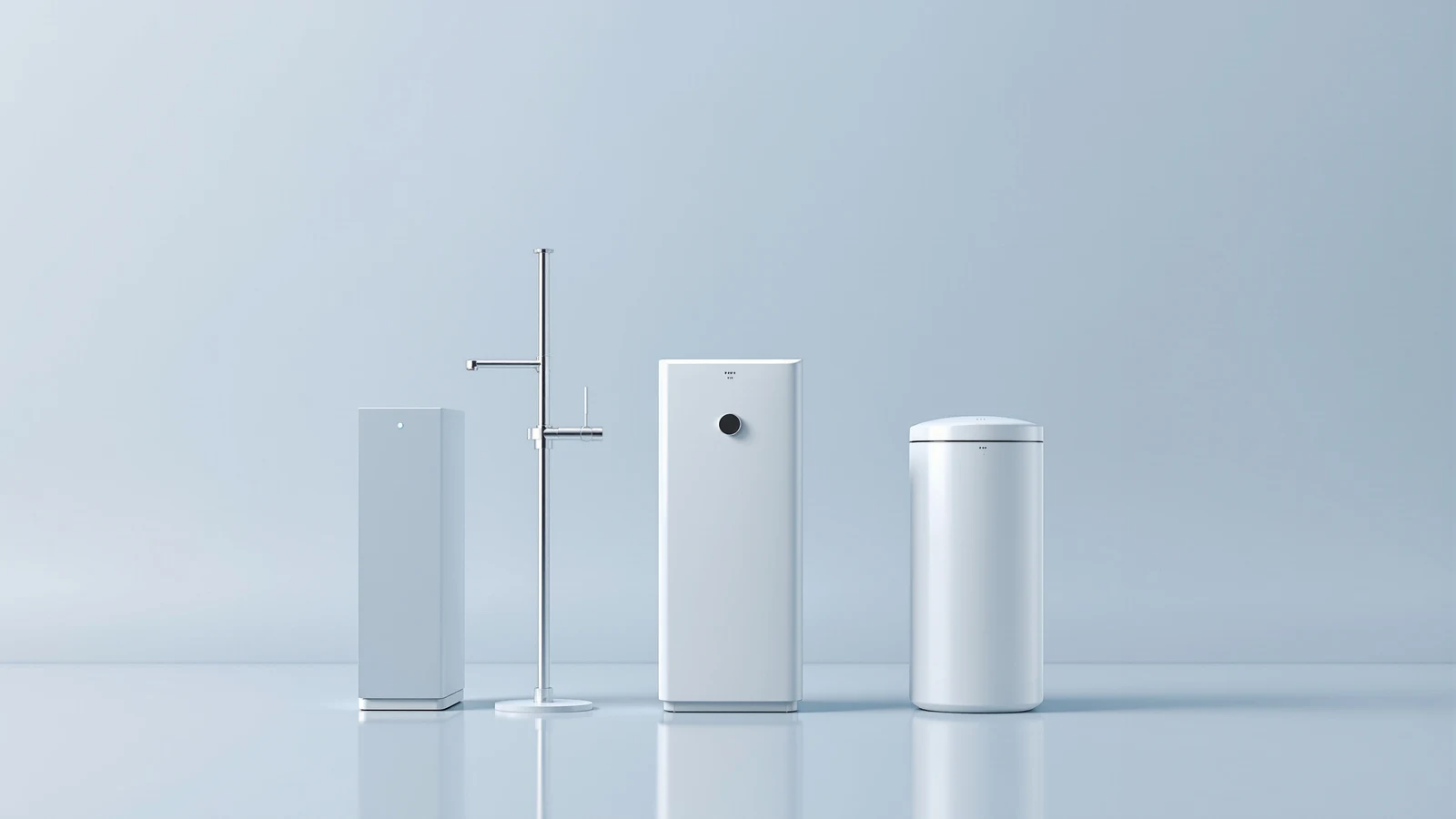
Delta Faucet Clarifi under-sink reverse osmosis system next to two established tankless reverse osmosis systems on a kitchen counter

Delta's whole business for more than half a century has been faucets and plumbing fixtures — the handle you turn in a huge share of American kitchens and bathrooms, sold through Home Depot, Lowe's and nearly every big-box plumbing aisle in the country. It is not a water-filtration name. Walk past the reverse osmosis shelf in the same stores and the brands on the box are different: Waterdrop, Frizzlife, APEC, iSpring — companies whose entire identity is built around dissolved-solids rejection, certification numbers and gallons per day. The Delta Faucet Clarifi Under Sink Reverse Osmosis Water Filter System, model DWQ1001012, priced at $755.67, is the brand's entry into that second list. Delta is, after all, a faucet brand first — the dedicated faucet that ships with an RO system is usually a minor spec-sheet line for a filtration specialist, which is part of why a comparison like Waterdrop's TSB-versus-TSA dedicated-faucet piece reads like a filtration company being unusually thorough about a part of the product it didn't start with. For Delta, the faucet is the one part of this system that needed the least explaining.

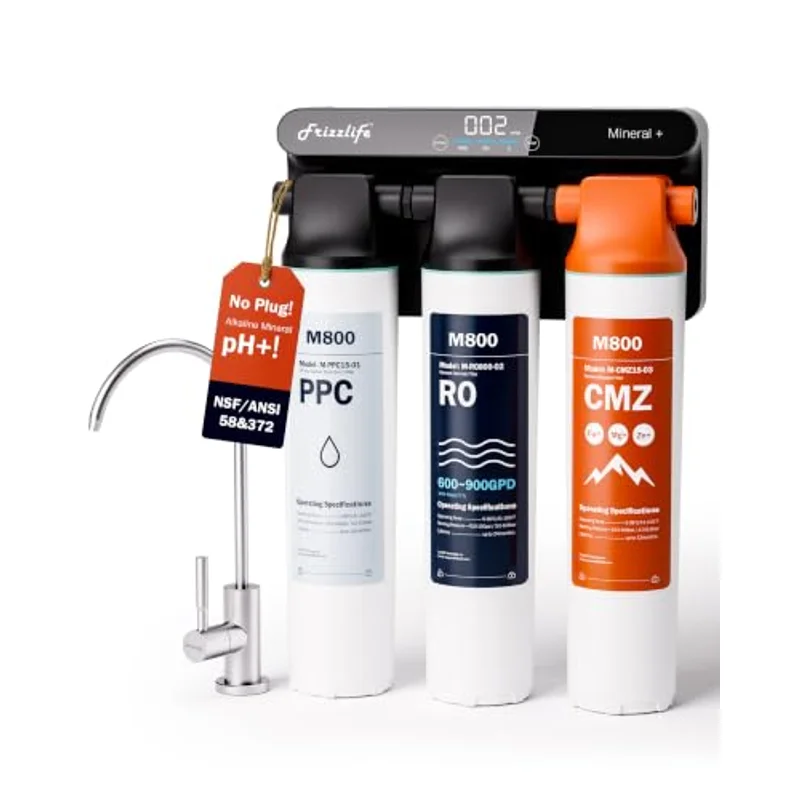
Put the listing titles side by side and the difference in audience is immediate. The Frizzlife M800's own title packs five concrete, checkable claims into one line: up to 900 GPD, alkaline mineralized, auto flush, NSF/ANSI 58 & 372, a 4:1 pure-to-drain ratio. Delta's title for the Clarifi reads: "Under Sink Reverse Osmosis Water Filter System, 6-Stage RO Water Filter, Tankless Water Filtration System, Undersink Water Filter, Reverse Osmosis Filter System." That's five restatements of the same two facts — it's an RO system, it's tankless — and exactly one number, the stage count. No GPD rating. No certification number. No drain ratio. The repetition reads like copy optimized to be found by someone typing "reverse osmosis" into a search bar, not a listing written for a shopper who already knows what GPD and NSF/ANSI 58 mean and is comparing three tabs of specs.

That's not necessarily a flaw in the hardware — it's a tell about who Delta expects to buy it. A filtration specialist's title is written for a shopper who already speaks the category's language. A fixture brand's title, going by this one, is written for a shopper who trusts the name already on their faucet and hasn't shopped reverse osmosis systems before. Both buyers exist, and both are legitimate. The rest of this comparison is about what the second buyer is actually paying for at nearly triple the price of the two tankless systems already selling at this output.
Reading the listing

Clarifi's 6-stage spec sheet, read line by line, at $799

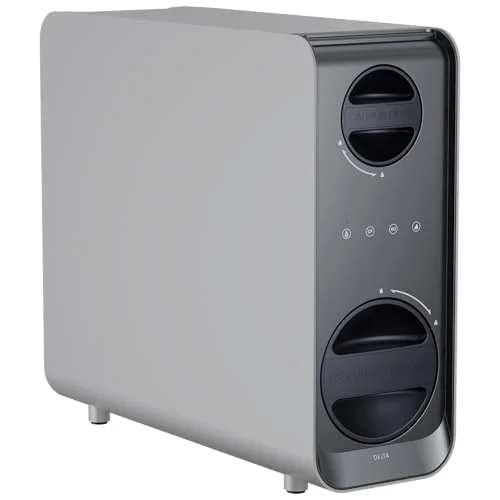
Strip the Clarifi listing down to what it actually states and the sheet is short: six filtration stages, tankless, under-sink installation, model number DWQ1001012, $755.67. That is the complete list of checkable facts we could source for this page. What isn't in it — and what we are not going to invent to fill the gap — is a rated gallons-per-day output, a drain ratio, a named NSF/ANSI certification number, or a published filter-change interval. Those four numbers are exactly what let a buyer compare one tankless RO system to another without guessing, and the Clarifi listing we sourced doesn't carry any of them. If the number isn't published, the honest move is to say so and point you to the current listing to check it yourself, not to assign Delta's new system a plausible-sounding figure on the strength of the brand name alone.

Six stages, by itself, is not an unusual count for a modern tankless system — it sits in the same general range as the competitors in this comparison. What makes six stages at $799 different from a similar stage count at a third of the price is everything the headline number doesn't tell you: whether those are six housings each doing a distinct filtration job, or six marketing-friendly line items that other systems fold into fewer, differently-named stages. Without Delta's own stage-by-stage breakdown — which the listing doesn't provide beyond the top-line count — that's a question only the listing itself, or Delta's installation documentation, can answer. It's worth checking before assuming six stages at $799 buys meaningfully more filtration than a similar or greater stage count sitting at under $300 elsewhere in this comparison.

Delta's listing also doesn't publish a filter-change interval — a number competitors increasingly lead with now that some tankless systems go 12 to 24 months between changes instead of the standard six. Without that figure for the Clarifi, a buyer can't yet weigh its running-cost rhythm against the rest of the category, which is one more piece of information $799 doesn't come with here.

One more line worth reading literally: "6-Stage RO Water Filter System" is Delta's own description of itself. On the evidence available to us, it is not a third-party verification of anything. The next two sections work through what that distinction costs you, first in price and then in certification.

The arithmetic

The price gap against two established tankless systems with a similar stage count

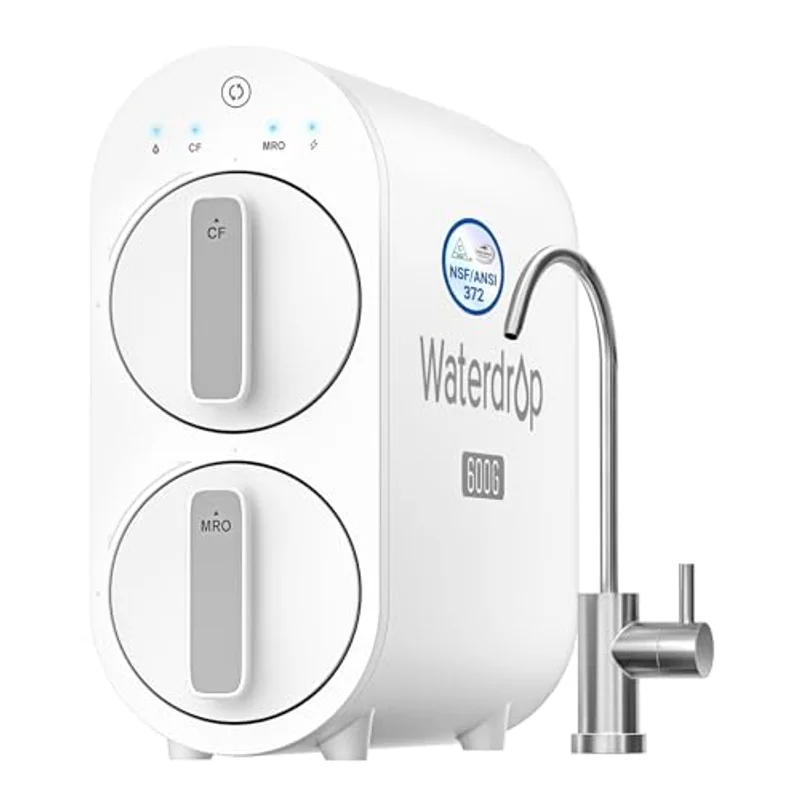
Line up what's actually in front of you. The Frizzlife M800 is $289.99 — non-electric, rated up to 900 GPD, NSF/ANSI 58 & 372 certified, a 4:1 pure-to-drain ratio that wastes less water than most of the category. The Waterdrop G2P600 is $269.00 — tankless, rated 600 GPD, NSF/ANSI 372 certified, seven filtration stages. The Delta Faucet Clarifi is $755.67 — tankless, six stages, with no GPD figure or certification number stated on the listing we sourced.

Run the arithmetic plainly, because it is the finding of this whole comparison. $755.67 against the Frizzlife's $289.99 is a premium of $509.01 — the Clarifi costs 2.76 times as much. Against the Waterdrop's $269.00 it's a premium of $500.00, or 2.67 times the price. Either way you cut it, Delta's first reverse osmosis system costs nearly triple an established tankless competitor running a similar or greater number of filtration stages, at a similar or higher rated output where that output is stated at all. That inversion — the newcomer costing nearly three times as much as the systems already doing the job it's entering to do — is not disqualifying on its own. Brand premiums exist in every category, and sometimes they're earned. But it is the number that should set the bar for everything Delta is asking a buyer to take on faith in the next two sections: the stage count, the unstated certification, and the plumbing-brand service promise.

It's worth being precise about where that $500 to $509 could actually be going, because "brand premium" does a lot of unexamined work in a sentence like that. It could be covering genuinely higher-grade membrane or housing hardware the listing doesn't itemize. It could be covering Delta's retail and distribution structure, built around a brand sold through every major home-improvement chain in the country rather than primarily direct-to-consumer, which is closer to how Frizzlife and Waterdrop largely sell. It could be covering installation support or warranty infrastructure that doesn't exist at the two cheaper price points. We can't allocate a $500 gap across those three buckets from a product listing alone — nobody outside Delta can — but the next two sections look at the actual evidence for the second and third explanations. And if the math that matters most to you is less about brand and more about what any RO system saves against bottled water over time, the actual payback timeline runs on the sticker price you start with, which makes a $500 premium a meaningfully longer road back to break-even no matter which system earns it.

The plumbing-brand case

Installation support and warranty: does a plumbing brand's service network change the math

This is the strongest honest case for the premium, and it deserves to be made plainly before it's weighed. Delta has spent decades building exactly the kind of infrastructure a plumbing appliance eventually needs: a customer service operation sized for a company shipping millions of fixtures a year, parts availability through the same big-box retail network where homeowners already return faucet parts, and brand recognition that makes "call Delta" a less intimidating proposition than tracking down a specialist filtration company's support line. If that network extends cleanly to the Clarifi — phone support that actually knows the product, a service process a homeowner already trusts from a prior faucet repair — it is a real, non-trivial asset a brand-new filtration-only company can't match on day one.

Here is what we could not find to back that case up: a published warranty term for the Clarifi in the data available to us. The same gap exists for the Frizzlife M800 and the Waterdrop G2P600 — none of the three systems in this comparison have a warranty length we could source and verify for this page. That is a real limitation, not a dodge; it means the service-network argument for Delta's premium currently rests on the company's general reputation for plumbing fixtures rather than on anything specific stated about the Clarifi's own coverage. Our warranty coverage comparison found that most RO brands, across a wide spread of prices, land on roughly the same one-year limited term regardless of what the system costs — which is exactly the pattern worth checking Delta's actual registered warranty against before assuming a $799 price tag buys materially longer coverage than a $290 one.

There's also a structural wrinkle specific to this category that a faucet brand's reputation doesn't automatically solve: reverse osmosis is a consumables business as much as a hardware business. The membrane and pre-filters need replacing on a schedule for as long as you own the system, and that ongoing cartridge supply chain — not the one-time install — is where filtration specialists like Frizzlife and Waterdrop have built their actual repeat business. Delta's service strength is in fixtures bought once and rarely touched again; whether that same infrastructure translates into keeping Clarifi-specific cartridges in stock and reasonably priced five years from now is a separate question that decades of faucet warranty experience doesn't answer by itself.

Self-asserted vs. third-party

Reading Delta's own filtration claims against third-party certified competitors

"6-Stage RO Water Filter System" is Delta's own description of the Clarifi, written by Delta, on Delta's listing. That's worth stating plainly because it's easy to read a specific-sounding number and assume it carries the same weight as a certification. It doesn't, automatically. The Frizzlife M800's NSF/ANSI 58 & 372 claim and the Waterdrop G2P600's NSF/ANSI 372 claim are both references to an independent certifying body's published standard — a third party checked the system against a test protocol, and the result is a number anyone can look up, not a sentence the manufacturer chose to write about itself.

We did not find an NSF/ANSI certification number, a WQA listing, or any other third-party verification stated on the Clarifi listing we could source for this page. That is not the same claim as "the Clarifi isn't certified" — plenty of systems carry certifications that simply aren't foregrounded in the title the way Frizzlife's is, and Delta may publish one elsewhere in its own product documentation that we didn't have access to here. What we can say is that, on the specific listing data available to us, Delta's filtration claim is self-asserted while the two competitors' claims are independently verifiable — and a buyer deciding between a $799 system and two systems costing less than a third as much should check the current Clarifi listing or Delta's own product page for a certification number before assuming the brand name is standing in for one. Our comparison of non-electric and tankless designs runs into the same self-asserted-versus-certified split on a different axis — noise claims instead of filtration claims — and the checking method is identical either way: find the independent number, don't take the adjective at face value.

None of this means the Clarifi performs worse than its certified competitors. It might perform identically; six well-engineered stages without a stated certification can absolutely reject what a certified system rejects. What it means is that a buyer cannot verify that claim from the listing alone the way they can verify Frizzlife's or Waterdrop's — and at nearly triple the price, that is exactly the kind of gap nobody should assume closes in Delta's favor without checking first.

Side by side

The three listings, lined up

Prices and specs as stated in each product's own listing. Confirm the live price on Amazon before buying — these move.

SystemFormatOutputStagesCertifiedPrice
Frizzlife M800Tankless · non-electricup to 900 GPDMulti-stage, auto flushNSF/ANSI 58 & 372$289.99Price
Waterdrop G2P600Tankless · under-sink600 GPD7NSF/ANSI 372$269.00Price
Delta Faucet ClarifiTankless · under-sinkNot stated6Not stated on listing$755.67Price

The highlighted row isn't a recommendation — it's the system this page is about. Fewest stated specifics, highest price, and the one genuine differentiator the brand is selling is Delta's name and retail network, covered above. Check the current Clarifi listing directly for whatever output and certification language it carries before assuming it matches the two competitors' explicit claims.

The picks

Who the brand name is actually worth the premium for, and who should skip it

The honest version of this decision doesn't have a single winner — it has a narrow case for Delta and a much wider case for either specialist competitor.

01Most output, stated certification

Frizzlife M800

Buy this for the highest output and a number you can verify
NSF/ANSI 58 & 372 · up to 900 GPD · 4:1 pure-to-drain · non-electric

The cheapest of the three at $289.99, the highest rated output, a certification number anyone can look up independently, and no outlet required under the sink. If you want the most filtration for the least money and don't have a specific reason to pay for a recognizable brand name, this is the comparison's clear answer.

Frizzlife M800 non-electric tankless reverse osmosis system
$290
Non-electricCheck price →
02Closest match, more stages

Waterdrop G2P600

Buy this if you simply want a 600-class tankless system
NSF/ANSI 372 · 600 GPD · 7 stages · tankless

Runs seven stages against the Clarifi's six, carries a stated NSF/ANSI 372 certification, and costs $500.00 less. If you want a tankless system in the same output class as the Clarifi without paying for the Delta name specifically, the G2P600 out-documents its filtration at a fraction of the price.

Waterdrop G2P600 tankless under-sink reverse osmosis system
$269
Tankless · 600 GPDCheck price →
03If the name is the feature

Delta Faucet Clarifi

Buy this specifically for the Delta name and its retail service network
$755.67 · 6 stages · tankless · undersink

The defensible case for the premium is narrow: you already trust Delta from a faucet or fixture purchase, you want the phone-support and big-box-retail-return path that comes with a plumbing brand you recognize, and you're comfortable buying six stages of filtration without an independently verified certification number attached to this listing. Outside that specific case, both competitors above out-document their filtration for less than a third of the price.

Delta Faucet Clarifi 6-stage tankless reverse osmosis system
$756
6-stage · tanklessCheck price →
How we picked

One new listing, two established tankless systems

We set Delta's first reverse osmosis listing against two tankless systems already tracked on this site, chosen because their rated output and stage count sit close enough to the Clarifi's six stages to make the price comparison fair. We did not include any tank-based system here — tankless is the format Delta entered, and that is the comparison its own listing invites.

How we compared

Research, not a lab

We're honest about this: we don't physically test these systems and we don't run a testing lab. We compare each listing's own stated stage count, certification language and price. We did not find a published star rating or review count we could verify for the Clarifi at the time of writing, so none appears anywhere on this page.

FAQ

Questions people ask about Delta's reverse osmosis system

How much more expensive is the Delta Clarifi than other tankless RO systems?

$755.67 against the Frizzlife M800's $289.99 and the Waterdrop G2P600's $269.00 — a premium of $500.00 to $509.01, or roughly 2.67 to 2.76 times the price, for a similar or lower stage count and an output rating the listing we sourced doesn't state.

Is the Delta Clarifi NSF certified?

We did not find an NSF/ANSI certification number stated on the Clarifi listing we sourced for this page, unlike the Frizzlife M800 (NSF/ANSI 58 & 372) and Waterdrop G2P600 (NSF/ANSI 372). That isn't proof the Clarifi lacks certification — check Delta's current listing or product documentation directly for the current claim before assuming either way.

Does Delta's reputation as a faucet brand carry over to its reverse osmosis system?

Not automatically. Delta's service and retail infrastructure was built around fixtures bought once and rarely serviced again. Reverse osmosis is an ongoing consumables business built on membrane and cartridge replacement, which is a different relationship than the one Delta's decades of faucet warranty experience were built on.

Who should actually buy the Delta Clarifi over a cheaper tankless system?

Mainly buyers who already trust the Delta name from a prior faucet or fixture purchase and specifically want its retail and phone-support network, and who are comfortable with six stages of filtration that isn't independently certified on the listing we sourced. Buyers focused purely on output, certification or price get more documented filtration for under a third of the cost from either competitor in this comparison.

Keep reading

Next, if you're still comparing tankless systems